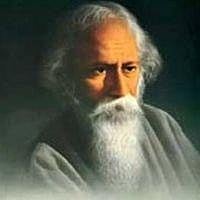
Anniversary of Tagore's death being celebrated
Bangladesh and Bengali communities all over the world are celebrating the 69th death anniversary of famed writer and poet Rabindranath Tagore on Friday, Srabon 22, in line with the Bengali calendar.
bdnews24.com News Service
bdnews24.com
Published :
06 Aug 2010, 06:52 AM
Updated :
24 Apr 2022, 05:34 PM
Dhaka, Aug 6 (bdnews24.com) – Bangladesh and Bengali communities all over the world are celebrating the 69th death anniversary of famed writer and poet Rabindranath Tagore on Friday, Srabon 22, in line with the Bengali calendar.
Born in 1861, the Bengali literary icon moved on from the land of Bengal to spread the eastern spiritual heritage around the world through his works and reshaped Bengali literature and music in the late 19th and early 20th centuries.
Various social and cultural organisations in the country, including the Bangla Academy, the Nazrul Academy and Chhayanot have undertaken different programmes to mark the day.
Highlights of the days will be the staging of the musical dance rendition of his famous play 'Tasher Desh' in the evening at Chhayanot premises, a solo speech series and a cultural program organised by the Bangla Academy and performances of various songs by Tagore organised by the Nazrul Institute.
Life
Born in Calcutta to a wealthy and prominent Brahman family, Tagore continued his family legacy of reforming society.
Tagore's grandfather had established a huge financial empire and was responsible for financing many public projects, such as the Calcutta Medical College.
The family was a pioneer of Bengal Renaissance and was known for their efforts to combine traditional Indian culture with Western ideas.
All of Tagore's siblings made significant contribution in Bengali literature and culture. Tagore's oldest brother Dwijendranath Tagore was a philosopher and a poet. Another brother, Satyendranath Tagore, was the first Indian member of the Indian Civil Service. Yet another brother, Jyotirindranath Tagore, was a composer and a playwright. Among his sisters, Swarna Kumari Devi earned fame as a novelist.
The youngest amongst brothers and sisters, Tagore, started composing poems at the age of eight.
He received his early education first from tutors and then at a variety of schools. Among them was the Bengal Academy where he studied Bengali history and culture, and University College, London, where he studied law but left after a year without completing his studies.
In 1883, Tagore married Mrinalini Devi Raichaudhuri and fathered two sons and three daughters.
In his mature years, in addition to his many-sided literary activities, Tagore managed their family estates, and in the process, came into close touch with general people. Many attribute this as a turning point in his literary stance and for his increased interest in social reforms.
He moved to East Bengal (now Bangladesh) in 1890 and during his stay there, collected local legends and folklore. He wrote seven volumes of poetry between 1893 and 1900, including Sonar Tari (The Golden Boat) in 1894 and Khanika in the 1900.
Tagore stood out from other literary figures of his time for writing in the common language of the people and abandoning the ancient form of the Indian language. It, however, earned him some criticism from critics and scholars of the time.
In 1901, Tagore founded a school outside Calcutta, Visva-Bharati, which was dedicated to merging Western and Indian philosophy and education. It became a University in 1921.
His wife died in 1902, followed in 1903 by the death of one of his daughters and in 1907 his younger son.
He was an early advocate of Independence for India and his influence over Gandhi and the founders of modern India was enormous.
Tagore died on Srabon 22, 1348 according to the Bengali calendar. In accordance to the English calendar he died on Aug 7, 1941.
Literary work
Tagore produced poems, novels, stories, a history of India, textbooks, and treatises on pedagogy.
His reputation as a writer was established in the United States and in England after the publication of Gitanjali (Song Offerings), in which Tagore tried to find inner calm and explored the themes of divine and human love.
The poems were translated into English by Tagore himself. His cosmic visions owed much to the lyric tradition of Vaishnava Hinduism and its concepts about the relationship between man and God.
The poems appeared in 1912 with an introduction by William Butler Yates, who wrote "These lyrics - which are in the original, my Indians tell me, full of subtlety of rhythm, of untranslatable delicacies of colour, of metrical invention - display in their thought a world I have dreamed of all my life long."
His poems were praised by Ezra Pound, and drew the attention of the Nobel Prize committee. "There is in him the stillness of nature. The poems do not seem to have been produced by storm or by ignition, but seem to show the normal habit of his mind. He is at one with nature, and finds no contradictions. And this is in sharp contrast with the Western mode, where man must be shown attempting to master nature if we are to have "great drama." (Ezra Pound in Fortnightly Review, 1 March 1913).
However, Tagore also experimented with poetic forms and these works have lost much in translations into other languages.
His short stories especially influenced Indian Literature deeply, and he was the first Indian to bring an element of psychological realism to his novels.
The Nobel laureate wrote his most important works in Bengali, but he translated his poems into English, forming new collections.
Many of his poems are actually songs, and inseparable from their music. His written production, still not completely collected, fill 26 substantial volumes.
At the age of 70 Tagore took up painting.
He was also a composer, settings hundreds of poems to music. Tagore's song Sonar Bangla (Our Golden Bengal) became the national anthem of Bangladesh.
Although Tagore wrote successfully in all literary genres, he was first of all a poet. Among his fifty and odd volumes of poetry are Manasi (1890) [The Ideal One], Sonar Tari (1894) [The Golden Boat], Gitanjali (1910) [Song Offerings], Gitimalya (1914) [Wreath of Songs], and Balaka (1916) [The Flight of Cranes].
The English renderings of his poetry, which include The Gardener (1913), Fruit-Gathering (1916), and The Fugitive (1921), do not generally correspond to particular volumes in the original Bengali; and in spite of its title, Gitanjali: Song Offerings (1912), the most acclaimed of them, contains poems from other works besides its namesake.
Tagore 's major plays are Raja (1910) [The King of the Dark Chamber], Dakghar (1912) [The Post Office], Achalayatan (1912) [The Immovable], Muktadhara (1922) [The Waterfall], and Raktakaravi (1926) [Red Oleanders]. He is the author of several volumes of short stories and a number of novels, among them Gora (1910), Ghare-Baire (1916) [The Home and the World], and Yogayog (1929) [Crosscurrents].
Besides these, he wrote musical dramas, dance dramas, essays of all types, travel diaries, and two autobiographies, one in his middle years and the other shortly before his death in 1941. Tagore also left numerous drawings and paintings, and songs for which he wrote the music himself.
Recognition
Tagore was given the Nobel Prize for his own collection of poem Gitanjali in 1913.
Tagore was knighted by the ruling British Government in 1915, but within a few years he resigned the honour as a protest against British policies in India.
bdnews24.com/sm/rn/1219h