Published : 02 Apr 2023, 09:32 PM
Updated : 02 Apr 2023, 09:32 PM


A weaver in Bangladesh has developed a technology to make a particular type of Sarees from the threads extracted from the barks of banana plants.
The type of Saree is named ‘Kolabati’ and will be marketed under the ‘Oporupa Bandarban’ brand name, confirmed the patron of the project Yasmin Parvin Tibriji, the Bandarban deputy commissioner.
The prototype of the Kolaboti Saree - 13.5 cubits long and 2.5 cubits wide - was made by a seasoned freelance Monipuri weaver, Radhaboti Debi.
Radhaboti, a retired weaver from Moulvibazar, took up the challenge of weaving the traditional female clothing item in South Asia, after being encouraged by the deputy commissioner.
The Saree project was part of a larger project involving barks of banana plants the district administration have been endorsing for a while now.
Handicraft makers and weavers came up with different items like window curtains, doormat, and penholders from it.
“I ordered initiation of the project after watching people throw away the banana plants upon collecting the fruit,” DC Yasmin said.
“At first, threads of the barks of the plants were prepared, and handicraft makers in the district made different items from those.
“But the ultimate challenge was to make a Saree from it, which no one could pull off. That’s why I brought Radhaboti Debi to work her magic,” she added.
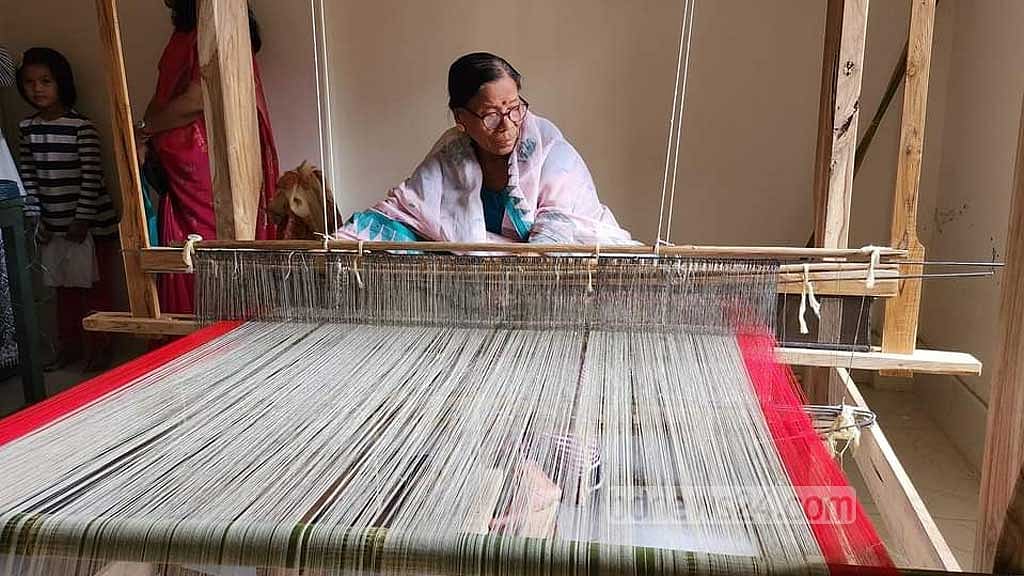
It took Radhaboti, a weaver who had worked at the Sylhet District Cooperative Office for decades before retiring, ten days to prepare thread and develop the Saree using a loom.
Radhaboti, an expert in making Monipuri Saree which requires looms, said her fellow Monipuri weavers advised her not to take up the project as she might fail and the skills set of the Monipuri weavers will be questioned.
“I didn’t pay heed to those comments. DC Yasmin Parvin gave me an inspiring pep talk before I said yes to the project. It took me ten days to make the Saree,” she said.
The district administration has yet to come up with a commercial value for the Saree as it first needs to crunch the numbers about the production cost.
“Primarily, we are thinking it may cost at least Tk 7,000 to make it profitable so that we can garner interest among the local weavers,” she said.
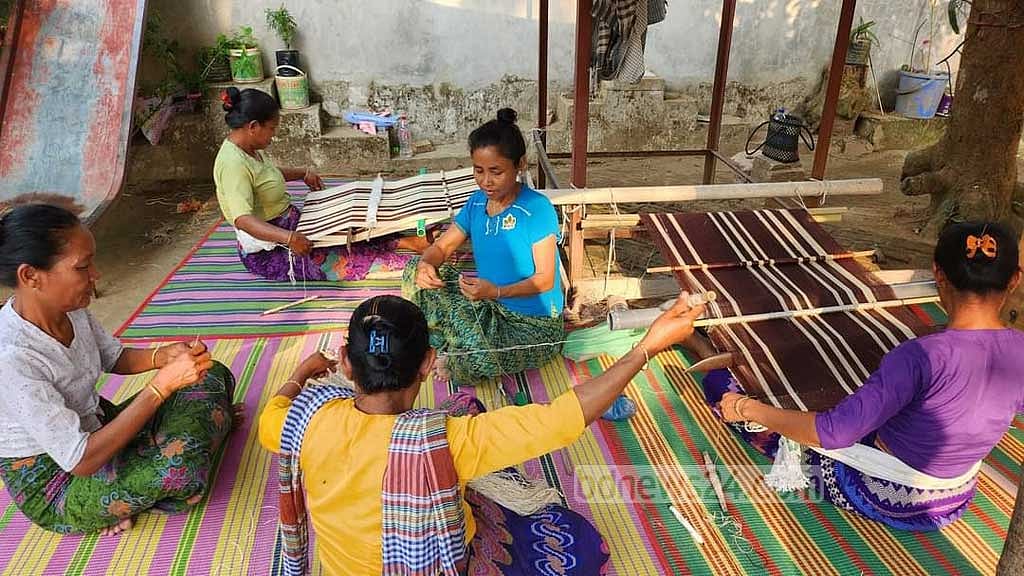
There are, however, still some kinks to figure out, DC Yasmin said.
“The thread from the bark of the banana plants is not as smooth as regular thread we find from cotton. Locally, we are trying, but further research is required to make it as smooth as cotton thread,” she said.
The DC said she had already written to the Bangladesh Ministry of Textile and Jute to take up the research work.