


Published : 11 Dec 2016, 02:26 AM
Updated : 19 Oct 2022, 05:35 PM


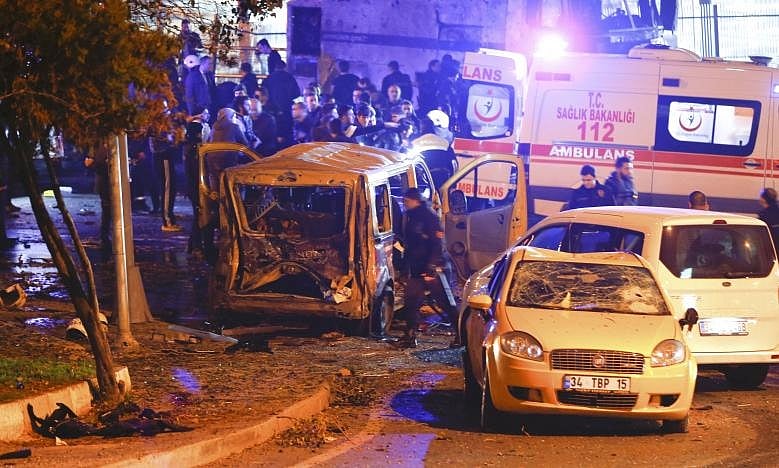
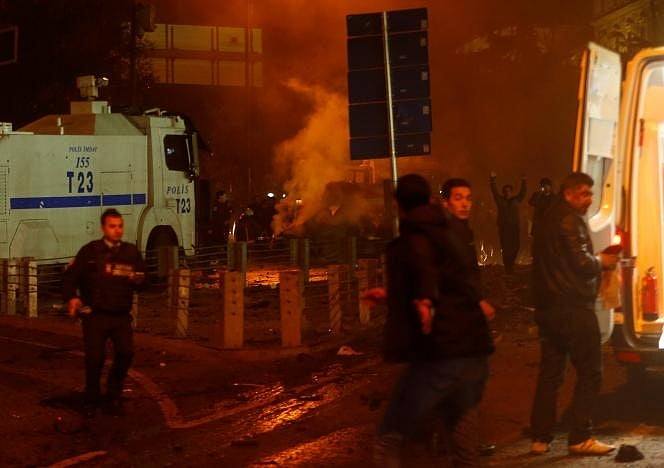
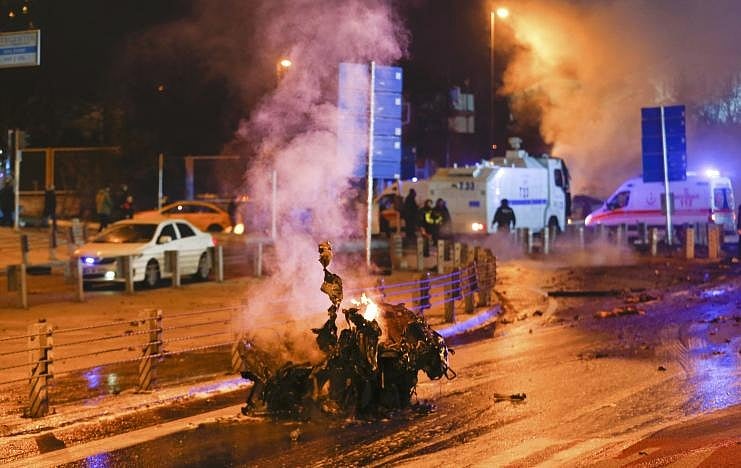
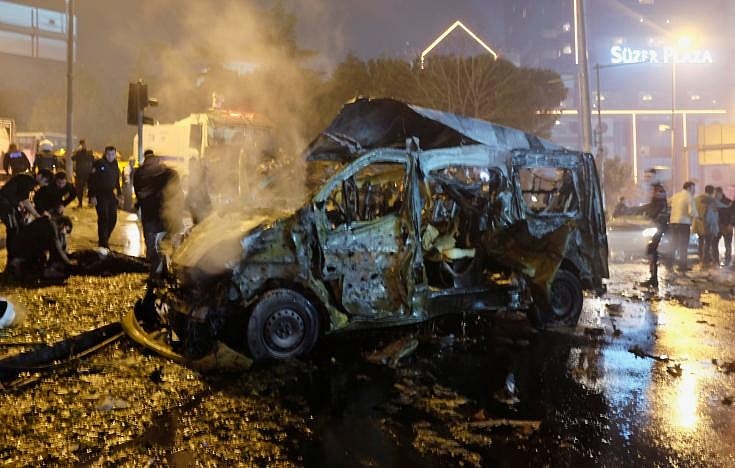
First a car bomb exploded outside the Vodafone Arena, home to Istanbul's Besiktas football team, leaving flaming wreckage on the street. Forty-five seconds later, a suspect wearing explosives detonated them while surrounded by police in an adjacent park, Deputy Prime Minister Numan Kurtulmus told a news conference.
Turkish Interior Minister Suleyman Soylu said that Kurdish militants were believed to be responsible for the attacks.
"According to the latest information we have received, 38 of our nation's children have reached martyrdom after last night's cruel attack," he said. Seven of the victims had been civilians and one had yet to be identified.
President Tayyip Erdogan described the blasts as a terrorist attack on police and civilians. He said the aim of the bombings, two hours after the end of a match attended by thousands of people, had been to cause the maximum number of casualties.
"Nobody should doubt that with God's will, we as a country and a nation will overcome terror, terrorist organisations ... and the forces behind them," he said in a statement.
The attack shook a football-mad nation still trying to recover from a series of deadly bombings this year in cities including Istanbul and the capital Ankara, some blamed on the Islamic State jihadist group and others claimed by Kurdish militants.
"It was like hell. The flames went all the way up to the sky. I was drinking tea at the cafe next to the mosque," said Omer Yilmaz, who works as a cleaner at the nearby Dolmabahce mosque, directly across the road from the stadium.
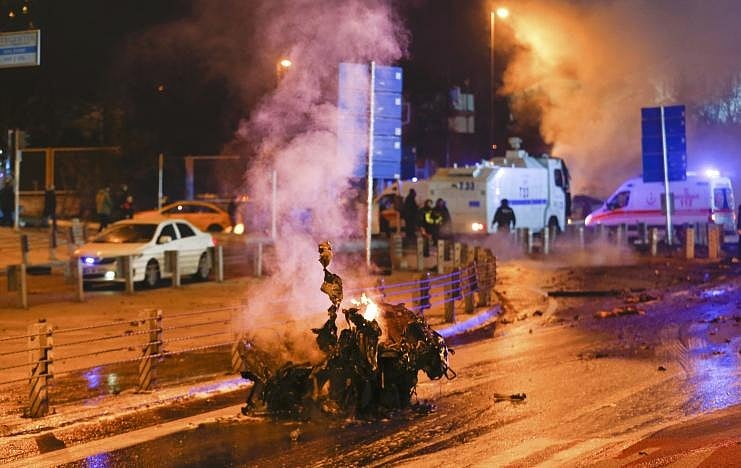
Police arrive at the site of an explosion in central Istanbul, Turkey, December 10, 2016. Reuters
Turkey is a member of the NATO military alliance and part of the US-led coalition against Islamic State. It launched a military incursion into Syria in August against the radical Islamist group. It is also fighting a Kurdish militant insurgency in its own southeast.
Victims mainly police
At an earlier press conference Interior Minister Suleyman Soylu had said the first explosion, which came around two hours after the end of the match between Besiktas and Bursaspor, was at an assembly point for riot police officers. The second came as police surrounded the suicide bomber in the nearby Macka park.
Two of those killed in the blasts were civilians, he had said. The other 27 were police officers, including a police chief and another senior officer. He said 17 of the wounded were undergoing surgery and another six were in intensive care.
A damaged vehicle is seen after a blast in Istanbul, Turkey, Dec 10, 2016. Reuters
A Reuters photographer said many riot police officers were seriously wounded. Armed police sealed off streets. A police water cannon doused the wreckage of a burned-out car and there were two separate fires on the road outside the stadium.
Bursaspor said none of its fans appeared to have been injured. Both it and Besiktas condemned the bombings.
"Those attacking our nation's unity and solidarity will never win," Sports Minister Akif Cagatay Kilic said on Twitter. Transport Minister Ahmet Arslan, also writing on Twitter, described it as a terrorist attack.
NATO Secretary General Jens Stoltenberg condemned what he described as "horrific acts of terror", while European leaders also sent messages of solidarity.
The United States condemned the attack and said it stood with its NATO ally.
The bombings come five months after Turkey was shaken by a failed military coup, in which more than 240 people were killed, many of them in Istanbul, as rogue soldiers commandeered tanks and fighter jets in a bid to seize power.
Istanbul has seen several other attacks this year, including in June, when around 45 people were killed and hundreds wounded as three suspected Islamic State militants carried out a gun and bomb attack on its main Ataturk airport.












