


Published : 06 Jul 2019, 02:23 PM
Updated : 17 Oct 2022, 11:42 AM


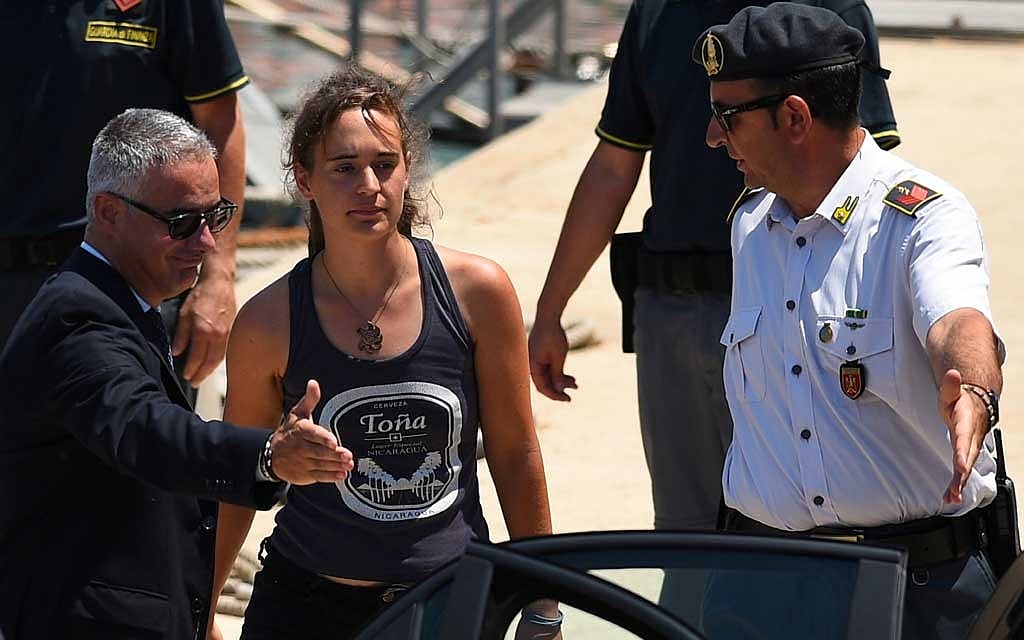
By docking after being told she should not, she had firmly landed in the sights of Italy’s powerful, nationalist interior minister, who described the event as an “act of war.” And then she was immediately arrested by the police.
But Rackete, 31, said she had been thinking about her passengers. “I was concerned for safety of the people who we had rescued,” she said in a telephone interview Friday. “That was always the first priority in all the decisions that we made.”
Because she could not guarantee their safety, she added, “I decided to bring them to shore.” The captain has since been freed by a judge, although prosecutors are still investigating.
Although it may not have been her intention, when Rackete rescued dozens of migrants off the coast of Libya on Jun 12 and set course toward Lampedusa, she sailed straight into a political maelstrom over migration that has been dividing Italy and much of Europe.
The debate has pitted the humanitarian rescue ships that operate in the Mediterranean against Italy’s government, whose hard-line interior minister, Matteo Salvini, has built his career on anti-migrant policies and a strategy of closed ports.
The vessel, the Sea Watch 3, was the latest of a long line of confrontations.
In June 2018, the ship Aquarius was denied access to Italy and forced to sail to Valencia, Spain, with 630 migrants onboard. Since then, about 19 sea rescue missions — involving nongovernmental ships but also commercial and military vessels — have been blocked from Italian ports, keeping “more than 2,500 people blocked at sea for an overall period of 165 days,” according to Marco Bertotto, of Doctors Without Borders Italy, who spoke to reporters in Rome this past week.
“The only effect has been to produce useless suffering to men, women and children already tried by the harsh conditions they experienced in Libya,” he added. The restrictions have been a disincentive to ships to carry out maritime rescues.
Rackete — who has done stints as a nature conservationist in the Arctic and Antarctic, and has a master’s of science degree in conservation management from Edge Hill University in England — fell afoul of Salvini’s most recent legislative victory, a decree that criminalises rescue boats that enter into Italian territorial waters.
The decree includes fines of up to 50,000 euros, or about $56,000, and the impounding of trespassing ships.
Rackete said Italian officers boarded her ship, which is German-owned but flies a Dutch flag, to hand her a paper copy of the decree.
That did not deter her from sailing to Lampedusa. She docked on the island after a 16-day wait for Italian officials to give her authorisation to land. The standoff had dampened the hope and frazzled the nerves of the 40 migrants onboard and had exhausted the 22 crew members.
It was a memorable landing. The Sea Watch 3 sailed into port and collided with a border patrol vessel next to the dock.
As she descended from the ship, Rackete was greeted with some cheers but also boos, cries of “criminal” and “sellout,” and the expressed hope that she would be raped.
The authorities said the Sea Watch’s collision with the patrol vessel had put the lives of officers at risk. Rackete’s lawyer said that she had not seen the patrol boat and that she had apologised to officials.
As of Friday, the migrants from the Sea Watch were in Sicily, waiting to be sent to the five European nations that said they would take them in.
While on board, and later under house arrest, Rackete said she was oblivious to “the huge reaction this case has caused.”
But, she acknowledged, “Stories are easier to tell if there’s a face you can put to them.”
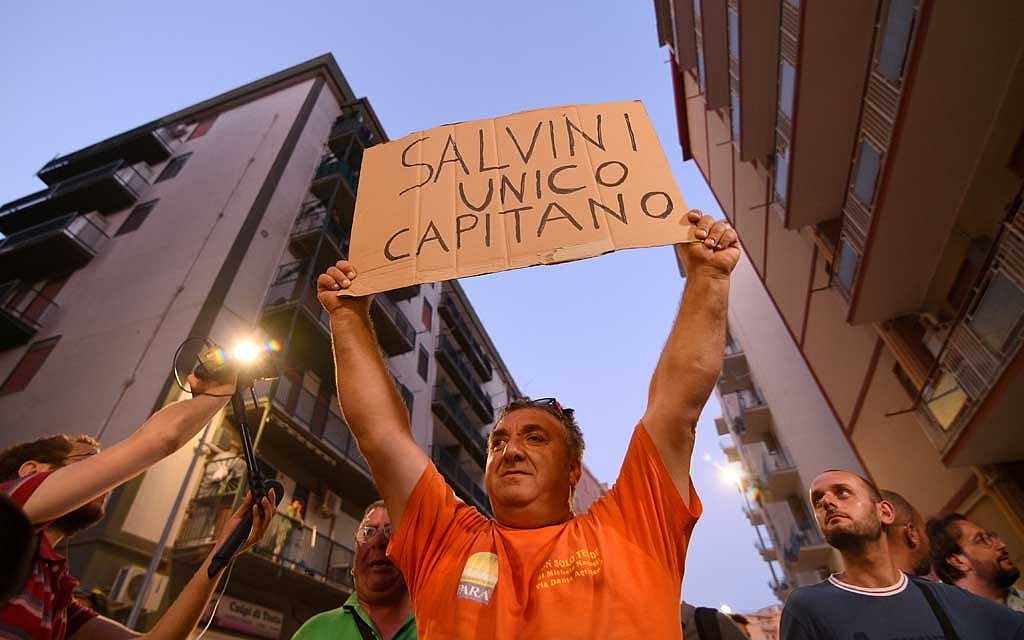
Italian newspapers had seized on the standoff, and on the coincidence of Salvini’s nickname — “Il Capitano.” Headlines pitting him against “La Capitana” abounded.
Despite Salvini’s decree criminalising the rescue boats, he has said migration is down.
In Parliament on Wednesday, Salvini said arrivals by sea had dropped 84% from last year, and 97% from 2017, part of a broader decline of migration to Europe.
According to the Interior Ministry, fewer than 3,000 migrants have arrived in Italy by sea this year.
Of the 70.8 million forcibly displaced persons worldwide, only a small fraction arrive in Italy and elsewhere in Europe, noted Filippo Miraglia of the Arci Association, one of several nongovernmental groups that deal with migrant and refugee issues. “There is no emergency,” he said.
Some of Salvini’s critics argue that his measures, by denying migrants legal status in Italy, have driven many of them underground.
“Matteo Salvini will go down in history as the minister of clandestine immigration,” wrote Tito Boeri, the former head of Italy’s social security agency in Rome, in the daily La Repubblica on Friday. The number of irregular migrants in Italy is expected to top 700,000 in 2020, he wrote. “It’s never been so high.”
A sailboat belonging to the rescue organisation Mediterranea Saving Humans sailed to Lampedusa on Friday, asking to allow 54 rescued migrants to disembark. On Friday afternoon, 13 migrants, women and children, were taken from the boat to Italy, while negotiations continued for possibly taking the remainder to Malta.
Speaking to reporters in Rome this week, Alessandro Merz, owner of Mediterranea’s ships, said that with its immigration decrees, the Italian government was trying to “rewrite years of norms, laws and international conventions that ensured that at sea, people must be rescued.”
Rackete said that continued migrant tragedies, like a shipwreck off Tunisia this week that may have left as many as 80 people dead, were evidence “there is a need for rescue ships.”
Next week she will face another magistrate in Sicily, where she is under investigation for facilitating illegal migration. But she noted that in similar cases, charges have been thrown out. “So I am not worried,” she said.
For now, she has left Lampedusa and is keeping quiet about her whereabouts. She said she was feeling “very positive” about being released and hoped that the Sea Watch 3, which was seized by the authorities to look for evidence, would be returned, even though she would not be on it.
“My lawyers advised me to stay off ships while the investigation continues,” she said.
© 2019 New York Times News Service












