


Published : 16 Aug 2015, 10:34 PM
Updated : 19 Oct 2022, 06:54 PM


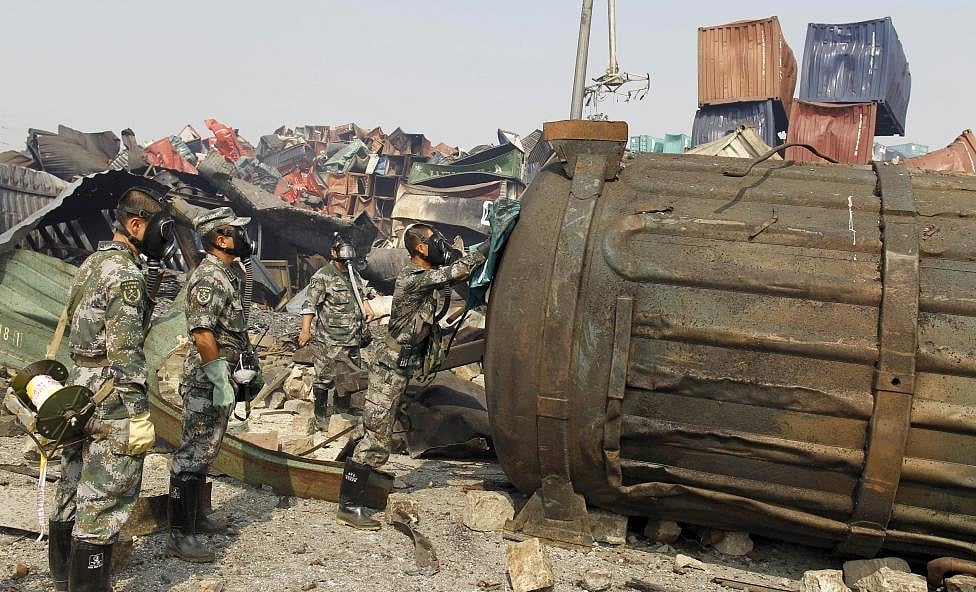
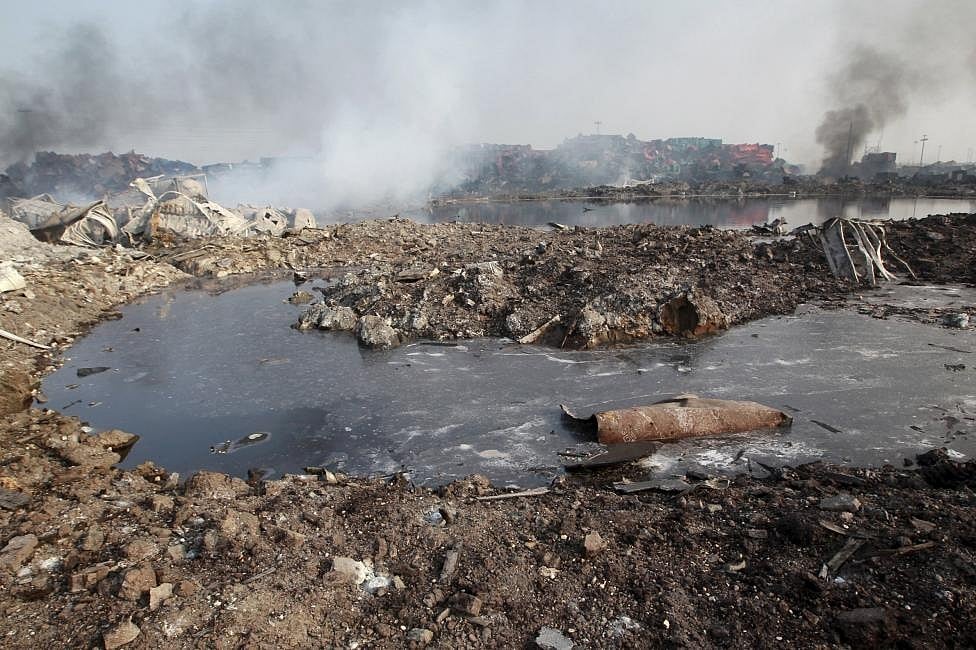
The goal is to clear the chemicals before any rain falls, which could create further toxic gas.
The death toll rose to 112 from Wednesday's disaster, which sent massive yellow and orange fireballs into the sky, hurled burning debris across a vast industrial area, crumpled cars and shipping containers, burnt out buildings and shattered windows of nearby apartments.
The number of missing rose to 95, most of them fire fighters, state media said, suggesting the toll would rise significantly.
More than 720 people remained in hospital.
Officials acknowledged the presence of toxins but said they posed no risk to people outside a two-km evacuation zone surrounding the blast area.
"I can responsibly say that there will be no secondary damage to the people," Shi Luze, the chief of staff of the People's Liberation Army's Beijing Military Region, told reporters, referring to people outside the zone.
Shi confirmed the presence of more than 100 tons of deadly sodium cyanide, stored at two separate sites.
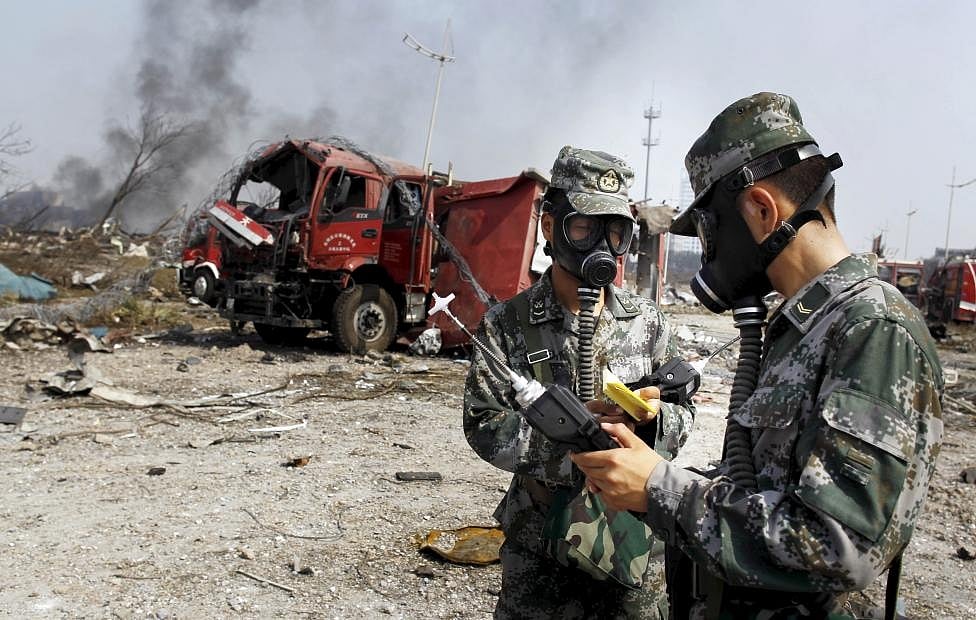
Soldiers of the People's Liberation Army anti-chemical warfare corps work next to a damaged firefighting vehicle at the site of Wednesday night's explosions at Binhai new district in Tianjin, China, August 16, 2015. Reuters
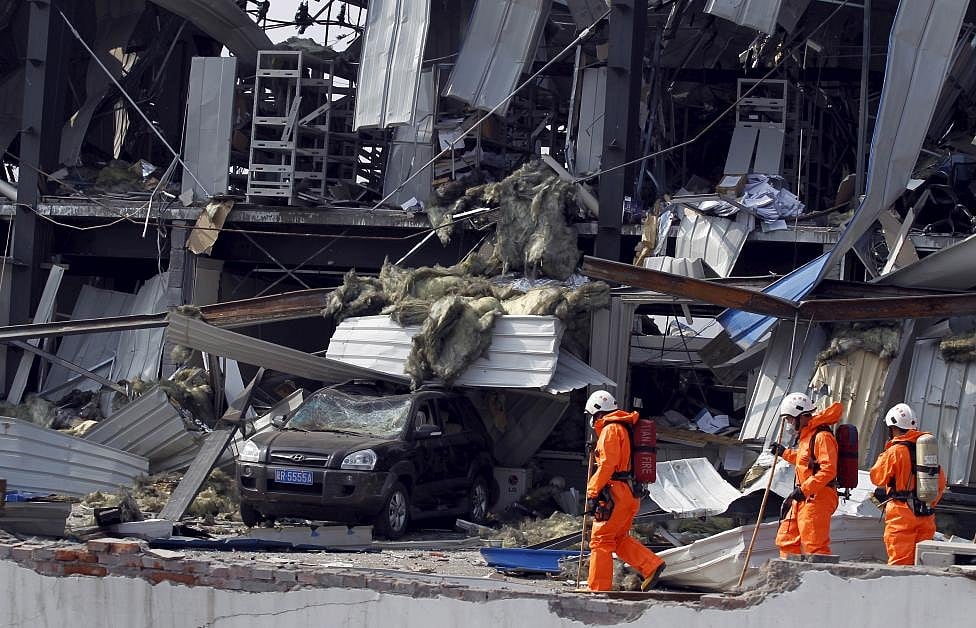
Firefighters in masks walk past debris as they work at the site of Wednesday night's explosions at Binhai new district in Tianjin, China, August 16, 2015. Reuters












