


Published : 09 Nov 2017, 03:51 PM
Updated : 19 Oct 2022, 03:50 PM


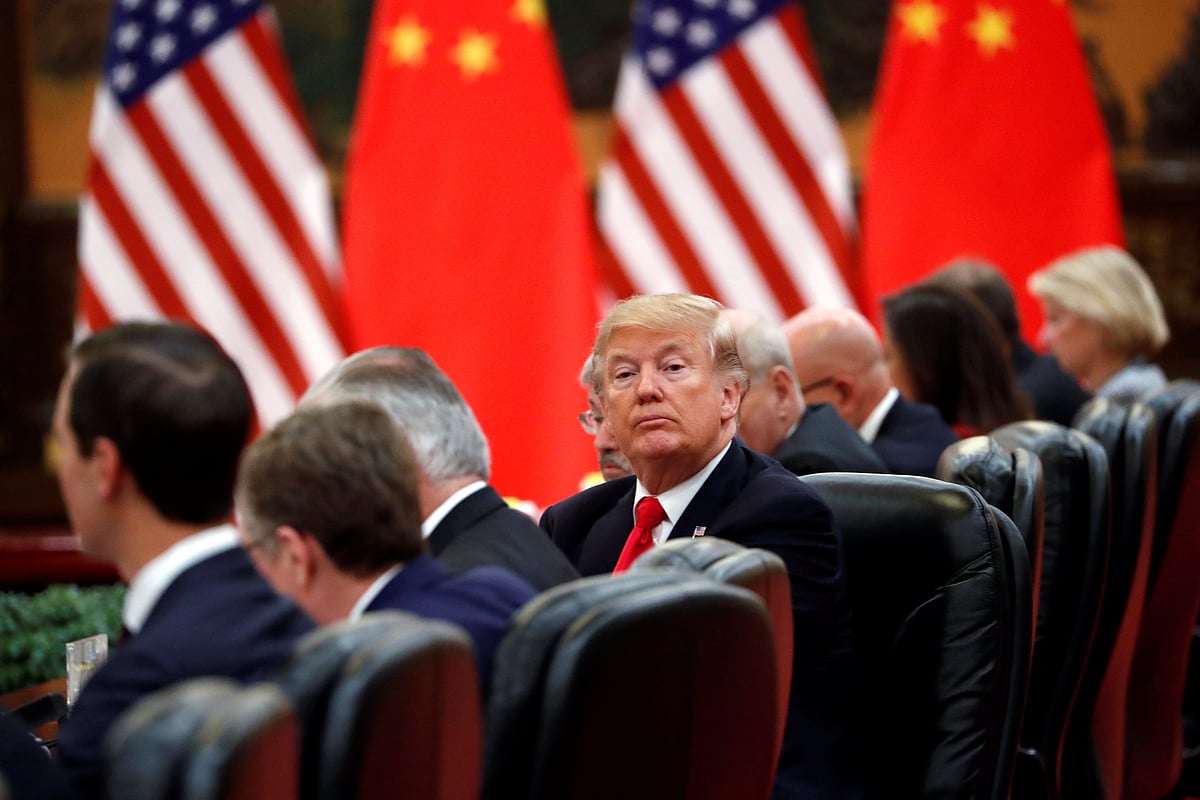
On North Korea's nuclear and missile programmes, Trump said "China can fix this problem quickly and easily", urging Beijing to cut financial links with North Korea and also calling on Russia to help.
Trump was speaking alongside Xi in the Chinese capital to announce the signing of about $250 billion in commercial deals between US and Chinese firms, a display that some in the US business community worry detracts from tackling deep-seated complaints about market access in China.
Xi said the Chinese economy would become increasingly open and transparent to foreign firms, including those from the United States, and welcomed US companies to participate in his ambitious "Belt and Road" infrastructure-led initiative.
Factbox: Business deals during Trump visit
Trump made clear that he blamed his predecessors, not China, for the trade imbalance, and repeatedly praised Xi, calling him "a very special man".
"But we will make it fair and it will be tremendous for both of us," Trump said.
Xi smiled widely when Trump said he does not blame China for the deficit and also when Trump said Xi gets things done.
"Of course there are some frictions, but on the basis of win-win cooperation and fair competition, we hope we can solve all these issues in a frank and consultative way," Xi said.
"Keeping opening up is our long-term strategy. We will never narrow or close our doors. We will further widen them," he said. China would also offer a more fair and transparent environment for foreign firms, including US ones, Xi said.
Modest progress
Trump is pressing China to tighten the screws further on North Korea and its development of nuclear weapons in defiance of UN sanctions. At least modest progress is hoped for, although there are no immediate signs of a major breakthrough, a US official said earlier.
Referring to Xi, Trump said: "I do believe there's a solution to that, as do you."
US President Donald Trump and China's President Xi Jinping hold bilateral meetings at the Great Hall of the People in Beijing, China, Nov 9, 2017. Reuters
"We are devoted to reaching a resolution to the Korean peninsula issue through dialogue and consultations," Xi said.
Briefing reporters after the talks, US Secretary of State Rex Tillerson said Trump told Xi: "You’re a strong man, I’m sure you can solve this for me."
Tillerson said both leaders agreed they could not accept a nuclear-armed North Korea but he acknowledged they had some differences over tactics and timing.
Tillerson pointed out that Trump, in a speech in Seoul, had "invited the North Koreans to come the table," in line with the Chinese desire for a negotiated solution. He added, however, that Trump was prepared for a "military response" if he deemed the threat serious enough, but "that's not his first choice".
"We are going to work hard on diplomatic efforts as well," he said, but did not elaborate.
In a show of the importance China puts on Trump's first official visit, Thursday's welcoming ceremony outside Beijing's Great Hall of the People overlooking Tiananmen Square was broadcast live on state television - unprecedented treatment for a visiting leader.
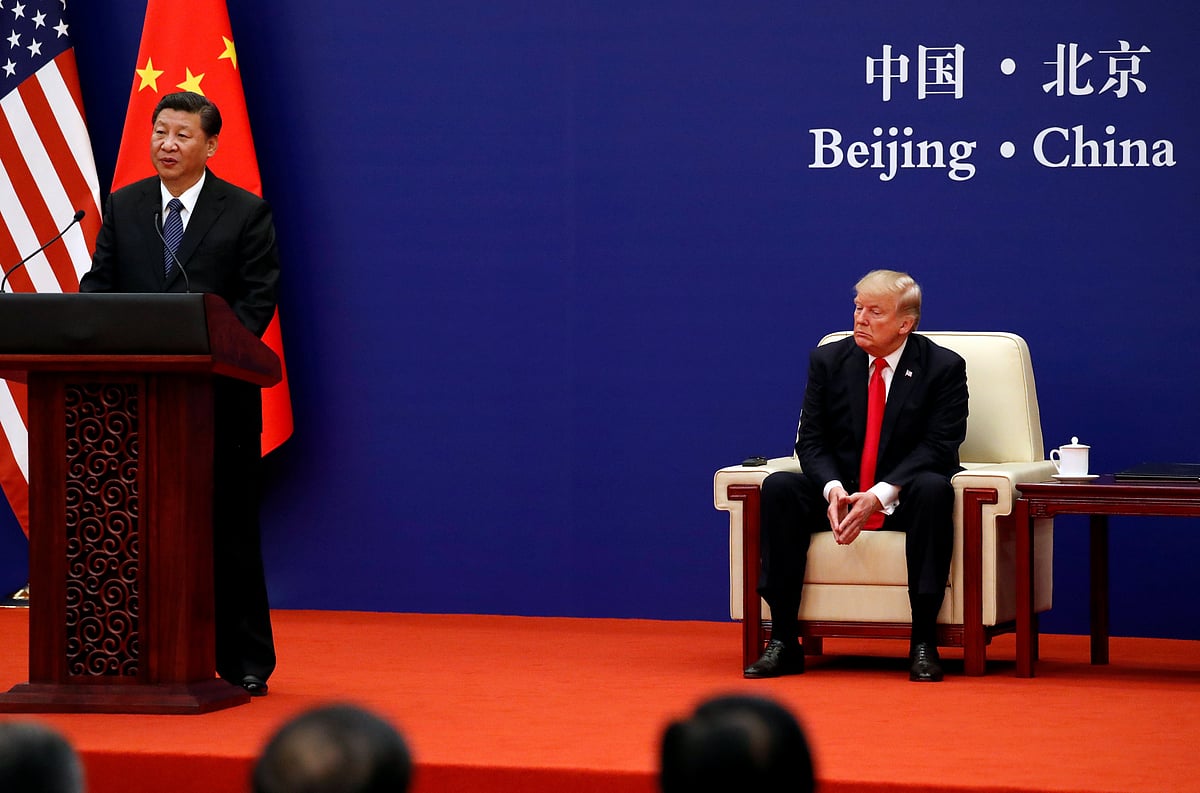
US President Donald Trump and China's Xi Jinping meet business leaders at the Great Hall of the People in Beijing, China, Nov 9, 2017. Reuters
"For China, cooperation is the only real choice, only win-win can lead to an even better future," he said.
Xi said China and the United States strengthened high-level dialogue on all fronts over the past year and boosted coordination on major international issues, such as the Korean peninsula and Afghanistan.
"Relations between China and the United States are now on a new historical starting point," Xi said.
Trump and Xi hit it off at their first meeting in April at Trump's Mar-a-Lago resort in Florida and continued their "bromance" on Wednesday with an afternoon of sightseeing together with their wives. However, divisions persist over trade and North Korea.
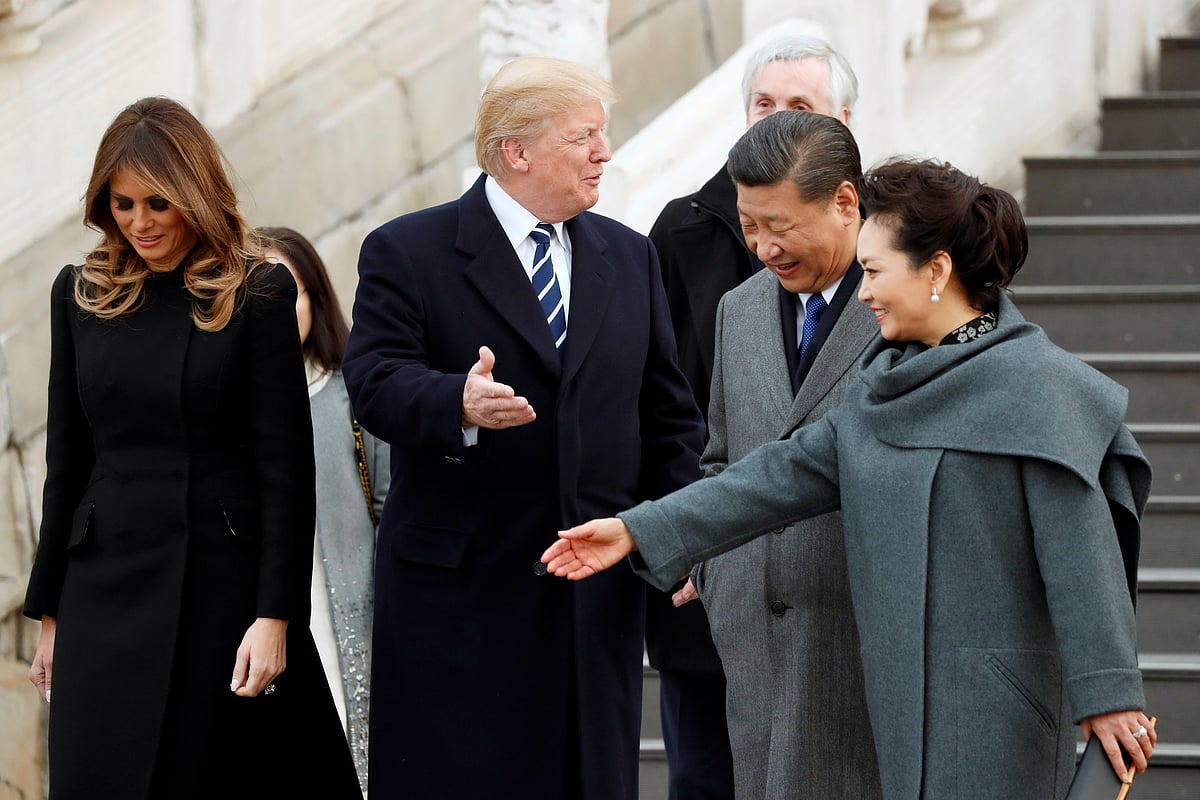
US President Donald Trump and First Lady Melania visit the Forbidden City with China's President Xi Jinping and First Lady Peng Liyuan in Beijing, China, Nov 8, 2017. Reuters
'Horrible' trade surplus
Trump has ratcheted up his criticism of China's massive trade surplus with the United States - calling it "embarrassing" and "horrible" last week - and has accused Beijing of unfair trade practices.
For its part, China says US restrictions on Chinese investment in the United States and on high-tech exports need to be addressed.
Several corporate chief executives were in Beijing as part of a delegation led by US Commerce Secretary Wilbur Ross, with General Electric and semiconductor maker Qualcomm Inc among those announcing billions of dollars in sales to China.
But Qualcomm's agreement to sell $12 billion worth of components to three Chinese mobile phone makers over three years is non-binding, and critics say such public announcements are sometimes more show than substance.
"This shows that we have a strong, vibrant bilateral economic relationship, and yet we still need to focus on levelling the playing field because US companies continue to be disadvantaged doing business in China," said William Zarit, chairman of the American Chamber of Commerce in China.
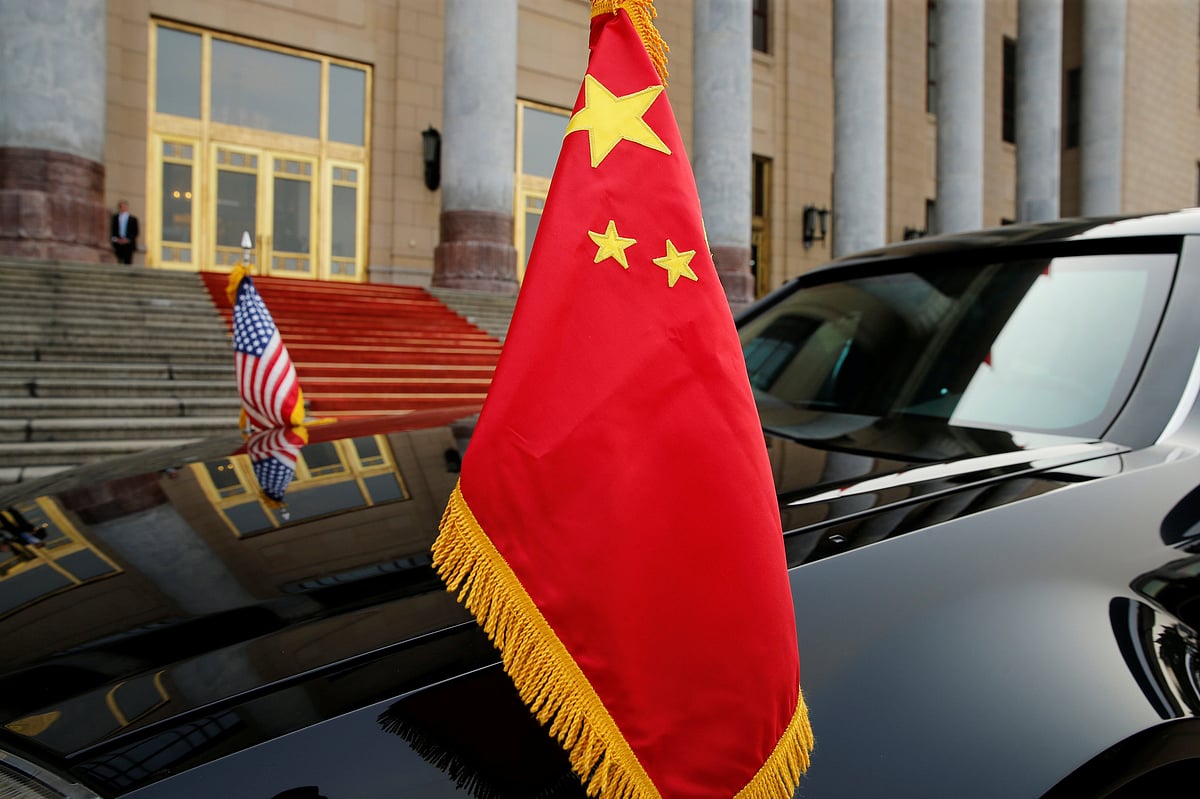
US President Donald Trump's limousine, flying US and China flags, waits for him to depart after a day of meetings and events with China's President Xi Jinping at the Great Hall of the People in Beijing, China, Nov 9, 2017. Reuters
A US official said both sides were "in sync" about wanting to minimise friction during the visit and recreate the positive tone of the April summit.
Trump was not expected to put much emphasis in his talks with Xi on thorny issues such as the disputed South China Sea and self-ruled Taiwan, claimed by China as its own, although the leaders' aides may deal with those matters privately, the official told Reuters, speaking on condition of anonymity.
China has repeatedly pushed back at suggestions it should be doing more to rein in North Korea, which does about 90 percent of its trade with China, saying it is fully enforcing UN sanctions and that everyone has a responsibility to lower tension and get talks back on track.












