


Published : 05 Feb 2020, 01:04 PM
Updated : 08 Apr 2022, 02:21 AM


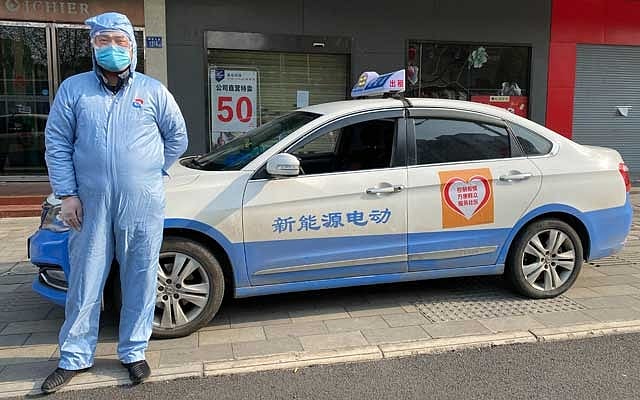
In his blue and white car, Zhang Lei is the rare sight on the streets of Wuhan.
During normal times, Zhang, 32, is a taxi driver in this Chinese city of 11 million at the epicentre of the outbreak. But after the local government abruptly locked down the city late last month, Zhang became one of the thousands of people who have volunteered to help ease the transportation woes.
Zhang, who wears a powder blue protective suit, face mask and goggles when driving, is not permitted to transport residents suspected of having the coronavirus. The ambulances are supposed to handle that. Most of his passengers are poor, elderly residents who don’t have children or whose family is outside Wuhan and can’t come home because of the quarantine.
“It’s heartbreaking,” he said. “There is no one to take care of them.”
The free rides are arranged by neighbourhood committees, which typically serve as a go-between for residents and the local government. In the current crisis, those committees are in charge of allocating community resources and helping coordinate with hospitals. There are about 1,000 neighbourhood committees in Wuhan, or one for every 11,000 people or so.
Like other drivers, Zhang doesn’t get paid. He shells out for gas, though he is confident the government will eventually issue subsidies to reimburse him.
Many Chinese have praised these volunteer drivers for donating their time and energy to help out their fellow residents. But Zhang, who has a broad face and a jovial demeanour, makes no effort to conceal the motivation behind his altruism.
“Boredom!” he exclaimed on a recent afternoon, when asked why he decided to volunteer for the job.
“Second, to serve the people,” he quickly added. “Everyone is cooped up at home all day so I may as well do something to contribute to society.”
The job is demanding, Zhang says. There are typically four drivers assigned to each neighbourhood, and many residents have said it is difficult to secure a ride. Some elderly patients have reported walking two hours just to get to the hospital. Zhang said the number of his rides per day varies.
Driving residents, including the sick, around the city comes with its own risks. Most residents these days are choosing to stay inside as much as possible. An eerie silence has blanketed this once bustling metropolis, punctuated only occasionally by the wail of an ambulance siren or a barking dog.
“Of course, we’re worried about getting infected,” Zhang said. “Our families are very worried about us, they don’t want us to leave the house.”
Zhang lives with his parents, wife and two children, ages 3 and 7. The village where he grew up outside of Wuhan recently sent him a notice urging him not to go back, saying he lived too close to the Huanan Seafood Market, where the virus is thought to have originated.
He said his village was being extra cautious because they have not yet had a confirmed case of the coronavirus.
“Someone like me is the most dangerous to them,” he said.
To ward off the virus, Zhang and other drivers say they shower when they go home, as well as disinfect their protective gear and car every day. His employer issues them face masks — though not the best kind, Zhang is quick to point out.
Channelling the spirit of taxi drivers worldwide, Zhang has no shortage of commentary on what the government could do better.
Many volunteer drivers say they have only one protective suit and a few pairs of glove that don’t even fit very well. And that wasn’t even the worst of it.
“At least they could give us something to eat,” he grumbled. “We’re always seeing reports about this donation and that donation, but we front-line workers haven’t seen any of it. It’s just instant noodles every day.”
c.2020 The New York Times Company












