


Published : 20 May 2018, 09:55 AM
Updated : 19 Oct 2022, 02:12 PM


Flags flew at half-mast in Cuba on Saturday, marking the start of two days of national mourning while authorities worked to recover evidence from the site of the crash and to identify the crash victims.
Fifteen have been identified so far and one black box retrieved, officials said.
Allegations of previous safety complaints against the little-known Mexican company called Damojh that leased the nearly 40-year-old Boeing 737 to Cuban flagship carrier Cubana also began to surface.
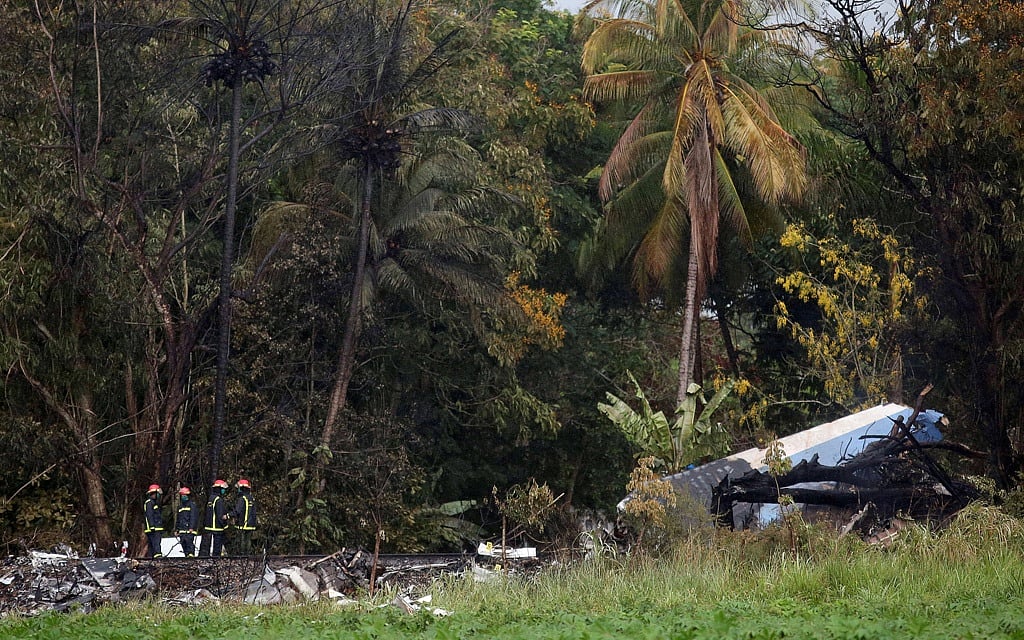
Firefighters work at the wreckage site of a Boeing 737 plane that crashed in the agricultural area of Boyeros, around 20 km (12 miles) south of Havana, shortly after taking off from Havana's main airport in Cuba, May 18, 2018. Reuters
Meanwhile, Cuban authorities told a news conference on Saturday at Havana airport that 99 of the passengers killed on the domestic flight to the eastern city of Holguin were Cuban, while three were foreign tourists - two Argentines and a Mexican - and two were Sahrawi residents in Cuba.
Six Mexican crew members were also killed.
Ten Nazarene pastoral couples returning home after a retreat were among the victims, the Cuban Nazarene Church said.
Three Cuban women survived the crash, but are still in critical condition, said the head of the hospital where they are being attended.
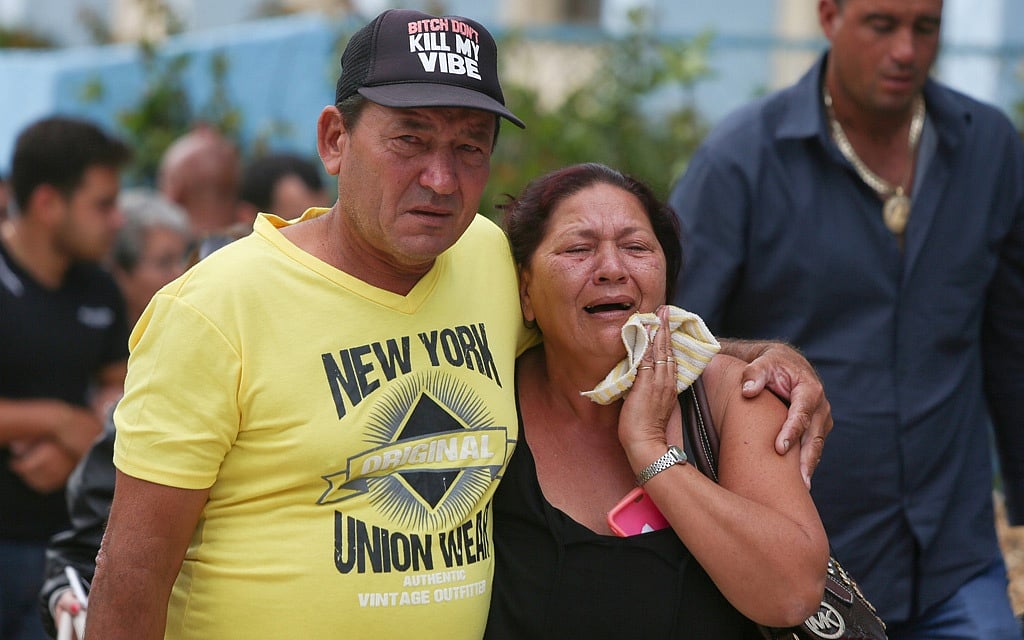
"My daughter is a fighter, she's strong, she'll save herself," said Amparo Font, the mother of 23-year-old survivor Gretel Landrove, with a trembling voice and tears welling.
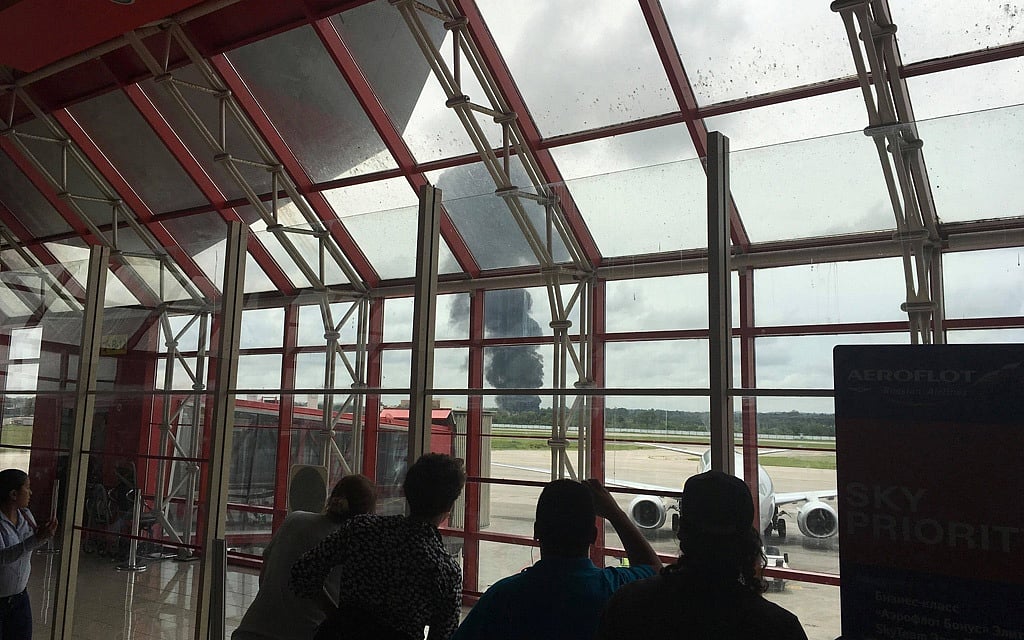
People watch as smoke rises from the site where a plane crashed shortly after taking off from Havana, Cuba, May 18, 2018, in this photo in obtained from social media. Scott Paton/via Reuters
Her 60-year-old grandmother was among the dead, and she was waiting with other relatives of the deceased at a Havana hotel for an update from authorities.
President Miguel Diaz-Canel on Saturday visited the morgue, a day after reviewing the site of the crash, which is the first big test of his presidency after taking the reins from Raul Castro last month.
Some locals who saw the crash say one of the engines appeared to have caught fire before the plane hit the ground.
"The plane was on fire, it flipped and then nosedived," said farmer Marino Perez Alvaredo.
RECORD OF SAFETY COMPLAINTS?
Cubana leased the jet less than a month ago, Transport Minister Adel Yzquierdo said on Saturday. The carrier was struggling to meet demand for flights and was serving many domestic routes by bus instead.
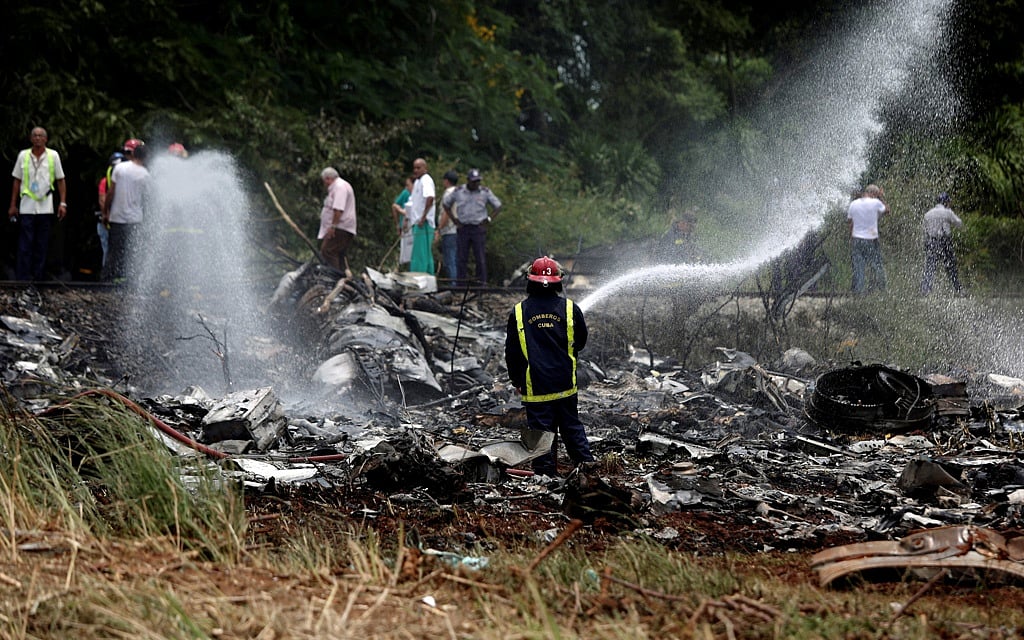
A firefighter works in the wreckage of a Boeing 737 plane that crashed in the agricultural area of Boyeros, around 20 km (12 miles) south of Havana, shortly after taking off from Havana's main airport in Cuba, May 18, 2018. Reuters
Ovidio Martinez Lopez, a retired Cubana pilot, wrote in a widely-shared post on Facebook that Cuban airlines had leased planes from Damojh in 2010 and 2011, but one of its aircraft dropped off the radar while over the city of Santa Clara.
Cuban officials suspended the captain and co-pilot of that flight for "problems and serious lack of technical knowledge," he said, and Cuba's aviation security authority had recommended Cubana no longer lease from them.
Separately, a pilot who used to work for Damojh was quoted on Saturday by Mexican newspaper Milenio criticizing the company for lack of adequate maintenance of planes.
"I experienced several incidents at this company, like engine failure or the electrical system went when we took off from Mexico on one occasion," Marco Aurelio Hernandez was quoted as saying.
Cuban investigators have so far recovered the cockpit voice recorder in "good condition," Yzquierdo said, and are still looking for the flight data recorder.
The crash was the worst in Cuba since a Soviet-built Ilyushin-62M passenger plane crashed near Havana in 1989 killing all 126 people on board and another 14 on the ground.
"For the love of god, I never thought I would see this," said Caridad Miranda, 45, whose sister and niece died in the crash.
"They should have checked that plane well."












