


Published : 05 Jul 2020, 10:49 AM
Updated : 08 Apr 2022, 02:36 AM


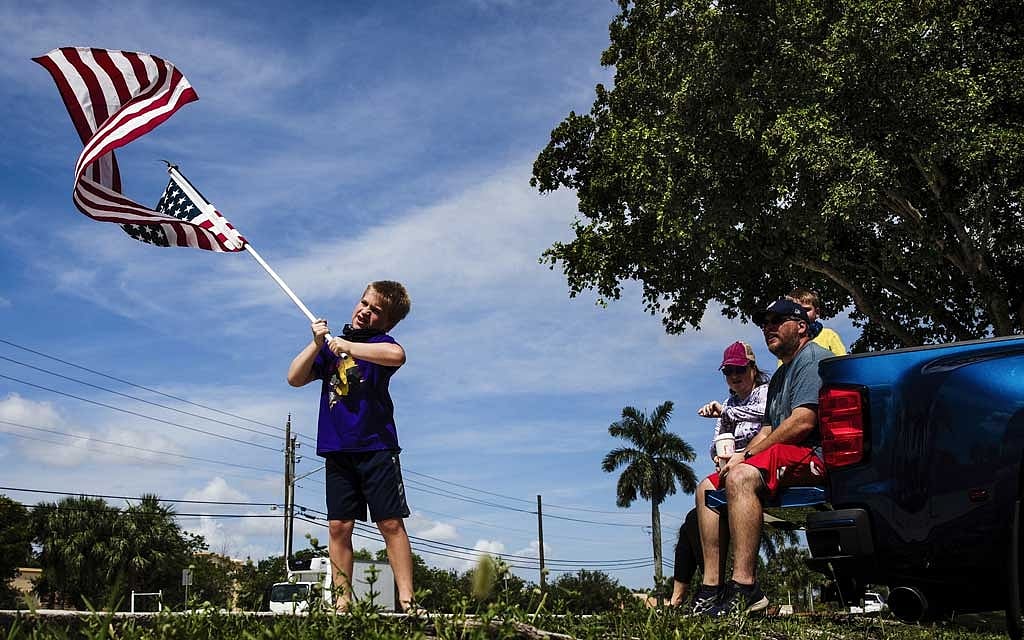
Fireworks shows were cancelled, bars in dozens of cities were shuttered, and many Americans scratched their plans to visit family members or beaches in favour of smaller celebrations at home. Coronavirus cases have risen steeply in recent weeks, and more cases were reported Thursday and Friday, leading into the holiday weekend, than on any other days in the pandemic.
Still, some ploughed ahead with planned parties and travel, ignoring the warnings of public health officials to avoid large gatherings. And some traditions lived on, with modifications. The famed hot dog eating contest was still held in Coney Island in New York, but contestants were separated by barriers as they devoured dozens of hot dogs. In Washington, D.C., an annual fireworks show put on by the federal government proceeded, despite protests from the city’s mayor.
People also joined large protests that have become a weekend mainstay after the police killing of George Floyd in Minneapolis in May and ramped up again Saturday, with demonstrations in Philadelphia, Chicago, Washington and elsewhere.
A combination of factors that in other years would be seen as even more reasons to celebrate — Independence Day falling on a Saturday, beautiful weather across the United States and low gas prices — instead caused concern for those who monitor the virus. Experts were worried that many Americans, weary after months of isolation, might decide to flout warnings just as the outbreak was getting worse in many states.
“Now we have this fatigue when the cases are shooting up,” said Dr Sarita Shah, a professor of epidemiology at Emory University. While Shah said there were safe ways to celebrate the holiday, particularly outside, she said she was worried that people would not be careful enough. “I worry that when it’s a holiday, when there’s alcohol involved, when there are large crowds, we can let our guard down.”
Margaret DeStefano, 88, usually hosts a barbecue each year for her family and friends in Charleston, South Carolina, but because of the coronavirus, she decided instead to attend a ceremony commemorating the first reading of the Declaration of Independence in Charleston, along with her boyfriend and about 100 other people. She said she felt lucky that, unlike her popular barbecue, the ceremony was still held this year despite the virus.
“It gives me freedom,” DeStefano said of the Declaration of Independence. “That’s what we live by.”
In Miami, Los Angeles and other coastal cities, pristine beaches sat largely untouched on a day when families usually flock to them. This year, though, many mayors ordered beaches closed, hoping to keep revellers away.
Even as the sun heated Galveston, Texas, to 93 degrees, the city’s 33 miles of slim beach remained mostly vacant.
“It’s just surreal,” said Chief Peter Davis of the Galveston Island Beach Patrol. “In all the years I’ve been here, I’ve never seen the beaches empty on the Fourth of July.”
A small group of protesters also assembled on the beach Saturday to protest the closure, carrying signs that read “Beach Lives Matter” and “Stop Government Overreach.” Most of the protesters went without masks, and a handful of them ventured into the water.
Fireworks shows were also limited in Texas and elsewhere. El Paso County prohibited residents from selling or lighting fireworks over the weekend, and Los Angeles County banned all firework shows.
Still, some Independence Day celebrations continued.
At a parade in Eagar, Arizona, near the New Mexico border, sidearms far outnumbered masks. For more than a century, the city has observed the holiday with a raucous parade, and Mayor Bruce Hamblin declared that it would go on this year, even as other nearby towns, mindful of Arizona’s soaring coronavirus numbers, cancelled theirs.
Residents cheered as floats made up of flatbed trucks, flame-spewing hot rods and a blond cowboy-hatted parade queen passed by.
“Got to die of something,” said Bruce Benge, a corrections officer who lives in nearby Pinetop and who left his mask on the front seat of his Ford pickup truck, which he had festooned with a Trump 2020 flag. “If I feel threatened, I’ll put it on.”
On the truck’s back seat was his assault-style rifle, and in a holster on his hip was a handgun with an extra magazine. Benge said he had heard that people who associate with antifa might turn up to disrupt the parade, and he had thus brought extra ammunition.
In Washington, federal officials planned a 35-minute show for Saturday night, the 2020 Salute to America, at which they said more than 10,000 fireworks would be set off shortly after 9 p.m. The celebration, which was also set to include flyovers of military planes, moved forward even as the city’s mayor urged people to avoid large crowds.
In Austin, Texas, more than 100 protesters rallied outside the Texas governor’s mansion against Gov. Greg Abbott’s order requiring face coverings, dubbing their gathering Shed the Mask, Don the Flag.
Debbie Esparza, 67, drove from San Antonio to take a stand against what she called a threat “to our civil liberties.” She did not wear a mask, saying she was not afraid of the virus.
“I’m not worried,” Esparza said. “I’m extremely healthy.”
Others altered their traditional celebrations in response the increased focus on racism in America that followed the killing of Floyd, saying that it felt as if the country was not worthy of celebrating.
For more than 20 years, Kayla Nelson’s family has been gathering on the Fourth of July in Prospect Park in Brooklyn, New York. But this year, Nelson, 17, said her family was hesitant to give off the impression they were satisfied with the current state of the country.
“I want to make it crystal clear that we’re not celebrating Fourth of July,” Nelson said, adding that she had brought the flag of Grenada, instead of the U.S., to the park this year.
In Manhattan, about 1,000 people gathered at Madison Square Park for another of the hybrid rallies and marches that have crisscrossed New York and scores of other cities since Floyd’s death.
The significance of the date wasn’t lost on anyone present. Some held signs that said: “Cancel July 4th. Amplify Black Voices.”
Justin Withers, 23, of Brooklyn, moved through the crowd in a red safety vest that marked him as one of the march’s organizers. He carried a bullhorn and said he didn’t see cause to celebrate the fact that the resurgent Black Lives Matter movement has now been around long enough to mark the country’s birthday.
“We want it to end, but in order for it to end, we have to have real change,” Withers said. “So if anything, I’m ashamed we’ve reached the Fourth of July and America is still in the state that it’s been in.”
The decline in the number of celebrants this year was also frustrating to some who had hoped to turn a profit over the holiday weekend. Naye Bahia, 20, an ice cream vendor, stood idle as she surveyed Prospect Park.
“Last year at this time, I would’ve sold at least 200 cups in two hours,” she said. “I haven’t even sold 100 cups so far.”
©.2020 The New York Times Company












