


Published : 26 Jul 2020, 02:50 AM
Updated : 17 Oct 2022, 11:10 AM


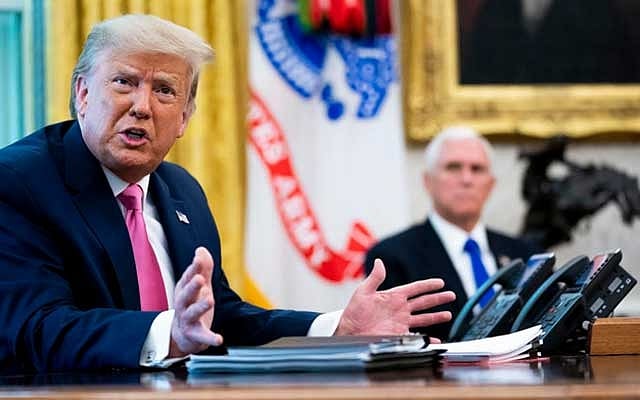
On Monday, Joe Biden suggested Trump was complicit in foreign meddling in the US political system, citing past overtures to Russia and Ukraine as he raised broader concerns about election interference.
On Tuesday, Trump raged baselessly on Twitter that voting by mail could “lead to the most corrupt election in our nation’s history.” And on Thursday, Biden suggested that Trump might “try to indirectly steal the election by arguing that mail-in ballots don’t work.”
Their comments, though on the overlapping theme of the election, are not comparable. Trump has long issued falsehoods about voter fraud, and even some Republicans said he appears to be seeking the option to question the legitimacy of an election outcome he finds unfavourable.
Even as Biden has consistently told voters about the threat he believes Trump poses to the country, he is now warning nearly as loudly about election interference, concerns that are rooted in intelligence community assessments and Trump’s own statements.
But the result — a series of extraordinary charges over the course of a week — amounted to the clearest sign yet that, nearly 100 days before Election Day, the presidential race is now not simply a fight over character, competence or even vicious personal attacks, but is also about one of the fundamental pillars of US democracy: free and fair elections, and faith in the outcome.
In their own sharply divergent ways, each presidential candidate sought to drive a narrative around the election’s legitimacy.
Trump claimed, without evidence, that mail-in voting leads to fraud and preemptively cast doubt on the credibility of the outcome, appearing to set up reasons to discount the results if he is unhappy with them, some government and campaign veterans said.
Biden, meanwhile, emphasised the threat of foreign interference with new fervour and warned in sharp and dramatic terms that his opponent might seek to disrupt the election.
A week of sounding the alarm on whether the electoral process is trustworthy started July 19, when Fox News aired an interview in which Trump declined to say whether he would accept the results of the election, echoing remarks he made in 2016.
“You don’t know until you see,” Trump said, asked if he was a “gracious” loser. “It depends. I think mail-in voting is going to rig the election. I really do.”
Pressed further on whether he would accept the results, Trump said, “I have to see.”
The comments shocked and alarmed veteran lawmakers and security experts.
“It’s stunning,” said former Sen. Carol Moseley Braun, D-Ill., adding that “the whole idea of our democracy is peaceful transfer of power.”
“I’ve never seen anything like it,” she continued. “This is totally divorced from any norms we’ve ever had in this country, ever.”
Chuck Hagel, who was a Republican senator from Nebraska before joining the Obama administration and serving as defence secretary, said Trump appeared to be “putting in doubt the legitimacy of our election on Nov. 3.”
“If that isn’t a very disturbing, clear signal that we may have a problem, I don’t know how much more of a blinking red light you need,” he said. “Safe, secure, fair, honest elections really is the holy grail of our democracy. If we can’t trust that or don’t believe in those results, we’re no better than Russia or China or Venezuela. We’re no better than any authoritarian government.”
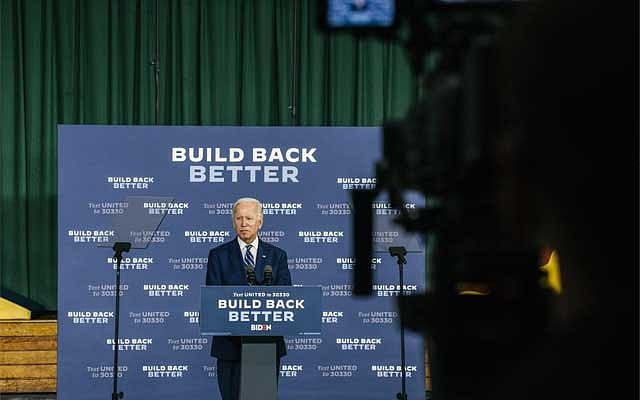
Former Vice President and presumptive Democratic presidential nominee Joe Biden speaks in New Castle, Del., July 21. Even as Biden has consistently told voters about the threat he believes President Donald Trump poses to the country, he is now warning nearly as loudly about election interference, concerns that are rooted in intelligence community assessments and Mr. Trump’s own statements. (Hannah Yoon/The New York Times)
“I regret that the president would try to undermine the legitimacy and question the outcome of the election based on some hypothetical abuse of absentee ballots” with “absolutely” no basis in history, said Ridge, a former Republican governor of Pennsylvania and a Trump critic. “When you listen to the president, you begin to wonder, is he more — is he worried about the legitimacy of the electoral process, or is he worried about losing?”
On Monday, Biden released one of his sternest warnings to date about foreign interference in the election. He has begun receiving intelligence briefings, he has said, and his advisers are on guard about potential meddling that could unfold in the homestretch of the campaign, as are some congressional Democrats who released a new warning Monday. This week four years ago, hacked Democratic emails were released into public view. And in July 2018, special counsel Robert Mueller indicted 12 Russian intelligence officers in the hacking of the Democratic National Committee and the Clinton presidential campaign.
“I am putting the Kremlin and other foreign governments on notice,” Biden said in the statement. “If elected president, I will treat foreign interference in our election as an adversarial act that significantly affects the relationship between the United States and the interfering nation’s government.”
At a fundraiser that night, he directly linked Trump to the issue.
“He knew full well of Russian involvement in the election in ’16,” Biden said. “He’s done nothing. He sought help — just like he sought help to get the Ukrainians to say things about me that weren’t true and got him impeached.”
Asked for comment, a spokesman for the Republican National Committee, Steve Guest, criticised the Obama administration’s record on confronting Russia and said Biden is making a “scurrilous accusation” against Trump.
The morning after Biden’s fundraiser, Trump was preoccupied with a different facet of elections.
“Mail-In Voting, unless changed by the courts, will lead to the most CORRUPT ELECTION in our Nation’s History!” he tweeted. “#RIGGEDELECTION.”
Voter fraud in the United States is exceedingly rare and was not an area of increased concern during the presidential primaries.
Some Republicans believe the president is right to focus on mail-in ballots, but not always for the false assertions of widespread fraud that he alleges. Rather, some are concerned about the logistics of the practice on what may be an unparalleled scale amid the pandemic. Dramatic increases in vote-by-mail in New York City, for example, did come with challenges in last month’s primary election.
“It’s not just the president,” said Lawrence Tabas, chair of the Republican Party of Pennsylvania. “There are thousands, thousands of people on both sides who have complained about mail-in ballot processes. It depends on what your state law is.”
Representatives for the RNC and the Trump campaign said in statements that they saw challenges with mail-in voting.
Guest, the spokesman for the RNC, expressed concerns about “chaos” from what he cast as a rushed, widespread vote-by-mail process, even though plenty of voters on both sides of the aisle have been voting by mail for years.
“Republicans want to make sure every valid vote is counted and our elections are free from interference, fair and transparent,” he said.
There are also many Republican officials and campaign strategists who strongly support voting by mail and are worried about the political consequences of Trump’s attacks on the process.
Biden campaign spokesman Andrew Bates referred to a news media report that noted the Trump campaign’s encouragement of absentee voting despite the president’s language. Trump’s efforts to “encroach on that sacred American right” are “abhorrent to the vice president,” he said.
Biden has argued for months that Trump may move to disrupt the election through any means necessary, culminating with his warning Thursday about the president “indirectly” stealing the election, and he has discussed in detail sweeping Democratic efforts aimed at voter protection.
He has also frequently raised the issue of foreign meddling in US elections.
But it was Monday, at the fundraiser, that Biden was most blunt about why he was growing increasingly vocal about threats to the election system, which he called a “violation of our sovereignty.”
“It’s going to be tough,” he said of confronting the issue of foreign interference. “There’s not much I can do about it now except talk about it.”
© 2020 The New York Times Company












