


Published : 03 Oct 2017, 03:37 PM
Updated : 11 Apr 2022, 09:21 PM


At present, the Taj Mahal alone attracts three million tourists a year. And the Taj and the Hindu holy city of Benaras are the only tourist attractions in India’s most populous state.
Worse still, the 17th century monument, known as one of the Seven Wonders of the World, and designated as a UNESCO Heritage Site in 1983, may suffer neglect and decay because the government considers it “unrepresentative of Indian culture”.
As per the Hindutwa ideology of the BJP, Islamic architecture and a mausoleum for a Muslim queen could not be part of “Indian culture.”
With air pollution from nearby factories and automobiles posing a continual threat to the mausoleum’s gleaming white marble façade, India’s Supreme Court had in 1998, ordered a number of anti-pollution measures to protect the building from deterioration.
Some factories were closed, while vehicular traffic was banned from the immediate vicinity of the Taj complex.
There is a possibility that these protective measures may not be implemented rigorously from now. That will lead to the decay of the monument. It is unlikely that the BJP-led central government in New Delhi will be eager to protect the Taj in view of the fact that the BJP Chief Minister of UP Yogi Adityanath has downgraded its importance.
The monument had been neglected earlier too. But Lord Curzon, the British viceroy of India from 1898 to 1905, had restored it at considerable cost.
The Taj Mahal became a major tourist attraction when tourism gained ground in the Indian sub-continent after India’s independence in 1947.
Today, the Taj Mahal alone attracts three million visitors a year. It is a must in the itinerary of foreign heads of state and government.
But with the BJP ruling in Uttar Pradesh and Delhi at the same time, it is doubtful if the Taj will be in the VVIP itinerary any more. This will affect the international publicity that the mausoleum has been getting from such visits.
While dropping one of the “Seven Wonders of the World” the new tourist booklet issued by the Uttar Pradesh government has included Mathura, Ayodhya and Gorakhpur.
Uttar Pradesh Chief Minister Yogi Adityanath, who is also the chief priest of the Gorakhnath Hindu temple, had recently criticised the custom of gifting replicas of the Taj Mahal to foreign dignitaries saying that the Taj does not represent Indian culture.
It is noteworthy that the Adityanath government did not include the Taj in the special section on “Our Cultural Heritage” in the State’s annual budget for 2017-2018.
The opposition Congress Party on Monday termed the omission of the Taj Mahal as a “joke as well as a tragedy.”
Congress spokesman Abhishek Sanghvi said: “How can you imagine tourism in Uttar Pradesh or India without Taj Mahal, I cannot understand. If it is indeed a booklet on tourism and excludes the Taj, it shows a clear religious bias which is completely misplaced. Such pettiness diminishes."
Legal action
Meanwhile, attempts had been made to establish, through legal action, that the Taj Mahal was previously a Hindu temple for Lord Shiva.
One PN Oak, calling himself a historian, had written a book entitled “Taj Mahal: The True Story”, in which he has argued that the Taj Mahal was originally a Shiva temple “Tejo Mahalaya” built by a Rajput King which was adopted by Shahjahan.
Oak approached the Supreme Court in 2000 to secure a declaration that the Taj Mahal was a Shiva Temple. However, the Supreme Court dismissively said that the Taj Mahal was ‘a bee in his bonnet’.
Several other Hindus had also taken the matter to the courts. Some cases have been dismissed but some are still pending. Some have taken recourse to the Right to Information Act (RTI) to get authentic information on the origins of the Taj.
The Central Information Commission, which answers queries under RTI, had directed the Union Culture Ministry to clarify whether the Taj Mahal is a mausoleum built by Shahjahan or a Shiva temple gifted to the Mughal emperor by a Rajput king. The Commission directed the Archaeological Survey of India (ASI) to share copies of the relevant documents.
According to History.com, the Taj Mahal was commissioned in 1632 by Shahjahan to house the remains of his wife, Mumtaz Mahal.
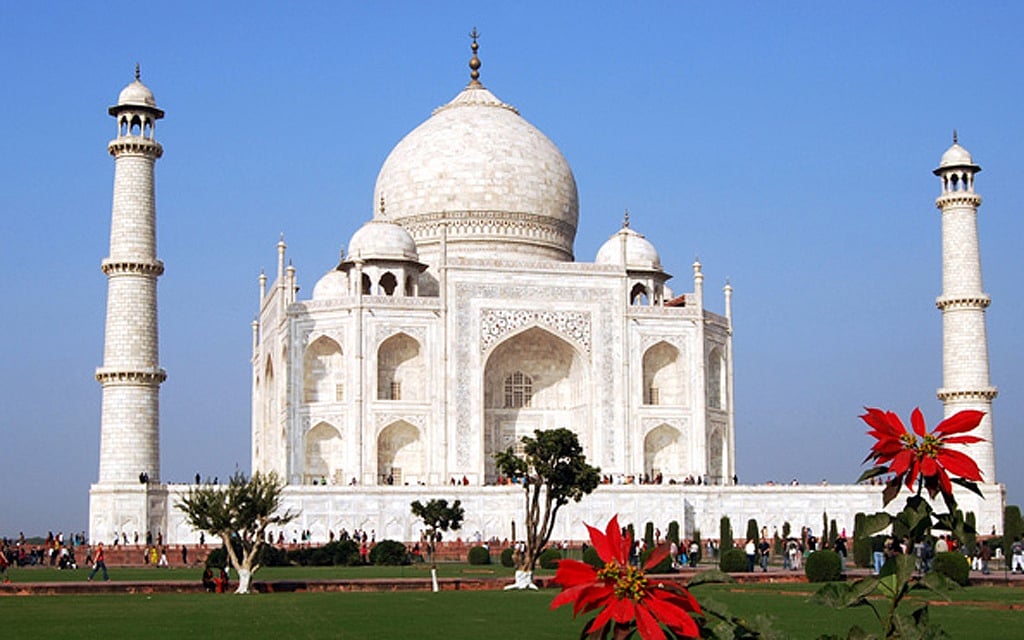
The Taj stands on the southern bank of the Yamuna River in Agra. The famed mausoleum complex, built over more than 20 years, is one of the most outstanding examples of Mughal architecture, which combined Indian, Persian and Islamic influences, the website said.
At its centre is the Taj Mahal itself, built of shimmering white marble that seems to change colour depending on the sunlight or moonlight hitting its surface.
“Designated a UNESCO World Heritage site in 1983, it remains one of the world’s most celebrated structures and a stunning symbol of India’s rich history.”












