Published : 02 Oct 2026, 04:06 PM
Updated : 02 Oct 2026, 04:06 PM


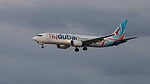
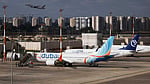
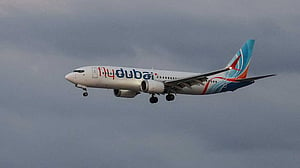
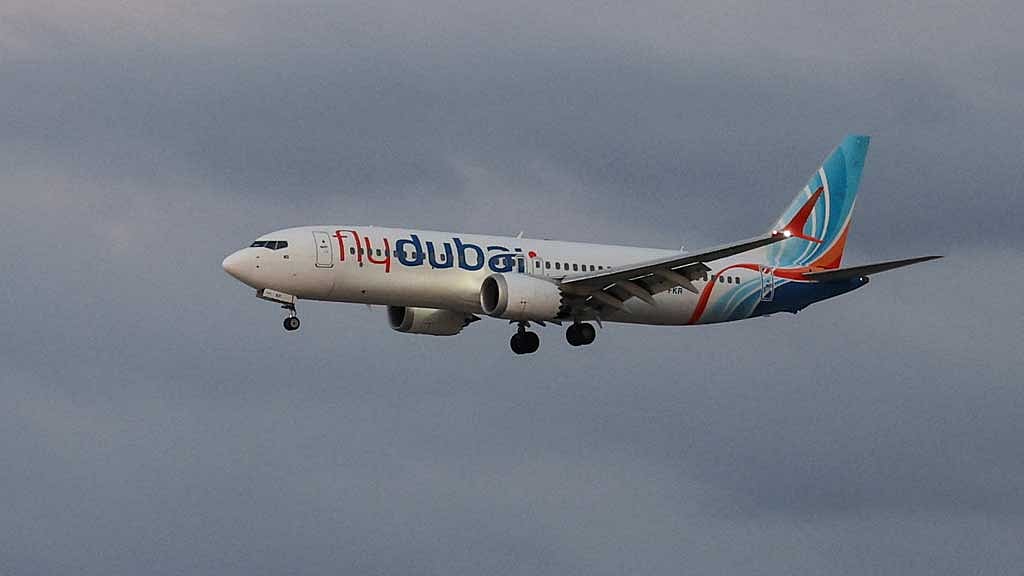
When flydubai flight FZ1073 suddenly lost more than half its cruising altitude over Saudi Arabia on Sept 30, there was little doubt that something extraordinary had happened aboard the aircraft.
Flight-tracking data recorded violent altitude changes. The aircraft transmitted first a general emergency code and then one signalling unlawful interference. Flydubai has confirmed an altercation on the flight deck, while Saudi Arabia says a preliminary investigation found that the co-pilot assaulted the captain.
What remains less clear is why it happened, precisely what occurred inside the cockpit and how much of the dramatic account that followed can yet be independently established.
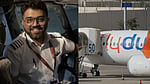
Israeli officials say the co-pilot attacked Captain Smit Machchhar and deliberately tried to crash the Boeing 737 MAX 8 carrying 174 passengers and eight crew members from Dubai to Tel Aviv. They say the wounded captain managed to release the cockpit door, allowing passengers to overpower the attacker before other flydubai crew travelling aboard took control and diverted the aircraft to Tabuk in Saudi Arabia.
Passengers have given accounts that support important parts of that version.
But the United Arab Emirates, which has jurisdiction over the UAE-registered aircraft, has not publicly concluded that the co-pilot intended to crash it. Its investigation is examining the circumstances and motive, including whether terrorism, prior planning or outside direction were involved.
Flydubai itself says the underlying reasons and motives remain unknown and has urged against premature speculation. The UAE General Civil Aviation Authority has similarly said investigators are still examining the operational and security circumstances.
That leaves several separate questions: What do the flight data establish? Do the most dramatic numbers being reported add up? What do passengers say happened? What do the circulating videos actually show? What have Saudi and Emirati authorities confirmed? And which parts of the developing account remain allegations or interpretations?
What The Flight Data Show
FZ1073 left Dubai at 03:05 GMT and climbed to 34,000ft.
At about 05:21, it began a steep descent, followed by a climb and another severe descent. Reuters reported that during one particularly violent segment the aircraft lost more than 14,000ft in less than 30 seconds.
Other reconstructions have produced strikingly different figures.
CNN, examining more granular tracking data, calculated a loss of more than 16,000ft in 35 seconds, with the aircraft's ground speed rising from about 460mph towards 700mph. The Financial Times described a drop of about 18,000ft over 90 seconds, while the Guardian reported a descent of about 17,000ft over roughly two minutes.
Those figures may in part reflect different tracking intervals and different portions of the same erratic sequence.
But one commercial pilot has questioned whether some of the most extreme numbers being circulated are physically plausible.
CNN asked Aaron Murphy, a Canadian commercial pilot and flight instructor, to recreate the reported descent in a Boeing 737 simulator.
As the simulated aircraft accelerated through an overspeed warning, Murphy said some of the early figures did not make sense to him.
"If you're descending that rapidly, the aircraft would have disintegrated completely," he said, adding that he expected the numbers to change when investigators released authoritative data.
That is not a minor point.
The aircraft unquestionably experienced an extreme upset. But if some of the reported combinations of altitude loss and speed would have subjected a 737 to forces incompatible with its survival, then either the early figures, their interpretation, or both require closer examination.
Public flight-tracking data cannot provide the final answer.
ADS-B services reconstruct an aircraft's movement from successive transmitted data points rather than from the vastly more detailed information recorded aboard the aircraft. Ground speed displayed by tracking services is also not the same measurement as the airspeed relevant to an aircraft's structural limits.
CNN aviation correspondent Pete Muntean made the same distinction after examining the data, noting that the cockpit voice recorder and flight-data recorder would provide investigators with far more information than public flight tracking can.
The broader sequence is nevertheless clear.
At 05:28:48, FZ1073 began squawking 7700, the internationally recognised transponder code for a general emergency. At 05:35, it switched to 7500, signalling unlawful interference. The aircraft later returned to 7700 as it headed towards Tabuk.
That chronology is important because some early accounts could easily leave the impression that passengers entered the cockpit, fought the co-pilot and pulled the aircraft out of its descent during the same 30- or 35-second plunge.
The tracking data show a much longer sequence.
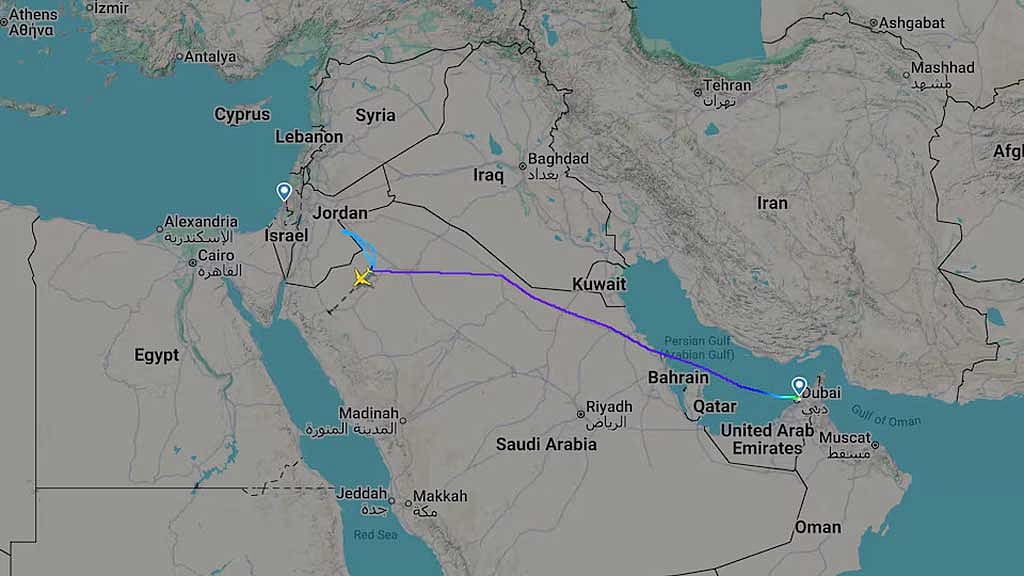
The first extreme movement began around 05:21. The unlawful-interference signal appeared about 14 minutes later, and the aircraft remained airborne long afterwards.
There was therefore considerably more time for the cockpit struggle, passenger intervention and eventual takeover by other flydubai crew to unfold than the most dramatic shorthand descriptions suggested.
What the public tracking data cannot establish is who was manipulating the controls during each descent and climb, precisely when the captain was attacked, when the cockpit door opened, or which control inputs caused the aircraft's movements.
Even the reported landing time comes with two timestamps.
Saudi Arabia's Interior Ministry says the aircraft landed at Tabuk at 09:45 local time, or 06:45 GMT. Flightradar24 says its final ADS-B message was received at 06:58 GMT and indicated that the aircraft had landed safely.
Those times are not necessarily contradictory. An aircraft can continue transmitting tracking data after touchdown. But 06:45 is the Saudi government's stated landing time, while 06:58 is the final tracking signal received by Flightradar24 rather than necessarily the moment the wheels touched down.
What Happened To the Rudder?
There is also a striking piece of physical evidence.
US President Donald Trump, recounting what he said Prime Minister Benjamin Netanyahu had told him, said the descent was so sharp that the rudder had been ripped from the back of the aircraft.
Trump himself made clear that he could not independently verify every detail of the account relayed to him.
Photographs of FZ1073 after landing reportedly show severe damage to the rudder, while CNN's Muntean said images appeared to show it almost completely broken away.
That makes the damage itself difficult to dismiss as merely part of the rhetoric surrounding the episode.
But no aviation authority has yet published a technical finding establishing exactly how much of the rudder separated, when the damage occurred or what aerodynamic forces caused it.
Visible damage consistent with an exceptionally violent flight event does not establish why the aircraft entered the descent or who was manipulating the controls at the time.
The eventual technical findings will also be important to the question raised by Murphy: whether the publicly reported speeds and descent rates accurately describe what the aircraft experienced.
What the Passengers Say Happened
Israeli passenger Yaniv Hayun has described running towards the cockpit during the crisis and helping pull the co-pilot away from the controls.
He said he then grabbed the control column himself and managed to straighten the aircraft "a bit" before trained flydubai crew took over.
Other passengers described a prolonged struggle rather than a few seconds of action.
Tzvika Manes said his wife was accompanying their young daughter towards the lavatory near the cockpit when she heard screams and a struggle and raised the alarm.
Manes said it took roughly 20 to 25 minutes to subdue the co-pilot, with passengers eventually using headphone cords to restrain him.
Dentist Shota Musaev treated the wounded captain, while video verified by Reuters showed the injured pilot and the restrained co-pilot after the struggle.

Flydubai confirms another crucial part of the passenger accounts.
The airline says crew travelling aboard the flight secured the aircraft, diverted it and landed safely in Tabuk. Reuters describes them as a reserve flydubai crew.
That helps explain how an aircraft whose two operating pilots had both been injured was ultimately brought safely to the ground.
It also clarifies one part of Hayun's account that has attracted scepticism online.
The claim is not that an untrained passenger flew the aircraft to Saudi Arabia while qualified pilots watched. Hayun says he briefly manipulated the controls after pulling the co-pilot away, before trained pilots took over.
Exactly how long Hayun had his hands on the controls, what state the aircraft was in at that moment and how much his inputs contributed to its recovery have not been independently established.
The Cockpit Door Question
Another obvious question is how the badly wounded captain managed to let passengers into a cockpit designed specifically to keep people out.
Passenger and Israeli accounts say Machchhar unlocked the reinforced door after being attacked.
Modern cockpit doors can be electrically unlocked from inside the flight deck, so doing so would not necessarily have required the captain to stand up, walk to the door and physically open it.
But that still leaves a factual question for investigators: precisely when the captain was attacked, what injuries he had sustained by that point and whether he remained capable of operating the release as the aircraft was undergoing its extreme movements.
The answer should eventually be available from cockpit recordings and aircraft systems data.
What The Videos Do — And Don't — Show
Video recorded aboard the aircraft has become another focus of scepticism.
Clips circulating online show passengers standing or moving around the cabin, the wounded captain receiving attention and the co-pilot already under restraint.
That has prompted an obvious question: if the aircraft was plunging at the extraordinary rate described in some reports, how were people able to stand and move around?
The timing of the footage is crucial.
Reuters verified video showing the injured captain and the subdued co-pilot, but the footage does not establish that those scenes were recorded during the most violent part of the descent.
Indeed, the fact that the alleged attacker had already been restrained indicates that at least some of the widely circulated footage was recorded after the struggle had progressed substantially.
Passengers walking around after the aircraft had levelled or partly stabilised would therefore not contradict evidence that it had undergone a violent descent minutes earlier.
Using those images to prove or disprove the severity of the initial plunge would require knowing exactly when each clip was recorded and matching it to the flight-data timeline.
Where Were The Oxygen Masks?
The absence of clearly visible passenger oxygen masks in the widely shared videos has raised another question.
But a rapid descent does not, by itself, cause passenger oxygen masks to deploy.
The automatic system responds to cabin altitude — effectively the pressure being maintained inside the aircraft — rather than simply the altitude or descent rate of the aircraft itself.
FAA material on the Boeing 737 system says passenger oxygen masks deploy automatically when cabin altitude rises above about 14,000 feet.
That means FZ1073 could have descended extremely rapidly without the masks deploying if the fuselage remained adequately pressurised.
What has not been publicly disclosed is what happened to the aircraft's cabin pressure during the upset.
No published investigative finding has yet provided cabin-altitude data or established whether the passenger oxygen system activated.
That information should be recorded by the aircraft's systems and would help establish both the physical severity of the event and what passengers experienced inside the cabin.
What About The G-Forces And Injuries?
The reported lack of widespread serious passenger injuries has also prompted questions given descriptions of an extraordinarily violent descent and recovery.
That issue requires similar caution.
A descent rate — even an extreme one — does not by itself reveal the G-force experienced by passengers. G-loading depends on acceleration and changes to the aircraft's flight path, particularly during abrupt transitions or recovery.
So the fact that passengers survived without mass injuries does not show that the aircraft could not have descended rapidly.
But it does add another reason to treat the most spectacular early flight figures as provisional.
Murphy's simulator exercise raised precisely that broader concern: some combinations of the reported speed and descent rate appeared to him severe enough to threaten the aircraft structurally.
CNN also noted how surprising it would be for passengers who were standing to escape serious injury during an event matching its simulated descent.
Another experienced airline pilot interviewed by CNN cautioned against overstating the human toll, saying that, apart from the injured captain, the incident had not produced the kind of widespread casualties such extreme descriptions might suggest.
None of that disproves a severe descent.
It reinforces the need for the actual flight-data recorder readings — including airspeed, vertical acceleration, pitch, control inputs and other parameters — before the most dramatic early numbers can be treated as definitive.
The Weapon Is Still Unclear
Even something as basic as the weapon remains unsettled.
Passenger accounts referred to a knife.
Netanyahu subsequently said the captain had been stabbed or struck with an axe, while other reporting has referred to emergency equipment aboard the aircraft.
Reuters said it had not been able to establish what weapon was used.
No published Saudi or Emirati investigative finding has yet settled the question.
If a knife or another prohibited weapon was carried through airport security, that raises one set of questions. If the co-pilot used equipment already available inside the cockpit, it raises another.
Until investigators establish what the object was and where it came from, one of the most obvious security questions surrounding the episode remains open.
What Saudi Arabia Has Established
Saudi Arabia's public account is notably narrower than Israel's.
The Interior Ministry said its preliminary investigation, conducted with a UAE security team, found that the co-pilot assaulted the captain, causing injuries to both and forcing the aircraft to make an emergency landing.
Both pilots received hospital treatment before leaving for Abu Dhabi after receiving medical clearance.
The Saudi statement did not say that the co-pilot deliberately tried to crash the aircraft.
It did not describe the incident as terrorism.
It did not say that he had been ideologically radicalised.
That does not rule out any of those possibilities. It means Saudi Arabia's publicly announced preliminary findings have not established them.
What Israel Says About Intent
Israel's account goes considerably further.
Defence Minister Israel Katz described the episode as an attempted "jihadist terror attack", while Israeli officials said their preliminary information indicated that the co-pilot intended to crash the aircraft.
By Oct 1, Netanyahu was also asserting a motive.
"We know that he underwent Islamist radical indoctrination," he told Fox News, saying Israel was drawing that assessment from information about the co-pilot.
Netanyahu said the man appeared suicidal and that it looked "very likely" he intended to bring down the aircraft, while stopping short of saying the investigation was complete.
He did not publicly provide the underlying evidence for the radicalisation assessment.
Two Israeli security officials told Reuters that Israel's initial assessment was that the co-pilot, identified by Israel as an Omani national, probably acted alone.
Israel's ambassador to the UAE, Yossi Shelley, was more cautious, saying it was too early to draw conclusions and that no motive had yet been determined.
The co-pilot has not been publicly identified.
Iran Enters The Narrative
Iran has also entered the discussion despite the absence, so far, of publicly disclosed evidence connecting Tehran to the incident.
Netanyahu said it was "too early to say" whether Iran had any involvement. Reuters reported that two Israeli security officials said Israel had identified no Iranian involvement at that stage.
Trump later went further, saying that, based on what he was hearing, he believed there could be an Iranian connection while US officials were still examining the matter.
He provided no public evidence.
The UAE investigation has made no finding linking Iran to the incident.
What UAE Is Investigating
The UAE Attorney-General has appointed a specialist prosecution team to establish the facts, circumstances and motive.
Investigators have specifically been directed to determine whether the incident was connected to terrorist activity or purpose and whether there was prior planning or direction.
The UAE authorities have also cautioned against reaching conclusions before the evidence is collected and verified.
The UAE says it has legal jurisdiction because FZ1073 is registered in the country and flies its flag.
Saudi Arabia conducted its preliminary inquiry with Emirati security personnel. Israeli intelligence and security agencies are conducting their own inquiries.
Those are overlapping investigative efforts, not a single Israel-UAE joint investigation.
How Did An Omani Pilot End Up On The Route?
The incident has also exposed a security question that existed before anyone began debating motive.
Oman does not have diplomatic relations with Israel.
Netanyahu said Israeli rules prevent pilots from countries without diplomatic relations with Israel from flying into the country and that the co-pilot had apparently been able to get through those restrictions.
The episode has prompted Israel to tighten identity and security checks on pilots flying into the country.
That leaves two obvious security questions.
How was the co-pilot cleared to operate a Tel Aviv service?
And how did he obtain the object used to attack the captain?
The episode also revives a longstanding problem created by reinforced cockpit doors.
Those doors were strengthened after the Sept 11, 2001 attacks to keep attackers out. But when the threat comes from someone already inside the cockpit, the same barrier can prevent others from intervening.
The 2015 Germanwings disaster, in which a co-pilot deliberately flew an Airbus A320 into the French Alps after locking the captain out, remains the most prominent example of that vulnerability. Aviation security specialists say the flydubai episode is likely to renew debate over how to protect the cockpit from both external and insider threats.
An Incident In the Middle Of An Election
The timing has inevitably added another layer of scrutiny.
Israel votes on Oct 27 in its first general election since the Hamas-led attacks of Oct 7, 2023, with national security and responsibility for the failures preceding those attacks prominent in the campaign.
One day before the flydubai incident, Netanyahu appeared at Israel's Tel Nof airbase and issued an unusually public warning.
"We have indications that, ahead of the elections, our enemies will try to attack us," he said.
He did not identify a particular enemy, target, method or plot.
The warning immediately raised questions in Israel. Israeli media reported that security officials knew of no specific threat corresponding to it, while Opposition Leader Yair Lapid sought an urgent security briefing.
After meeting Netanyahu that night, Lapid said there was "no reason to put the public in a panic" and argued that security threats should be dealt with professionally rather than through election messaging.
FZ1073's cockpit crisis unfolded the following morning.
Some government supporters quickly cited it as vindication of Netanyahu's warning.
Lapid said it was not.
"Nothing even remotely resembling this morning's plane incident came up in the security briefing with the prime minister last night," he said, adding that there had been nothing similar or even a hint of such a scenario.
The dispute continued after an unnamed diplomatic source told Israeli media that Lapid had been briefed about increased hostile activity abroad.
Lapid responded that the warning cited had existed for more than two years and had nothing to do with aircraft or anything resembling the flydubai episode.
Netanyahu later went to Ben Gurion airport to meet the returning passengers and publicly embraced Hayun and others involved in overpowering the co-pilot.
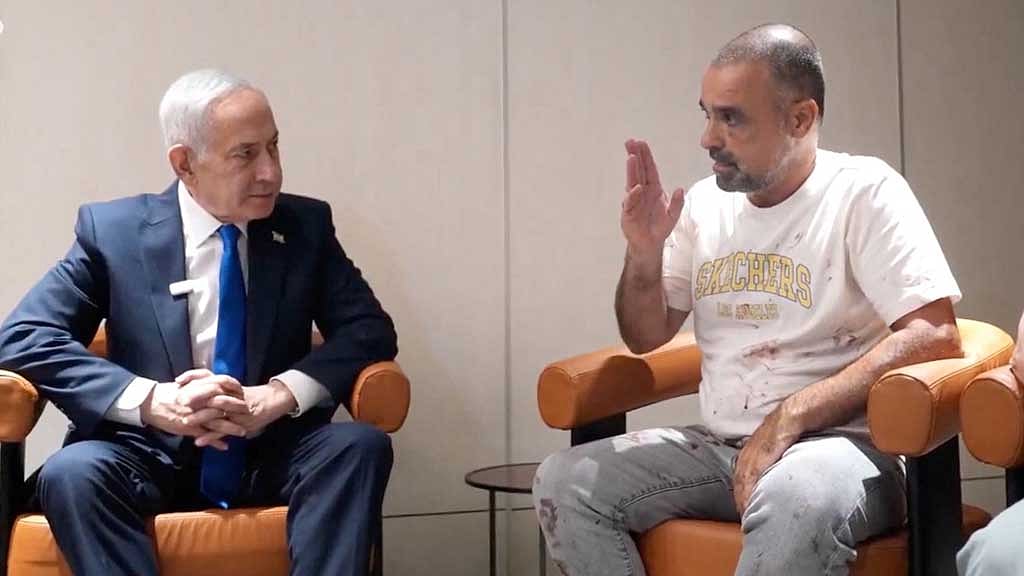
Government supporters praised their actions and linked the episode to wider security concerns. Opposition figures praised the same passengers while accusing Netanyahu's camp of seeking political advantage from the incident.
FZ1073 had become part of the election argument within hours.
What We Know — And What We Don't
The broad outline of the emergency is increasingly clear.
There was a serious cockpit altercation. Saudi Arabia says the co-pilot assaulted the captain. Flight data recorded violent descents and climbs. FZ1073 transmitted both general-emergency and unlawful-interference codes. Flydubai says additional crew travelling aboard secured the aircraft and landed it safely.
Passengers describe entering the cockpit, restraining the co-pilot and helping the wounded captain.
The aircraft also suffered visible rudder damage, although no published technical investigation has yet established its precise extent, timing or cause.
All 174 passengers and eight crew members survived.
But some basic questions about the physical sequence remain unresolved.