Published : 16 Dec 2023, 07:53 PM
Updated : 16 Dec 2023, 07:54 PM


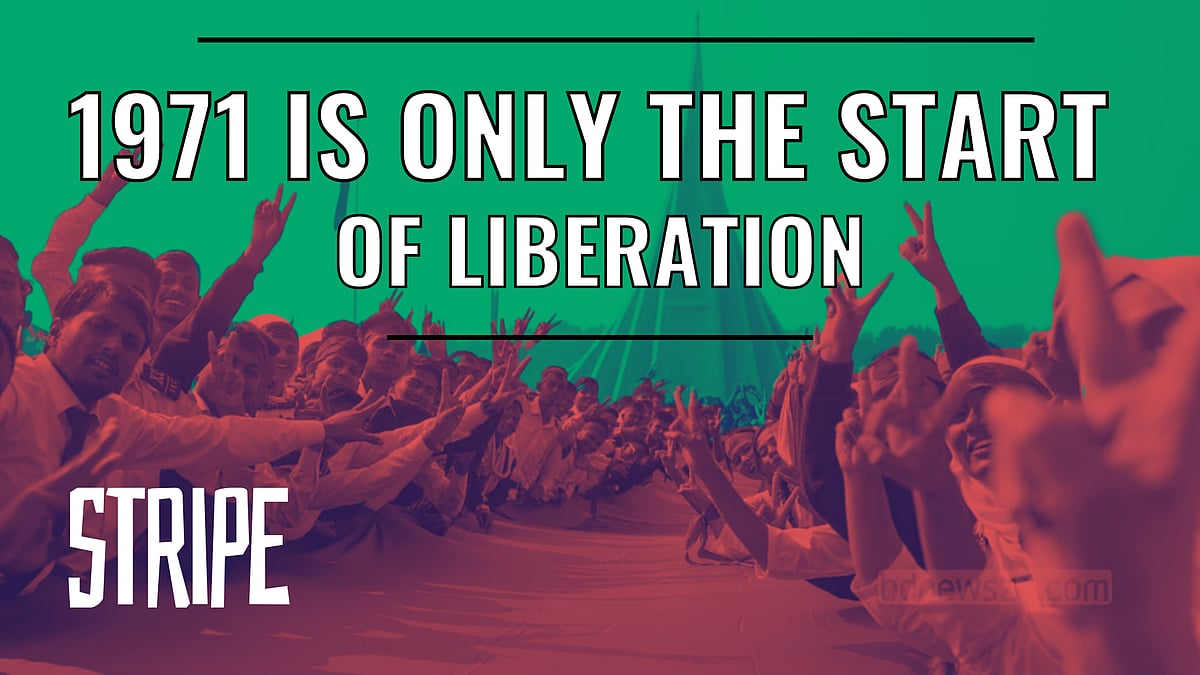
Dec 16, 1971, marked the end of nine long months of a battle for liberation. Today is a day to commemorate the sacrifices of those who gave their lives for Bangladesh’s future and to rejoice the long, long way the nation has come. But in the 52 years since, the country has made remarkable economic strides, defying the pitfalls that plagued its economic landscape.
Over the past decade or so, Bangladesh has seen a surging growth rate and a steady and uplifting trajectory to its per capita income. The global community has recognised the country for its exemplary progress in alleviating poverty, positioning it as among the most successful in this task in the world.
It has not been easy. Bangladesh emerged from 1971, bloodied and bruised. The scars of the war ran deep, especially in agriculture. Internal displacement, destroyed infrastructure, and disrupted food supply chains pushed production and distribution to the brink of collapse. Facing a desperate, starving population, the young nation made the bold choice in 1972 to prioritise agriculture and rural development as the cornerstones of its strategy for food security. It wasn’t just about filling stomachs but also about laying the foundation for a self-reliant future.
The transformation has been nothing short of miraculous. From a meagre 9.9 million tonnes of food grains in 1972, Bangladesh’s production soared to an impressive 45.4 million tonnes by 2020. Bangladesh is now the world’s fourth-largest producer of rice and its third-largest producer of freshwater fish.
In 1971, the Pakistani forces strategically dismantled Bangladesh’s infrastructure, targeting everything from communication and industry to structures with social value. A World Bank estimate says a staggering 4.3 million were destroyed, particularly in rural areas.
In the years since, Bangladesh has dedicated itself to developing infrastructure. This commitment spans housing, communication networks, industrial facilities, water supply systems, solid waste management, and electricity. Today, our nation proudly showcases several completed projects that stand as the pillars of our economy. Notable among them are the Padma Multipurpose Bridge, the Bangabandhu Tunnel, and the Rooppur Nuclear Power Plant.
And, only three days ago, the Dhaka Metro Rail inaugurated new train stations in the Dhaka University and Bijoy Sarani areas, marking a significant milestone in the expansion of the major urban transit project.
But, even as I bask in the red and green fairy lights that celebrate the anniversary of our historic victory, I can’t help but wonder if such a day will come for another people – the Palestinians. The images of a genocide unfolding before our eyes and the frustration at our powerlessness to intervene have been difficult to bear. And yet, hope persists. Hope that one day, the people of Palestine will experience their liberation. Until then, we must remember that old rallying cry, “Nobody’s free until everybody’s free.”
This article is part of Stripe, bdnews24.com's special publication focusing on culture and society from a youth perspective.