Published : 25 Jun 2023, 07:30 PM
Updated : 25 Jun 2023, 06:34 PM


Recent weeks have seen two significant tragedies at sea, each with their own set of harrowing circumstances. But the stark difference in their coverage by the media highlights concerning trends in the priorities of the media and its personal biases.
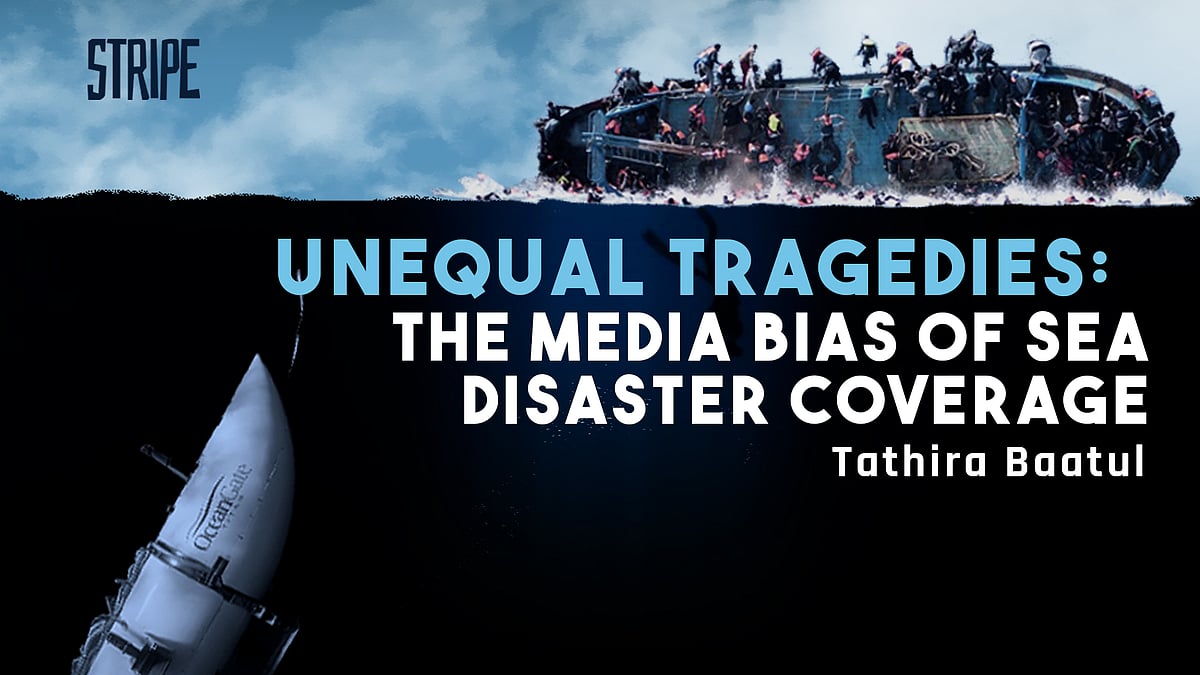
One incident involving the deaths of five wealthy individuals aboard a submarine received widespread coverage for days on end. The other, where hundreds of desperate migrants lost their lives, faded quickly.
The sharp discrepancy highlights the potential undercurrent of racism in Western media coverage, the dangers of complacency, and the need for solidarity with displaced peoples during these difficult times.
On Jun 13, a vessel carrying up to 750 migrants sank off the coast of Greece, one of the deadliest shipwrecks in recent years. As of Friday, only 104 people were recovered alive. Most of those onboard were fleeing war, hardship and famine in Egypt, Syria, Palestine and Pakistan. Many of them were women and children. Despite the magnitude of the disaster, coverage of the incident seemed superficial, lacking the depth and urgency demanded by such a profound loss of life.
There were many additional points of media interest surrounding the tragedy. Survivors accused the Greek coast guard of responding too late to the danger, allowing the vessel to sink. The vehement denials from Greek authorities gave rise to conflicting narratives, which showed the need for an independent investigation, as called for by the UN. Despite ripe ground for further reporting and questions about systemic issues that could lead to more deaths in the future, the disaster has not seen a notable degree of coverage on front pages and headlines.
But, within a week, another sea disaster dominated headlines. The spectacle of a billionaire losing their life on a misadventure due to poor safety enforcement became fodder for the content mill. As the media pored over the lives of these five individuals, their histories and backgrounds, the lives of hundreds of refugees sank away with little comment.
The horrifying contrast in the media's handling of these situations should be deeply troubling. It shows how willing we are, in the media and as a society, to prioritise specific lives over others based on net worth, skin colour, and place of birth. It shows the normalisation of a system that glorifies opulence while criminalising poverty.
The media plays a crucial role in shaping public opinion and raising awareness of humanitarian crises. By choosing which stories to highlight, the media shapes our collective consciousness and influences our understanding of global events. When tragedies affecting marginalised communities receive disproportionately less attention, it perpetuates the harmful narratives that devalue those lives.
Thus, it is imperative to challenge the media's priorities and promote solidarity with displaced peoples. The struggles and losses they endure deserve our attention and empathy. By amplifying their voices and demanding unbiased reporting, we can create a more inclusive and compassionate narrative that acknowledges the value of all human lives, regardless of race, class, or social standing.
The victims of the migrant boat disaster are ultimately the casualties of a profoundly unequal world. Their deaths directly result from a global system that perpetuates divisions based on wealth, nationality, and privilege. To defy this inequity, we must confront the media narratives that allow us to remain complacent, even in the face of horrific tragedy.
This article is part of Stripe, bdnews24.com's special publication focusing on culture and society from a youth perspective.