Published : 04 May 2023, 07:59 PM
Updated : 04 May 2023, 07:59 PM


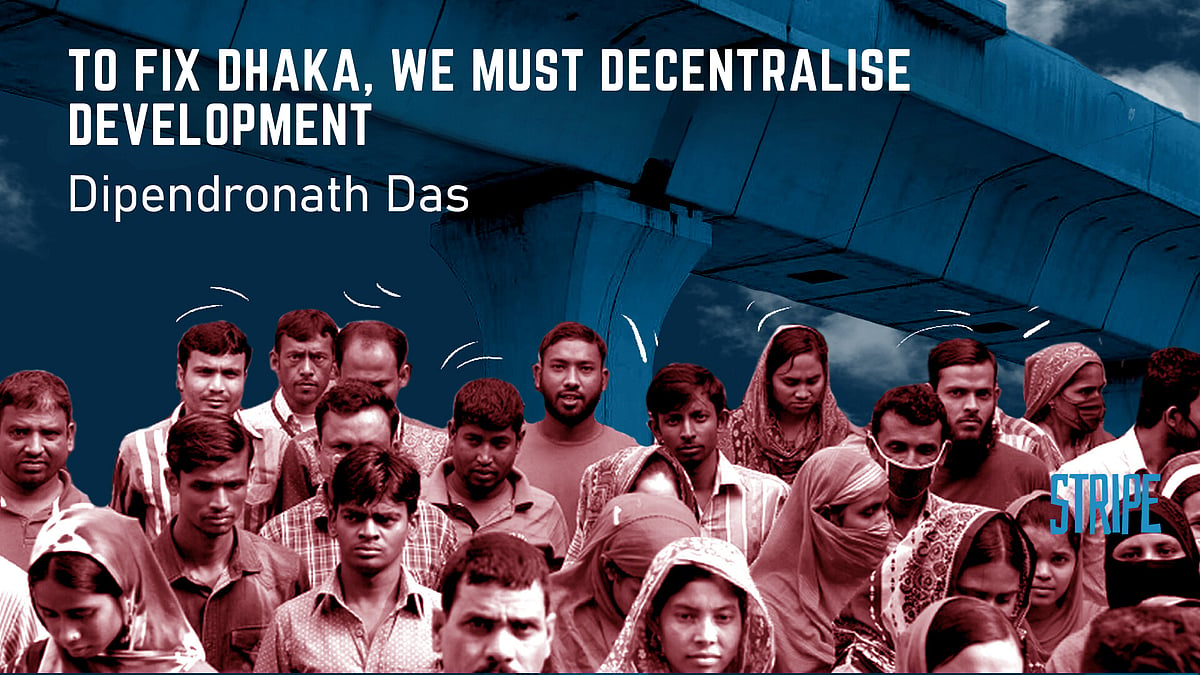
Every year, before the Eid holidays, many Dhaka residents leave the city to visit their ancestral homes. And every year, this sudden mass migration causes heavy congestion, accidents, and deaths. This seasonal departure results from years of urbanisation policies that have focused primarily on Dhaka.
Those making the trip are caught up in the desire to spend a beloved holiday with their families. A popular telecom company jingle, ‘Shopno Jabe Bari Amar’, testifies to the romanticisation of this regular travel.
People based in Dhaka often look forward to the Eid departures as it makes the city more livable for a few days. The legendary congestion eases, the crush of bodies dissipates, and the constant noise dims. As pleasant as it may be for city residents, the mass departure also highlights the critical problem of overpopulation and the urgent need for rapid decentralisation.
The jingle above paints a picture of a difficult journey back home paying off in a short but happy vacation. But it does not tell the whole story. Its subtext also presents a narrative that shifts the blame onto the people who leave the city, portraying them as the cause of overpopulation and other urban problems.
But Dhaka’s overpopulation problems are not the fault of the people who migrate to the city. They result from a lack of proper planning and development in other parts of the country.
Ideally, no matter where you are born in Bangladesh, you should be able to find robust educational opportunities and a suitable livelihood without the need to uproot yourself to migrate to an already overflowing city.
However, Bangladesh’s infrastructure is centralised, meaning that people are tied to the capital by attachment or obligation. The need to earn a living forces the working class to move to the city, while students chase their dreams of shining college and university life. As such, Dhaka has become Bangladesh’s defacto hub for politics, education, economy, and most other things.
The centralisation of infrastructure, job opportunities, and educational institutions in Dhaka has created a magnet effect, drawing people from all over the country to the capital. The result is an overcrowded, congested, and unsustainable urban environment.
Just as centralisation has led to this mess, the way out is through decentralisation.
Decentralisation means redistributing power and resources away from a central authority and towards local communities. It involves the transfer of decision-making and responsibility to the local level, where people better understand their own needs and can make more informed decisions about how resources should be allocated.
Decentralisation comes in many forms, including political, administrative, and fiscal. These policies mark a shift in power away from a central hub to the rest of the country. This would allow each region to become more self-sufficient and capable of handling its own business without extensive oversight. People of the grassroots would be able to express their needs to authorities directly, while local authorities would have a greater capacity to bring about the necessary changes. It would allow the government to become more responsive and bolster local communities.
The jokes we make about an overcrowded Dhaka and its mass of people perpetuate a classist mentality that exploits the already vulnerable. Under our current system and the structures it has built, many people have little choice but to migrate to Dhaka.
To truly address issues of overpopulation and urbanisation in the capital, we must dismiss such callous wisecracking and instead work towards a more equitable future. One where everyone has access to the same opportunities, regardless of where they come from.
This article is part of Stripe, bdnews24.com's special publication focusing on culture and society from a youth perspective.