


Published : 20 Apr 2019, 03:34 AM
Updated : 08 Apr 2022, 02:08 PM


Duties include delivering “the highest quality VIP hospitality for all government departments and ministers” and managing the government’s wine cellar.
Maximum annual salary: 30,000 pounds (not quite $40,000).
Only British nationals need apply, according to the Foreign and Commonwealth Office, which advertised the roles.
It may seem somewhat anachronistic that butlers are still being hired, especially in an age when digital assistants such as Alexa and Siri are available to relieve the burden of household duties like buying groceries or switching off the lights.
But the status symbol has endured in Britain, a country that cherishes tradition and heritage.
Grant Harrold, former royal butler to Prince Charles and a co-founder of The Royal School of Butlers, explained that the government’s job description was broadly in line with the requirements of a 21st-century butler.
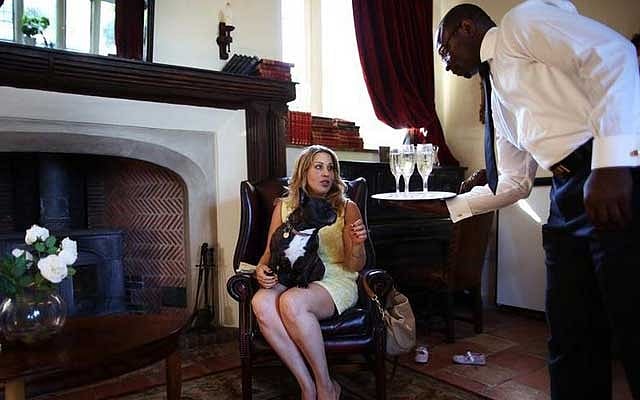
“If you watch ‘Downton Abbey,’ we like to think a butler wears a white tie, stands behind tables and chairs, looking the part,” Harrold said, referring to the hit television series. “The reality of a modern-day butler is that it is evolving into this hospitality role.”
But he wondered whether the government had knowingly played on British stereotypes in naming the role.
“The government is not asking for ‘house managers,’ but ‘butlers’ because it is a very British thing,” he said. “The government is saying: ‘We want to have our own British butler.’ It is a bit of a show.”
According to the Foreign Office, the hub of Britain’s diplomacy and international relations, limiting applicants to British citizens follows the rules of the department as a whole. The position’s responsibilities include managing stock and items worth as much as 3 million pounds, as well as ensuring the smooth running of food and drink service for events with as many as 350 guests.
Staying true to the intended role of a butler (the word is derived from an Old French term for “bottle bearer”), good knowledge of “fine wines” and food service is listed as a minimum requirement for the job, since the butlers must also take care of the government’s wine cellar.
Malcolm Rifkind, the British foreign secretary from 1995 to 1997, said that having a staff to supervise the government’s hospitality program was nothing out of the ordinary.
“There is not a single country in the world that would not offer that type of hospitality,” Rifkind said. He added that most national governments would employ someone to oversee events held for foreign dignitaries — though not all would officially be called butlers.
“It is perfectly normal to have a luncheon or dinner for visiting foreign minister or heads of state,” he said.
He explained that for such a formal occasion, wine would be served by hospitality workers. “You do not use diplomats to do that; it is not in their training,” Rifkind said. “It would be a waste of diplomats’ skills.”
Nestled among the business-jargon-filled job titles on the Civil Service website, the ad for “government butlers” is distinctive. The role is not new, and there are currently three government butlers on payroll.
Applicants are required to work odd hours and complete physically demanding tasks, but the maximum salary offered is only marginally better than the median annual income for a full-time worker in Britain: 29,574 pounds.
Harrold, the former royal butler, said that the salary offered by the government was average for a butler working in Britain and that the position offered other benefits.
“The people you look after and the reputation and experience you get from doing that is priceless,” he said.
© 2019 New York Times News Service













