Published : 07 Oct 2026, 12:54 PM
Updated : 07 Oct 2026, 12:54 PM


Scientists examining samples from a deep-sea canyon off Argentina have identified 57 marine species new to science, along with five new genera.
The specimens were gathered during a 2025 expedition to the Mar del Plata Submarine Canyon and examined by 20 taxonomists and early-career researchers at a two-week international workshop in Buenos Aires this year, ThePrint reports.
The new species include 20 copepods; 22 echinoderms, including sea cucumbers and crinoids; 14 cnidarians, including corals and sea pens, and one scaphopod mollusc.
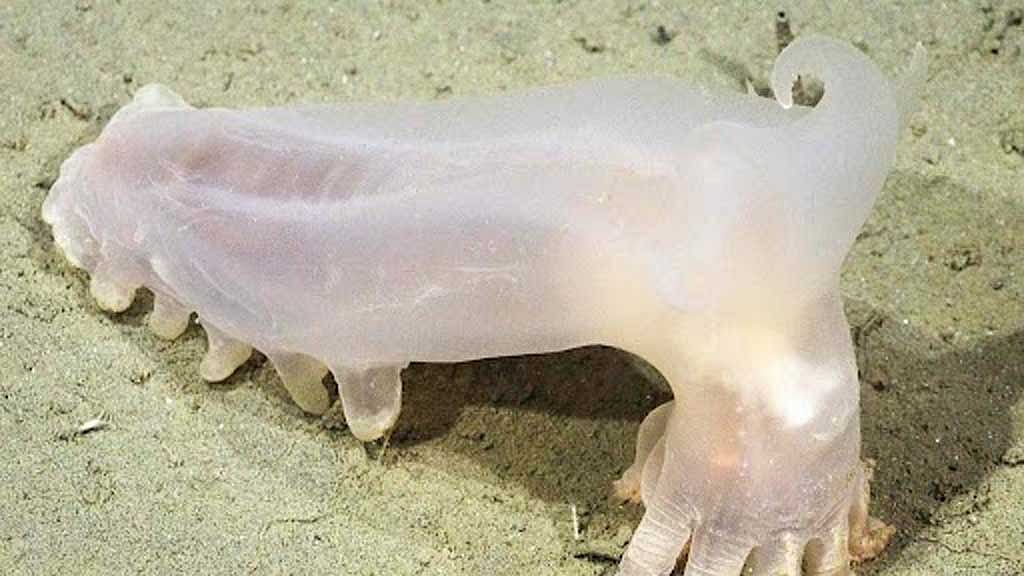
One of the most striking finds was a sea cucumber of the genus Peniagone, nicknamed “Loki” for its horn-like appendages.
It was found about 2,577m below the surface, where there is no sunlight and pressure is hundreds of times greater than at sea level.
The researchers have so far examined only about 10 percent of the copepod samples collected during the expedition, the Indian website said.
Some coral specimens could also represent new genera or even a new family, although genetic analysis is still needed, it added.
The Mar del Plata Canyon is one of the largest deep-sea canyons in Argentina’s waters. The region lies where the warm, salty Brazil Current meets the colder, nutrient-rich Malvinas Current, creating the Brazil-Malvinas Confluence, one of the most energetic areas of the global ocean.
The canyon’s complex seafloor also creates habitats for corals, sponges and other marine life.
Earlier expeditions in 2012 and 2013 found new species and generated more than 60 scientific papers, including evidence of cold-water coral and sponge gardens.
The 2025 expedition used SuBastian, a remotely operated vehicle (ROV) aboard the research vessel Falkor (too).
The vehicle allowed scientists to observe the seafloor, collect specimens and make what researchers describe as the first in-situ observations of parts of the canyon.
The discovery also shows why the deep ocean remains poorly understood.
Although sonar has mapped 28.7 percent of the world’s seafloor as of April 2026, mapping reveals the shape of the seabed rather than the life living there.
The deep ocean generally begins around 200m below the surface, with virtually no sunlight below 1,000m.
Temperatures average about 4 degrees Celsius, while pressure rises by roughly one atmosphere for every 10m.
The Indian website reported that humans have visually observed less than 0.001 percent of the deep-ocean seafloor, according to NOAA.
Finding a species is also different from formally establishing that it is new to science. Researchers may need to collect a specimen, compare its anatomy with known species and analyse its DNA.
The Buenos Aires workshop used integrative taxonomy, combining physical characteristics with other evidence. The findings were recorded in Ocean Census NOVA, an open-access platform aimed at speeding up marine species identification.
The expedition’s live broadcasts drew about 4 million viewers and nearly 22 million views across platforms, according to Argentina’s National Scientific and Technical Research Council.
ThePrint said the findings matter for conservation, fishing, climate research and decisions over ocean resources because scientists need to know what lives in an ecosystem before they can properly protect it.
The latest discoveries may not be the last from the expedition, with more specimens still awaiting detailed study.