Published : 19 Nov 2026, 01:06 AM
Updated : 19 Nov 2026, 01:06 AM


Homo erectus was a pivotal species in the human evolutionary lineage, the first with body dimensions like our own, the first to trek out of Africa and the first to use fire. Eight fossilised teeth from two caves in China are now offering new insight into this important ancestor.
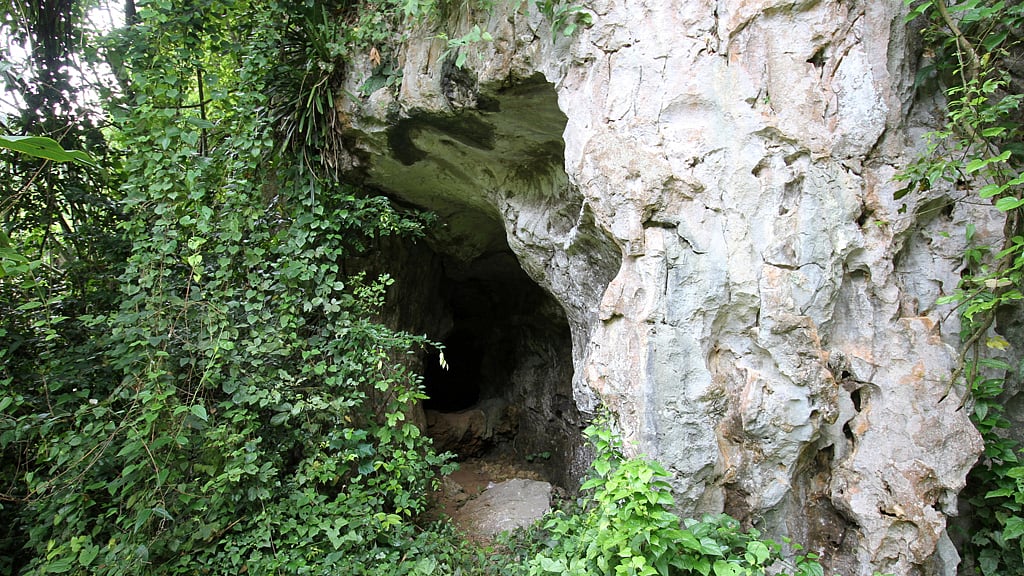
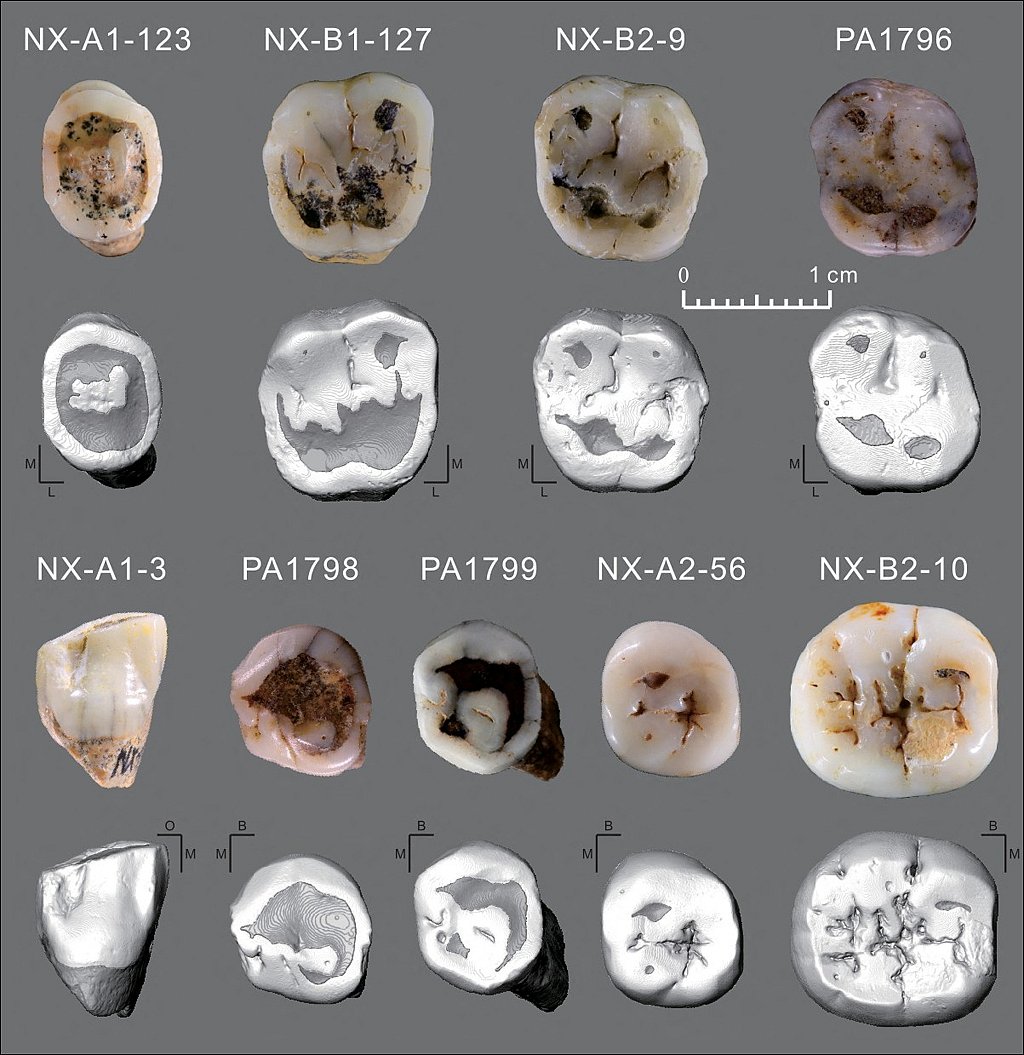
The teeth, discovered in the Baxian and Naxian caves located around 9 miles (15km) apart in southern China's Guangxi province, show for the first time that Homo erectus was able to inhabit a rainforest habitat, and that the species persisted on the Eurasian mainland longer than previously known. The teeth were determined to be 324,000 to 184,000 years old.
Homo erectus arose in Africa around 2 million to 1.9 million years ago, then trekked into Eurasia. The most recent known Homo erectus fossils anywhere come from the Indonesian island of Java, dating to roughly 110,000 years ago. But until now it was thought the species had vanished on mainland Eurasia around 400,000 years ago, based on fossils elsewhere in China.
The eight teeth were identified as belonging to Homo erectus based on size and shape. In a subset of the teeth, the identification was confirmed using ancient protein analysis.
A chemical analysis of teeth can unlock details about diet and habitat. In these teeth, the researchers found evidence that the Homo erectus individuals were eating and drinking within rainforest environments, a habitat previously unknown for this species or any human species before our own. The evidence did not reveal the precise food involved.
"We have discovered evidence of Homo erectus surviving in a challenging environment not normally associated with this species," said geochronologist Kira Westaway of Macquarie University in Sydney, Australia, who led one of two studies on the teeth published on Wednesday in the journal Nature.
Findings based on the element strontium in the teeth indicated this Homo erectus population may have ranged over large areas.
"The strontium levels in the teeth tested from Baxian cave do not match the strontium levels found around the cave area, based on reconstructed strontium maps of the region. The best match is found further afield in places like north Vietnam," Westaway said.
"So we have a late-surviving Homo erectus population that shows signs of being flexible, adaptable and mobile -- usually skills we associate with Homo sapiens, not ancient humans," Westaway said.
A Deeper Understanding
The teeth are providing a deeper understanding of Homo erectus.
"Homo erectus is associated with the emergence of more advanced stone tool artefacts, locomotion rather similar to ourselves and the emergence of the use of fire," said molecular anthropologist Frido Welker of the University of Copenhagen, who led the other study.
"African populations of Homo erectus are generally thought of as giving rise to Homo sapiens at some point in the Middle Pleistocene," Welker said, referring to a time interval spanning 770,000 to 126,000 years ago.
Fossils show Homo sapiens first appeared roughly 300,000 years ago in Africa before spreading worldwide.
The researchers also found a ninth tooth, belonging to another archaic human species. This tooth, Welker said, "could be Denisovan, but also something unknown."
Denisovans are a population known from a few locations in East Asia, Laos and Russia's Altai Mountains.
"Homo erectus is a formidable species," Westaway said. "It survived for nearly 2 million years, which is six times longer than our species Homo sapiens, in grassland savannas and open woodlands as it dispersed from Africa all the way around to Java in Indonesia. Despite these incredible achievements we still associate this species with being 'unsuccessful' at adapting to changing environments, and accepted opinion usually cites the encroaching rainforest as a cause of their extinction in Java."
"However, this study turns this narrative on its head as we have evidence of Homo erectus utilising enclosed rainforest in mainland China. This opens up a new chapter on our understanding of Homo erectus and challenges assumptions about the cause of their ultimate extinction in Java," Westaway said.
The dates of the teeth from the Chinese caves and the fossils from Java suggest that those Homo erectus populations never encountered Homo sapiens. Existing fossil evidence indicates our species arrived in those areas after Homo erectus had disappeared.
But the age of the teeth does suggest another intriguing meeting was possible for Homo erectus, Westaway said. The largest-known ape in history, Gigantopithecus, is known to have lived at around that time and place. Gigantopithecus reached perhaps 10 feet (3m) tall when standing and weighed possibly 660 pounds (300kg).
"That is not to say this is evidence that they actually met, just that the potential has increased," Westaway said.