Published : 12 Jun 2023, 02:57 AM
Updated : 12 Jun 2023, 02:57 AM


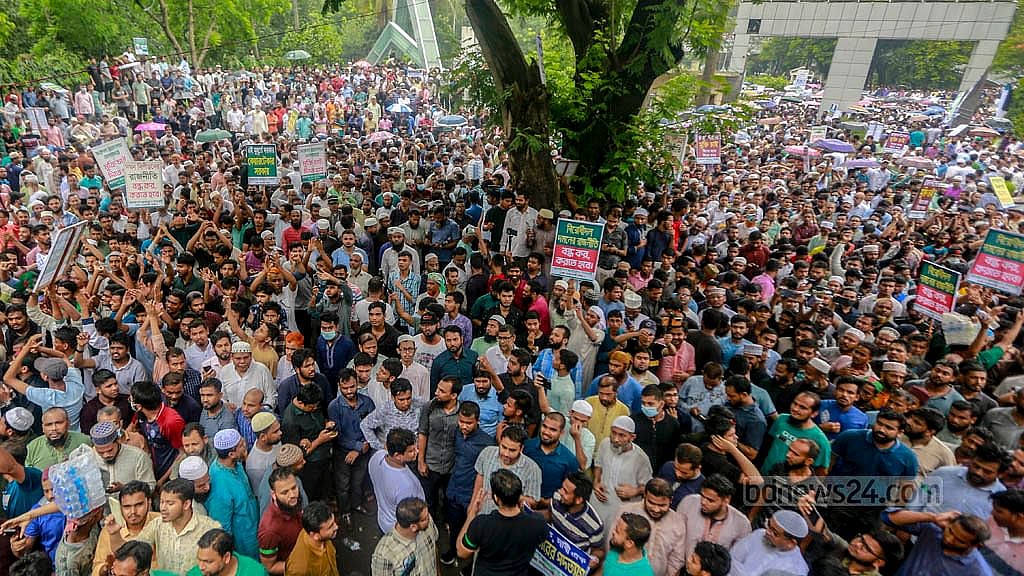
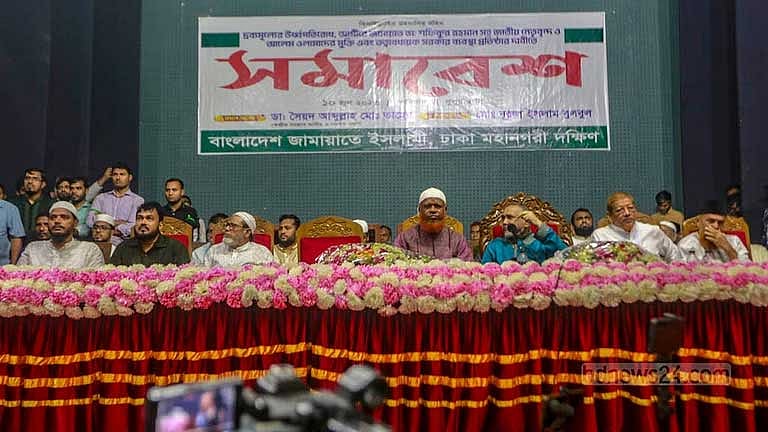
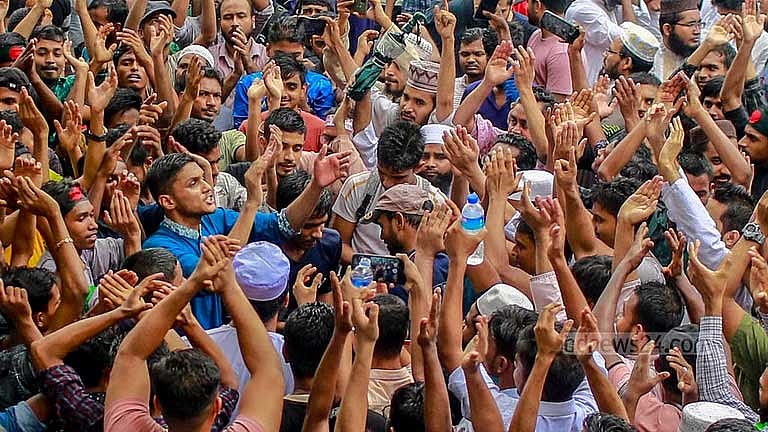
The first rally of Jamaat-e-Islami in Dhaka in more than a decade has turned the spotlight back on the future role of the party, which opposed Bangladesh’s independence from Pakistan, in politics.
The police permission for the rally on Saturday came as a surprise to many as the government continued its crackdown on the Jamaat. The ruling Awami League, which led Bangladesh during the 1971 war, has been historically at odds with the Jamaat.
The unhindered rally and photos of Jamaat activists greeting police with flowers during the programme at Ramna triggered a debate whether the Awami League fielded the Jamaat for a twist in Bangladesh’s politics, or the BNP sent the Jamaat out to strengthen its anti-government movement, or the Jamaat itself has something else in its plan.
Although it never formed a government alone nor had a strong presence in parliament, the Jamaat has always been a significant force in Bangladesh’s politics. An analysis of voting data showed the party’s voter base is 5 percent of the total.
With the Jamaat’s support, the BNP came to power in 2001. The BNP-Jamaat alliance then ruled the country for one term under then prime minister Khaleda Zia.
After the Awami League returned to power in 2009, it opened the war crimes trial as promised before the election. Several of the top Jamaat leaders were hanged or jailed for their crimes against humanity, such as genocide and rapes or abetting the crimes by the Pakistani forces, during the war.
The Jamaat was not allowed to hold programmes over the past decade following deadly violence during protests against the war crimes trial. Its leaders went underground but many were arrested on charges related to violence or Islamist militancy.
The party’s activities included sudden processions barred by the police. The law enforcers also gatecrashed Jamaat meetings and arrested its leaders on charges of conspiring to carry out violence. Its chief Shafiqur Rahman and Secretary General Mia Golam Parwar are in jail.
After the party lost its registration in a High Court verdict that questioned its charter in 2013, its leaders took part in the 2018 elections with the BNP’s paddy sheaf symbol. The BNP, however, has distanced itself from the Jamaat in recent times. The Jamaat now exists as a fringe political entity.
BNP, ALLIES DOUBT MOTIVE BEHIND PERMISSION
Although the Awami League has said the Jamaat is out to fulfil the BNP’s agenda, the opposition party was quick to deny any such connection.
“Not only the BNP, other parties and alliances are agitating simultaneously for the 10-point demand, including election under a neutral caretaker government, the government’s resignation and the resolution of parliament,” said BNP Standing Committee member Nazrul Islam Khan.
The BNP leader, however, had declined to comment when bdnews24.com asked him about the Jamaat’s inaction during protests announced by the BNP and its current allies, such as the Nagorik Oikya. “We don’t want to talk about the Jamaat,” Nazrul had said last month.
Mahmudur Rahman Manna, the convenor of the Nagorik Pikya, said the government decision to allow the Jamaat to rally surprised him.
“It showed how confused the government is. Jamaat leaders were detained and released after one and a half hours when they went to seek permission for the rally. They were later granted permission.”
Saiful Haque, coordinator of the Ganatantra Mancha alliance which is supporting the BNP in its anti-government movement, said the Awami League is blaming the BNP for sudden Jamaat activities to cover up its own deeds. “It’s the latest example of the government’s political strategy.”
Zonayed Saki, chief coordinator of the Ganasanghati Andolan, agrees with Saiful. “The Awami League may try to derail the anti-government movement by branding us as Jamaat.”
‘POLITICAL DECISION’
After the rally on Saturday, Awami League General Secretary Obaidul Quader said the BNP fielded the Jamaat ahead of the next general election.
Hasan Mahmud, a joint general secretary of the ruling party, said Jamaat’s demand for a caretaker government was, in reality, the BNP’s demand.
Permission granted to the Jamaat to hold the rally was a political decision, Awami League leader Abdur Razzaque said on Sunday, without assigning a reason.
Razzaque, the agriculture minister and a member of the ruling party’s policymaking body the presidium, said: “It’s a political decision. Time will tell us what will happen next.”
“The High Court ruled that their party charter is contradictory to the constitution of the country. Still, many people support them. The government took steps in light of this situation. Please wait and see what happens next.”
Abdur Rahman, another presidium member of the ruling party, said the Awami League expects the Jamaat to apologise to the nation for its anti-liberation stance and shun the communal trend of politics.
WHAT JAMAAT WANTS
Syed Abdullah Md Taher, the Jamaat chief’s deputy, told bdnews24.com the party wants the next election to be held under the caretaker government.
“The electoral system of the country has been destroyed. We’re conducting a movement for a free and fair election. And many of our leaders and activists, including our chief, are in jail, tortured,” he said.
“The caretaker government system was our demand. We’re still in a movement for that demand. Our position is clear. There shouldn’t be any doubt about it.”
Some think the government allowed the Jamaat to hold the rally because of foreign powers’ criticism over alleged suppression of descent.
A senior Jamaat leader, requesting anonymity, said the Awami League gave permission for the rally because of the visa restrictions threatened by the US. “They want to show the foreigners that all political parties are allowed to demonstrate.”
“Many may not understand our policy, but the rally shows that our workers have not lost mental strength after so many years of struggle.”