Published : 20 Feb 2026, 06:54 AM
Updated : 21 Aug 2026, 03:22 PM


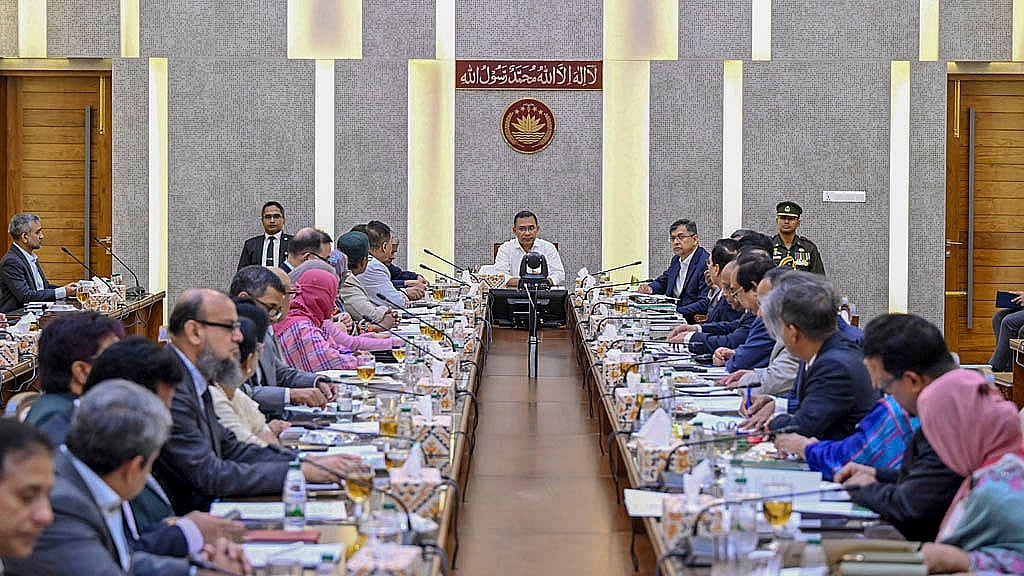
The fall of a government is loud. The reordering of the state is silent. As the Bangladesh Nationalist Party (BNP) settles into office, Bangladesh’s most consequential political struggle is unfolding not on the streets or in parliament, but across offices, files, and postings inside the bureaucracy.
Prime Minister Tarique Rahman stands at a crossroads familiar to every returning ruler: whether to cautiously coexist with an entrenched administration -- or to decisively reassert civilian authority over a system long accused of serving political masters.
After nearly two decades out of power, the BNP’s return to office brings an old question sharpened by new realities: how far will the new government go in reshaping the state machinery?
While Tarique’s cabinet has made clear that reviving the economy and restoring law and order are immediate priorities, the administration’s approach to the bureaucracy has emerged as one of the most closely watched tests of his leadership.
A Ministry in Name, Power at the Centre
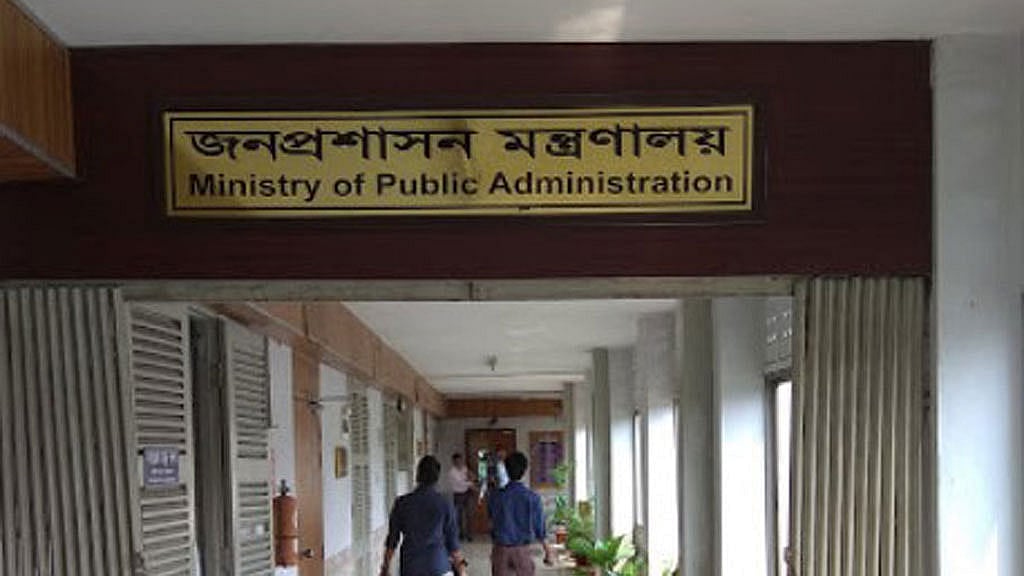
The Ministry of Public Administration has been entrusted to a state minister. In practice, however, senior BNP leaders say the portfolio remains firmly under the premier’s supervision.
Party leaders responsible for key policy areas say the government favours what they describe as “close control” of the administration -- without sliding into confrontation or excessive intimacy.
Reorganising the bureaucracy and restoring discipline, they argue, is among the government’s top priorities.
Yet they insist the new leadership does not want an open clash with the civil service, nor does it want to repeat the mistakes of over-politicisation.
Signs of change are already visible in the Secretariat, the nerve centre of Bangladesh’s administration. Similar changes are expected at the field level.
Early Signals of Reshuffle
Senior officials across several ministries say that even before the new government formally took office on Wednesday, there were strong indications that major administrative changes were imminent.
Some secretaries, particularly those serving on contractual appointments, are reportedly seeking to step aside voluntarily.
Next week, changes are expected in key field-level posts, including deputy commissioners (DCs), Upazila administrators (UNOs), and assistant commissioners (land).
Preparations for transfers are already under way across multiple ministries, with many officials bracing for reassignment.
A Turbulent Recent Past
The backdrop to these developments is the upheaval that followed the student–led mass uprising on Aug 5, 2024, which ended one-and-a-half decades of Awami League rule. The fallen government had long faced allegations of deeply politicising the administration.
When the interim government took charge, the Secretariat quickly became a scene of turmoil. Officials long denied promotions staged protests and sit-ins, crowding corridors and verandas of the Ministry of Public Administration in hopes of favourable postings.
On Sep 9 and 10, 2024, the interim government appointed new deputy commissioners in 59 districts in two phases -- one of the largest such reshuffles in recent history.
That, however, triggered further unrest. Officials who claimed they had been sidelined under the previous government demanded DC appointments, staging demonstrations outside the public administration secretary’s office for days.
Allegations soon surfaced that “beneficiaries and collaborators of the previous government” had secured DC postings. Nine deputy commissioners were eventually withdrawn.
Media reports also raised allegations of financial transactions linked to DC appointments.
BNP’s Balancing Act
Following the BNP’s victory in the elections, the new government was formed on Tuesday, with ministers and state ministers assuming office on Wednesday.
A senior minister and an advisor to the prime minister told bdnews24.com that both the BNP as a party and Tarique personally have long signalled their intent not to run an “administration-dependent government”.
Instead, they say, the prime minister has advised maintaining a functional relationship with the bureaucracy -- avoiding conflict while also avoiding surrendering control.
According to them, sweeping reshuffles are unlikely. While lobbying by different cadres is ongoing, only limited changes are expected, and politically motivated appointments will be few.
A senior BNP leader echoed this view, arguing that reconciliation -- already mentioned in the party’s election manifesto -- cannot succeed without the administration playing a central role.
Early Fault Lines
Still, several decisions taken before and after the election have offered glimpses into the leadership’s thinking.
Two days after the election, cabinet secretary Sheikh Abdur Rashid was removed, and Chief Advisor’s Principal Secretary M Siraj Uddin Mia was given additional charge. BNP leaders reportedly objected.
By Monday, Nasimul Ghani, senior secretary at the Ministry of Home Affairs, was appointed cabinet secretary.
Officials say that after the interim government was formed on Aug 8, 2024, supporters of the BNP, Jamaat-e-Islami, and the National Citizen Party (NCP) began asserting influence within the administration.
Amid growing political pressure, then chief advisor Muhammad Yunus promised political leaders in multiple dialogues that he would personally oversee administrative reshuffles.
A Jamaat-linked individual working within the Secretariat said that after the fall of the Awami League, Jamaat and NCP supporters became more visible across the administration -- allowing BNP supporters to identify them more easily. He believes BNP-aligned officials will now seek influence at every level.
A government official acknowledged that Jamaat-aligned figures already occupy several important posts.
A senior official warned that two risks loom large: an entrenched bureaucracy seeking to operate as an autonomous power centre, a tendency that grew under Sheikh Hasina; and what he called “covert Jamaat networks” within the administration.
“These hidden actors,” he said, “are the ones most likely to create trouble for the BNP.”
Lessons from the Past
A leader close to the BNP supremo said the prime minister holds strong views on promotions and postings -- particularly the Ziaur Rahman-era effort to keep the administration from becoming party-dependent.
Multiple party leaders said that immediately after the Awami League’s fall, BNP supporters organised themselves to secure positions within the administration, staging protests at the Secretariat. Many of those figures now hold roles in the government.
The BNP’s election manifesto outlines several administrative reforms: strengthening local government, forming an administrative reform commission, reinforcing the Public Service Commission, enhancing professionalism in state institutions, and preventing politicisation.
Party leaders caution that excessive party-based appointments could jeopardise those promises.
Without establishing what they call “neutral administrative governance”, they argue, pledges such as police reform, a service-oriented police force, an independent investigation service, creating 10 million jobs in five years, and introducing unemployment benefits will be difficult to realise.
BNP Vice-Chairman Shamsuzzaman Dudu told bdnews24.com: “The new government faces many challenges. Managing the administration properly is one of the most important among them. I believe this will receive priority.”
Who is Steering the Bureaucracy?
Several BNP leaders say Prime Minister Tarique has personally taken charge of administrative oversight. Former bureaucrat Ismail Zabihullah, who worked with Khaleda Zia, has been appointed as advisor, while ABM Abdus Sattar has been named principal secretary.
Multiple ministers and advisors of state minister rank will provide issue-specific input.
Prime minister’s Advisor Zahed Ur Rahman said, “We have only just been appointed. After discussions, we will be able to say more about priorities.”

Is a Reshuffle Inevitable?
An additional secretary told bdnews24.com, “After the fall of the Awami League government, there was massive change in the administration. There was no discipline then.
“The administration cadre traditionally follows a disciplined order, which was absent for one and a half years.
“To restore discipline, postings must be made strictly by batch. Since that is now happening, changes -- including at secretary level -- are inevitable, starting as early as Thursday.”
He added that many officials whose postings were stalled over the past 17 years -- and again over the following 18 months -- are now due assignments by batch seniority.
“That means widespread reshuffles from ministries to field administration.”
Is this driven by the new government’s influence?
“More important than political influence is restoring discipline,” he said. “Batch-based postings must happen whether ministers want them or not. Officers are still lobbying MPs and ministers -- that won’t stop -- but this time, going outside the rules may not be possible.”
Another official said: “Under the last government, even those punished for misconduct managed to secure benefits by claiming discrimination. If the new government wants to fulfil its promises, many of these officials will have to be removed.
“The government said it would appoint competent officials to key positions. Once old performance records are reviewed, many will step aside on their own.”
Junior officials said that many postings under the previous government were politically driven. Now, senior batch leaders are discussing reassignment, with action expected within days.
An Academic Perspective
Analyst Prof Sadik Hasan, who teaches public administration at Dhaka University said: “Our history shows that at some point, government and party become indistinguishable, and the government itself becomes dominant while the party’s role turns secondary.”
Referring to the transition from the Awami League’s fall through the interim government to the BNP’s return, he said: “We can hope that, learning from past experiences, the BNP will govern with that history firmly in mind.”