Published : 26 Mar 2022, 11:33 PM
Updated : 21 Oct 2022, 03:39 PM


For Prince William and his wife, Catherine, Duchess of Cambridge, it has been a turbulent tour of the Caribbean — one that has dramatised, through a pileup of gaffes and miscues, how rapidly Queen Elizabeth II is losing her grip on these distant dominions, even when she sends her most popular proxies.
Barbados cast off the queen as head of state last November, and Jamaica seems emboldened to follow suit, though it would require a referendum to amend the island’s constitution. William, second in line to the throne, got a taste of how the mood toward the monarchy has changed in the wake of the Black Lives Matter movement and a renewed call for reparations for Britain’s role in the slave trade.
“We intend to fulfil our true ambitions and destiny as an independent, developed, prosperous country,” Jamaica’s prime minister, Andrew Holness, said Wednesday as a po-faced William looked on.
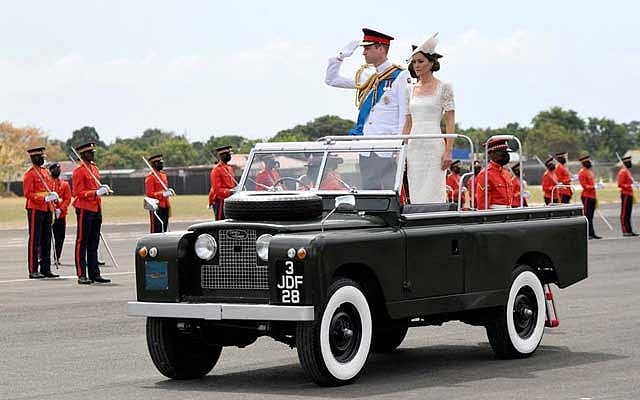
On many stops of their tour, the couple was greeted warmly, even jubilantly. But even those encounters were marred by off-key images. During a military parade, William, resplendent in a white dress uniform, rode with his wife, also in white, in the same open-top Land Rover that carried the queen and Prince Philip in 1962. To some locals, it was a caricature of a colonial proconsul inspecting his troops.
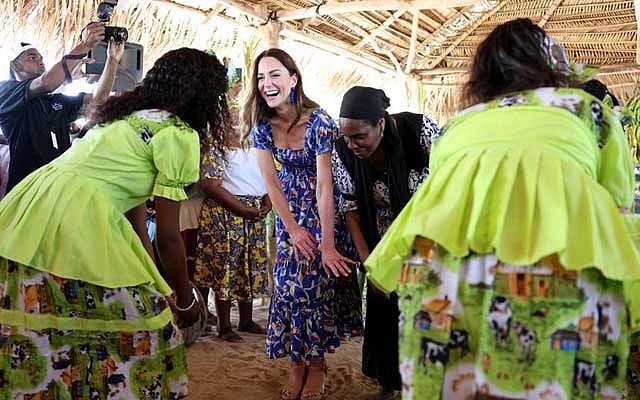
Catherine, Duchess of Cambridge, dances with the locals during her visit to Hopkins, a small village on the coast which is considered to be cultural center of the Garifuna community in Belize, Mar 20. Chris Jackson
The dissonance is about more than poor stagecraft, according to scholars and royal watchers. Sentiment toward the royal family has shifted perceptibly in the Caribbean since the killing of Black people by the police in the United States inflamed a long-simmering debate in Britain and its former colonies about the legacy of empire. Barbados’ decision to remove the queen was a tipping point.
“Barbados is seen as the conservative of the Caribbean,” said Richard Drayton, a professor of imperial history at Kings College London, who spent his childhood on the island. “So when Barbados takes a step like this, it creates space for other Caribbean countries to move in that direction.”
Both major political parties in Jamaica support becoming a republic, though there are legal hurdles that make it more complicated than in Barbados. Guyana led an earlier wave of republicanism in the Caribbean, dissolving its ties to the queen in 1970. Trinidad and Tobago followed in 1976 and Dominica in 1978.
Elizabeth, 96 next month, remains head of state of 15 countries in the Commonwealth. While she has a reservoir of popularity in the Caribbean, particularly among older people, Drayton said many were impatient for a public acknowledgement by the monarchy of its role in the slave trade, which was conducted under royal imprimatur by the Royal African Co. in the 17th and 18th centuries.
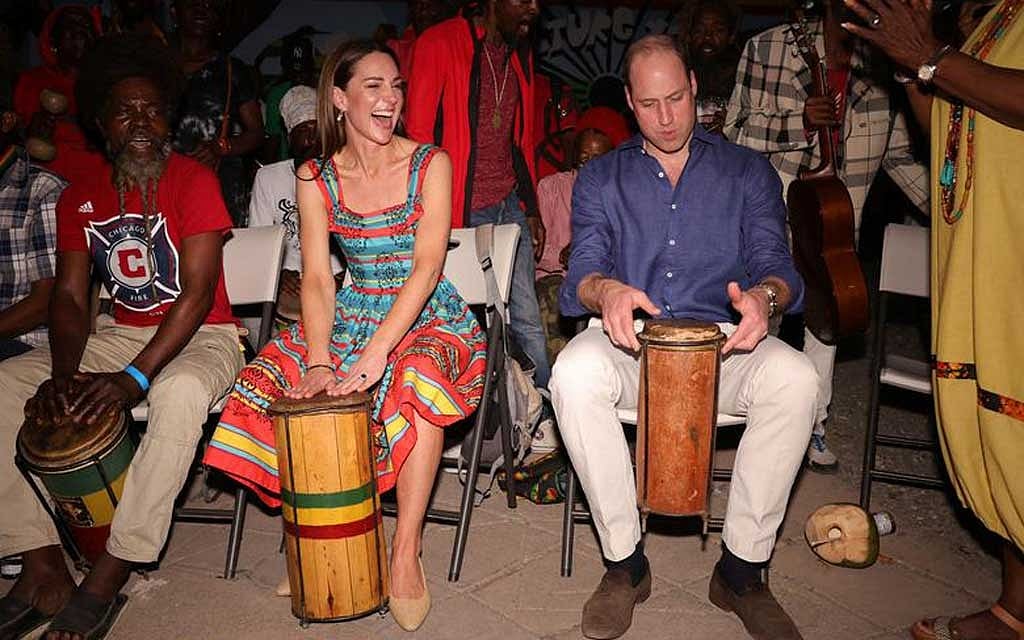
Prince William, Duke of Cambridge and Catherine, Duchess of Cambridge play music during a visit to Trench Town Culture Yard Museum where Bob Marley used to live, in Kingston, Jamaica, Mar 22. Chris Jackson/ Reuters
“I want to express my profound sorrow,” he said at a dinner in Jamaica. “Slavery was abhorrent, and it should never have happened.”
Given the charged atmosphere, Drayton said Buckingham Palace miscalculated by choreographing the couple’s visit as a traditional royal tour. The idea was to send William and Catherine, who are among the most popular royals in opinion polls, to represent the queen during her Platinum Jubilee (she stopped travelling overseas several years ago). Catherine, more commonly known as Kate, still got good reviews in the London tabloids.
“This is a very old strategy on the part of the royal household to cement its hold over the dominions, to make the charismatic presence of the crown visible,” he said. “The assumption they could simply send out members of the royal family to press the flesh and charm the crowds reflects a lack of clear thinking.”
The royal family has grappled with questions about race since last year, when the biracial, American-born wife of Prince Harry, Meghan, told Oprah Winfrey in a sensational television interview that a member of the family had expressed concerns about the colour of their baby’s skin. Asked bluntly whether his family was racist, William said no.
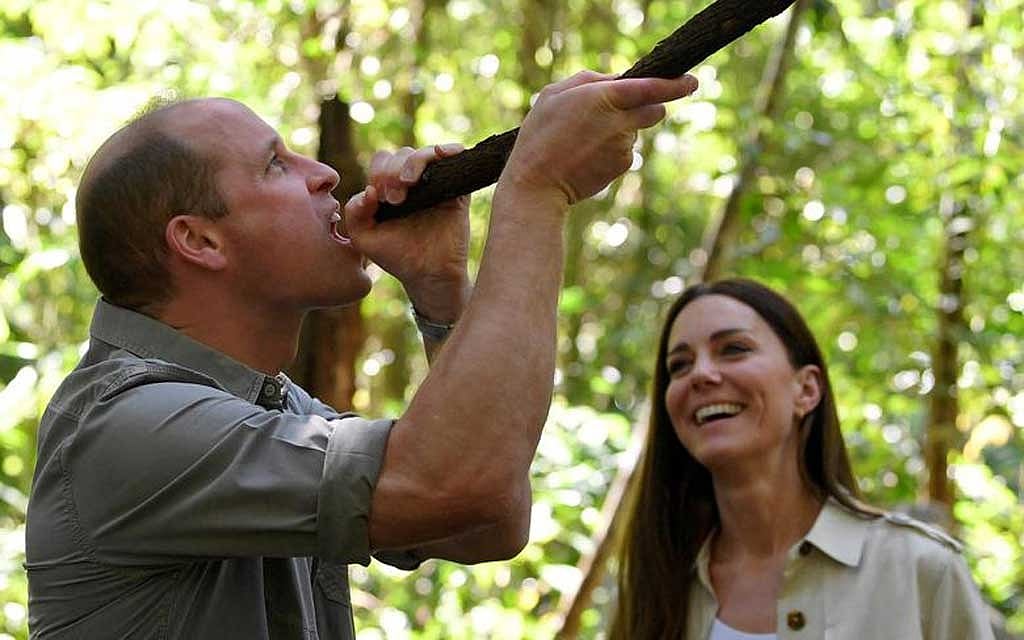
Prince William and Catherine, Duchess of Cambridge, drink water collected in a water vine as they meet military personnel from Britain and Belize during a visit to the British Army Training Support Unit jungle training facility, on the third day of their tour of the Caribbean, at Chiquibul Forest, Belize, Mar 21. REUTERS/Toby Melville
“If this tour had been led by Harry and Meghan, it would probably have gone down a lot better than William and Kate,” said Ed Owens, a historian who has written about the relationship between the media and the monarchy. “Harry and Meghan were, if you like, the monarchy’s silver bullet, making it more palatable.”
Still, given the deeper historical trends, it is unlikely that even they would have kept the queen’s realm from shrinking further. Drayton predicted Jamaica would be a republic in two years, possibly followed by Belize, though its situation was complicated by security concerns about its neighbour, Guatemala.
“The hesitations about doing this are now gone,” he said. “That particular ship has sailed.”
© 2022 The New York Times Company