Published : 25 Jun 2023, 03:18 AM
Updated : 25 Jun 2023, 03:18 AM


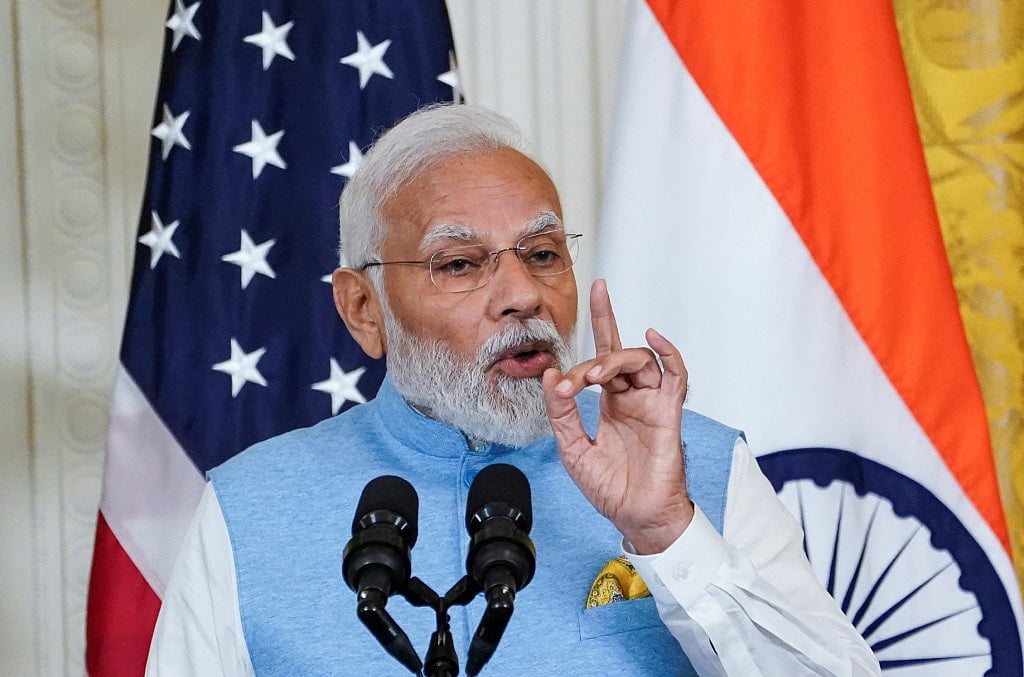
Fans of Narendra Modi have been celebrating the Indian prime minister’s visit to Washington, both in America and at home in India. The warmth with which the Biden administration has welcomed him -- and that has included the signing of quite a few important deals, a state banquet at the White House and an address before a joint session of Congress -- have impressed Modi supporters to no end. A non-resident Indian woman was heard on television proclaiming that Modi for her was the best prime minister India has had.
That is of course a matter of opinion. And it raises the question of why, despite the woman’s excitement, US Congresswoman Rashida Tlaib was among those Democrats who opted to boycott the Indian leader’s address to Congress. That said, there is a pretty long history of Indian Prime Ministers making their way to Washington, leaders who could not easily be swayed by all the blandishments successive US administrations placed before them. Before Modi, there were all the diplomatic differences which defined Delhi-Washington ties, beginning with Prime Minister Jawaharlal Nehru’s visit to the US in 1949.
Nehru was a hard nut to crack. President Harry Truman was clearly interested in having a newly independent India on America’s side at a time when the Cold War had just got underway. Nehru was non- committal; and by the time he made his second visit to Washington in 1956, when Dwight Eisenhower was President, he had already made it known that non-alignment was a cardinal feature of India’s foreign policy. India under Nehru had informed the world that it had little wish to be seen to be taking sides in circumstances where the capitalist world and the communist bloc were arrayed against each other.
Jawaharlal Nehru’s third visit to the US was in 1961, a few months after the Kennedy administration came to office. It was a trip that left the Indian leader unimpressed with President Kennedy. As he would tell his daughter Indira Gandhi after the visit, he found really nothing to talk about with the young President. It is to be recalled that ten years before he gained the White House, a young Congressman John Kennedy met Nehru on a visit to Delhi. Kennedy clearly tried to impress India’s Prime Minister with his views on diplomacy. At a point, Nehru, as was his habit when he got bored with visitors, began to look at the ceiling. The young Kennedy got the point. The meeting came to an end.
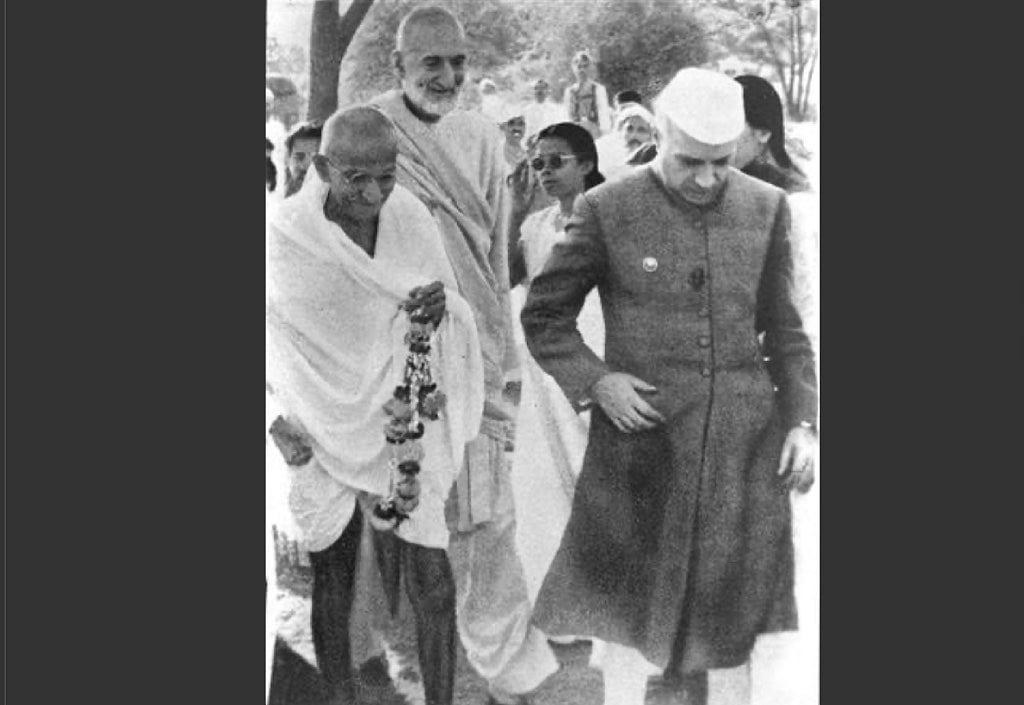
Washington was never happy with Delhi unwilling to be part of such US- dominated regional organisations as SEATO and CENTO. Moreover, the closeness which India enjoyed with the Soviet Union was an eyesore for policymakers in Washington. In the mid-1950s, Nikita Khrushchev and Nikolai Bulganin were given a rapturous welcome when they made an official visit to Delhi. Washington was not happy either that Delhi enjoyed friendly relations with Mao Zedong’s China (until the 1962 India-China border conflict changed the situation).
When Indira Gandhi succeeded Lal Bahadur Shastri as Prime Minister in 1966, one of the first countries she visited was the United States. India was in serious economic problems at the time, with food aid required from President Lyndon Johnson’s administration. Mrs Gandhi obviously did not appreciate the tone in which American officials lectured her delegation on what India needed to do about its economy. It is reported that once she came back home, she expressed her annoyance thus, ‘Never again.’ Her government undertook a massive programme of a green revolution across the country, a campaign that would make all the difference for India.
Indira Gandhi visited Washington in autumn of 1971, a time when the Nixon administration had publicly adopted an anti-Indian position over the Bangladesh war. Her talks with President Nixon, who had Henry Kissinger by his side, did not go well. She made it clear that the conflict over Bangladesh had arisen because of the actions of the Yahya Khan military junta in Pakistan and that unless the Pakistanis went for a political settlement with Bengalis, there was no way for the crisis to draw to an end. Her meetings with Nixon ended on a less than friendly note. America’s support for Pakistan was galling and she made it clear to her hosts.
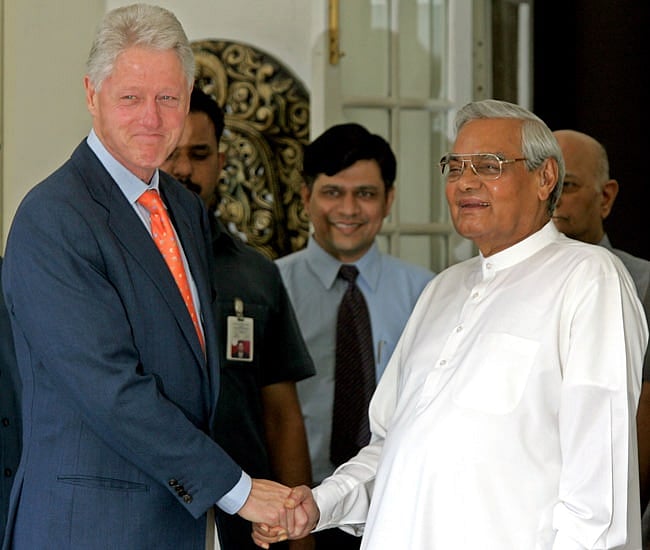
Mrs Gandhi was to visit Washington a third time as prime minister in 1982, two years after her return to office in 1980. President Ronald Reagan, who had succeeded Jimmy Carter in 1981, was effusive in welcoming the Indian leader. Earlier, in 1978, Prime Minister Morarji Desai, who had come to power after the 1977 elections, visited the US for talks with President Carter. In 1985, Rajiv Gandhi was welcomed to Washington by President Reagan. The young Indian leader made his second official visit to the US in 1987, where Reagan welcomed him once again. In 2000, Prime Minister Atal Bihari Vajpayee went to Washington and engaged in fruitful discussions with President Bill Clinton at the White House.
Prime Minister Modi’s visit thus falls in line with all the earlier visits to Washington by a number of his predecessors. It may be recalled that following the Gujarat riots in 2002, a US visa ban was imposed on Modi, at the time Chief Minister of the state. Not until Modi became Prime Minister in 2014 was the visa restriction lifted.
Modi’s visit has solidified India’s position as an ally of the United States, as the agreements signed during the visit demonstrate. India is today a member of Quad, an organisation overtly aimed at checking the ambitions of Xi Jinping’s China. Besides, Chinese claims on Indian territory in India’s north-east have justifiably rattled Indian politicians. The border between the two countries continues to generate worries.
In the old days, Washington had a tough time dealing with Indian prime ministers, whose determination to keep India away from any alignment and indeed to assert Indian foreign policy on the global stage was a significant feature of the country’s politics.
Indian diplomacy under Prime Minister Narendra Modi enters new and uncharted territory. Once the excitement over Modi’s Washington visit dies down, policymakers in Delhi will need to coolly examine the ramifications of the prime minister’s dealings with President Joe Biden and his administration.
Meanwhile, India’s secular opposition, fragmented in so many ways, has been meeting in Patna to devise the ways and means of challenging Modi’s Bharatiya Janata Party at the general elections next year.
[Syed Badrul Ahsan is a politics and diplomacy analyst]