Published : 01 Feb 2021, 10:33 AM
Updated : 14 Oct 2022, 06:27 PM


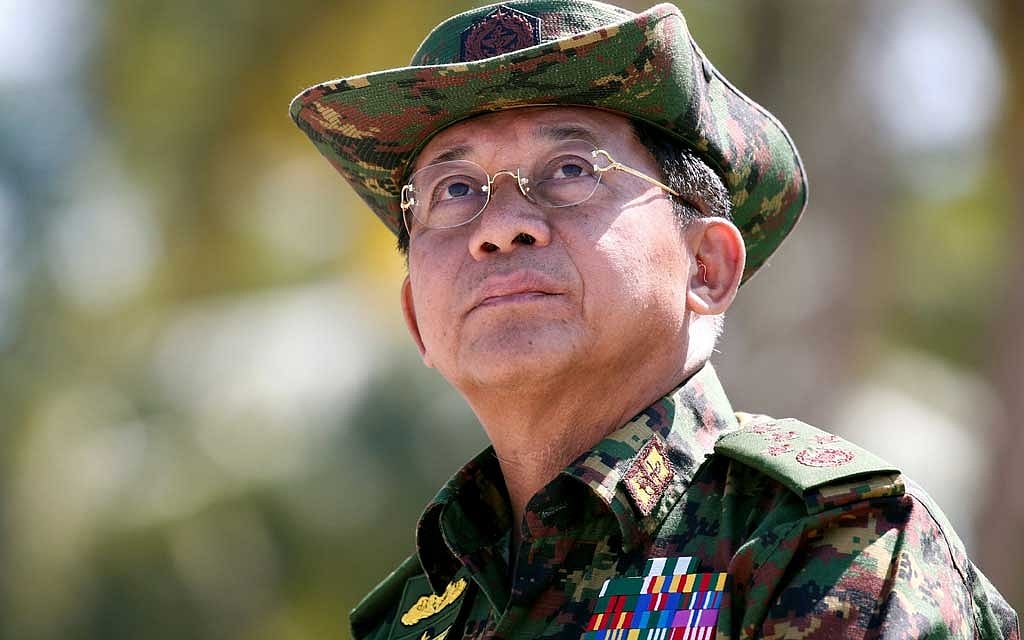
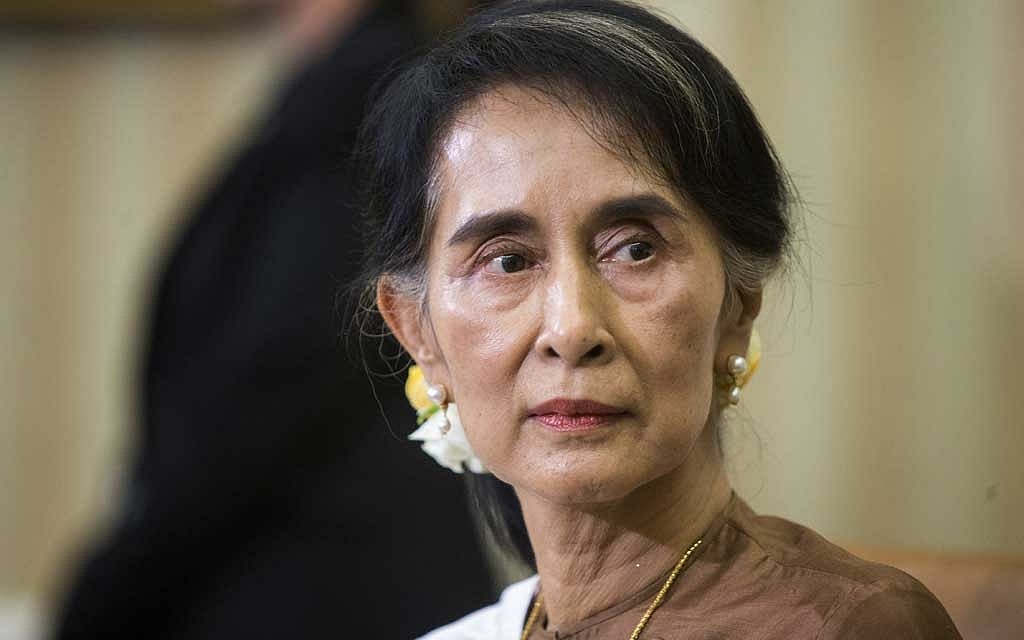
Officials from the governing National League for Democracy confirmed the detentions Monday morning. Hours later, with politicians and activists alike racing to find out who had been detained, a military television network announced a one-year state of emergency with power transferred to the army chief, Senior Gen Min Aung Hlaing.
Mobile networks and the internet were down in major cities in Myanmar, and some local journalists went into hiding for fear that their reporting could compromise their safety. Domestic flights were suspended, and the main international airport in Yangon, the largest city in Myanmar, had been shuttered, according to residents.
Myanmar had been celebrated as a rare case in which generals willingly handed over some power to civilians, honouring 2015 election results that ushered into office the National League for Democracy.
The stalwarts of that party had spent years in jail for their political opposition to the military. Suu Kyi, the political party’s patron saint, spent 15 years under house arrest and won a Nobel Peace Prize in 1991 for her nonviolent resistance to the junta that locked her up.
But the army, led by Min Aung Hlaing, has maintained important levers of power in the country, and the detention of the top government leaders, along with activists and other veteran politicians, Monday appeared to prove the lie in its commitment to democracy.
“The doors just opened to a different, almost certainly darker future,” said Thant Myint-U, a historian of Myanmar who has written several books about the country. “Myanmar is a country already at war with itself, awash in weapons, with millions barely able to feed themselves, deeply divided along religious and ethnic lines.”
“That it was able to make any progress this past decade toward democracy was a near miracle,” he said. “I’m not sure anyone will be able to control what comes next.”
As it began its political evolution, Myanmar was lauded by Western governments, including the Obama administration, as a democratic beacon in a world where authoritarianism was on the rise. But the political transition in the Southeast Asian nation was never quite as smooth or as significant as the political fairy tale made it out to be.
The army, which began a political transition toward what it called, confusingly, “discipline-flourishing democracy” in 2011, made sure to keep significant power for itself. One-quarter of Parliament is filled by men in military uniforms. Key ministries are under army control. And in the chaotic years of early democratisation, fire sales of state assets often ended up with military companies or their proxies capturing the choicest prizes.
In 2017, the military stepped up its brutal campaign against the Rohingya, compelling 750,000 members of the Muslim ethnic minority to flee to neighboring Bangladesh in one of the largest global outpourings of refugees in a generation. United Nations officials have said the mass burnings of Rohingya villages, complete with systematic executions and rape, were carried out with genocidal intent.
President Joe Biden’s administration is reviewing whether the United States will officially label the campaign against the Rohingya genocide. Western nations, including the United States, have already slapped financial sanctions on some high-ranking officers implicated in the violence against the Rohingya, including Min Aung Hlaing himself.
The latest turmoil was ostensibly provoked by concerns about fraud in the November elections, which delivered an even bigger landslide to the National League for Democracy than the party enjoyed five years earlier. The governing party secured 396 out of 476 seats in Parliament, while the military’s proxy party, the Union Solidarity and Development Party, managed just 33.
The Union Solidarity and Development Party cried foul, as did political parties representing hundreds of thousands of ethnic minorities who were disenfranchised shortly before the vote because the areas where they lived were supposedly too gripped by strife for elections to take place. Rohingya Muslims were also unable to cast their ballots.
But few in Myanmar believed that the detentions Monday, which netted top National League for Democracy officials, were made only over concerns over electoral fraud. Worries that the military might intervene started in October, when the vote was canceled in some of the ethnic minority areas.
“The ominous warning signs had been in plain sight all along,” said U Khin Zaw Win, who runs a policy think tank in Yangon, the commercial capital of Myanmar.
The military's reassertion of authority could prolong the power of Min Aung Hlaing, who is supposed to age out as army chief this summer. His patronage network, centered on lucrative family businesses, could well have been undermined by his retirement, especially had he not been able to secure a clean exit.
The coup came just two days after António Guterres, the UN secretary-general, warned against any provocations. Guterres called on “all actors to desist from any form of incitement or provocation, demonstrate leadership, and to adhere to democratic norms and respecting the outcome of the 8 November general election.”
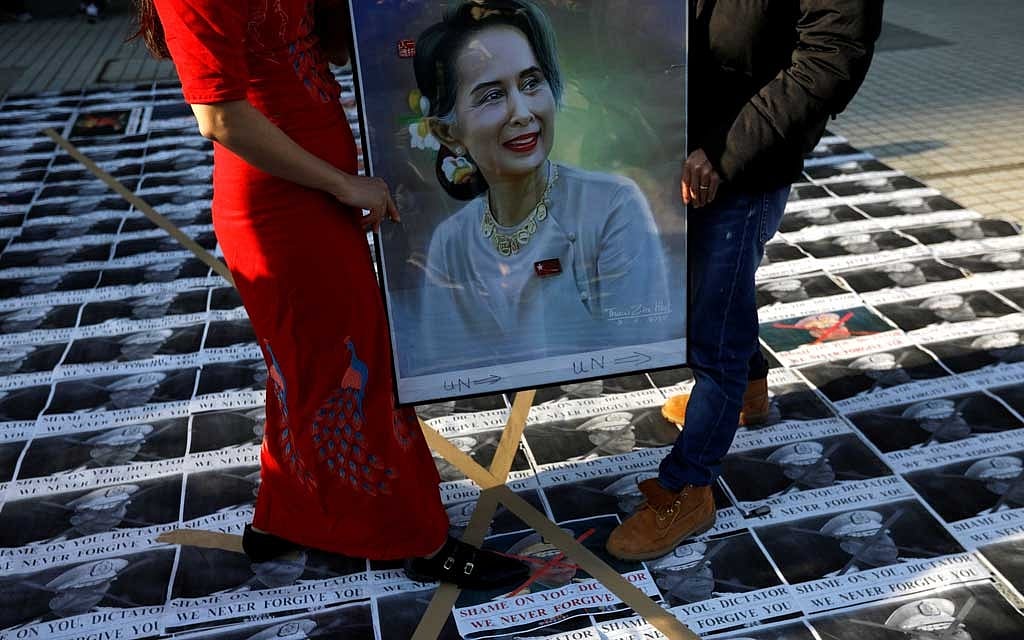
In recent years, Suu Kyi, 75, once celebrated as an international champion of human rights for her campaign of conscience against the junta while under house arrest, emerged as one of the military’s biggest public defenders. Despite a mountain of evidence against the military, she has publicly rejected accusations that the security forces waged a genocidal campaign against the Rohingya.
But with her national popularity enduring, and her party receiving another electoral mandate, the generals began visibly losing patience with the facade of civilian rule that they had designed.
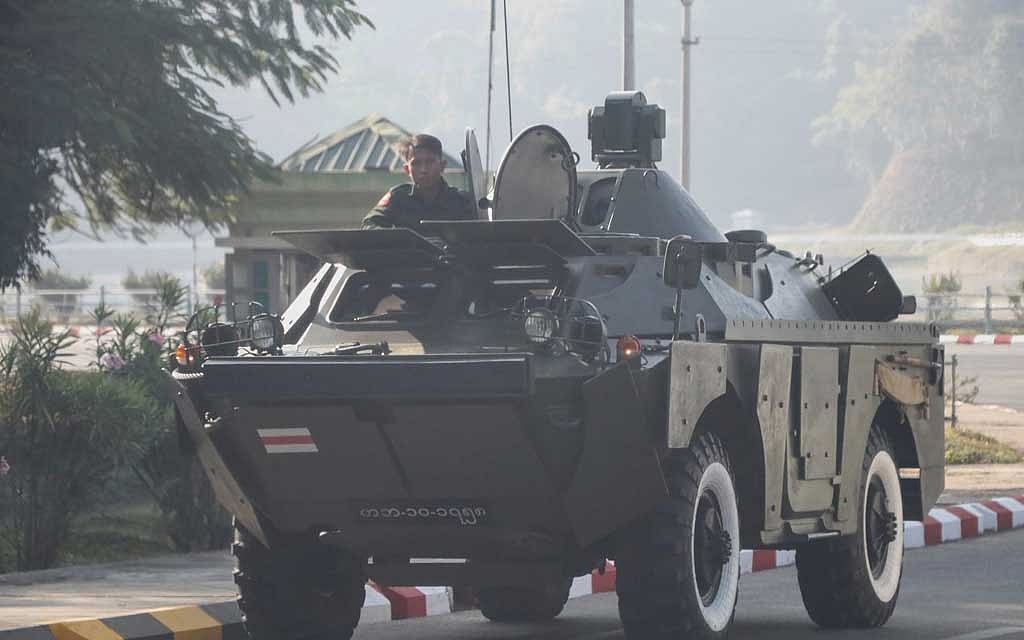
Last week, an army spokesperson refused to rule out the possibility of a coup, and Min Aung Hlaing said that the constitution could be scrapped if the law was broken. Armoured vehicles appeared on the streets of two cities, spooking residents unused to seeing such firepower cruising through urban centers.
On Saturday, the military appeared to step back, releasing a statement saying that as an armed organisation, it was bound by the law, including the constitution. Another statement on Sunday said that it “was the one adhering to democratic norms.”
The detention of the senior civilian government leaders occurred just hours before Parliament was supposed to begin its opening session after the November election.
The country had buzzed with coup rumors for days, prompting a number of diplomatic missions, including that of the United States, to issue a statement on Friday.
“We oppose any attempt to alter the outcome of the elections or impede Myanmar’s democratic transition,” the joint diplomatic statement said.
The military, which initially seized power in a coup in 1962, fired back with its own statement on Sunday, urging the diplomatic missions in the country “not to make unwarranted assumptions about the situation.”
A businessman from the north of Myanmar, Ko Thar Htet, lamented the turn of events.
“I’m so angry to see the military threatening people, instead of helping the government for the sake of people,” he said. “They have committed so many crimes.”
c.2021 The New York Times Company