


Published : 24 Mar 2015, 06:23 PM
Updated : 19 Oct 2022, 06:39 PM


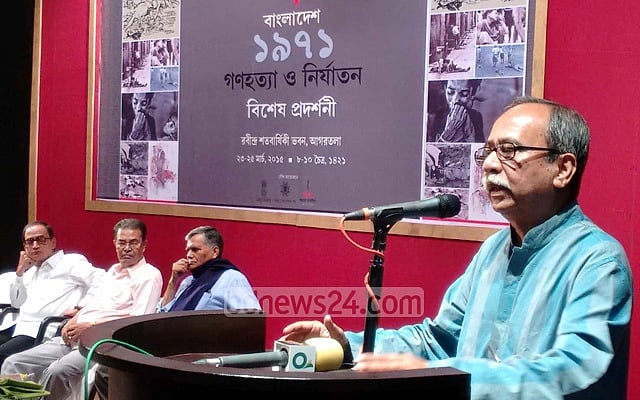
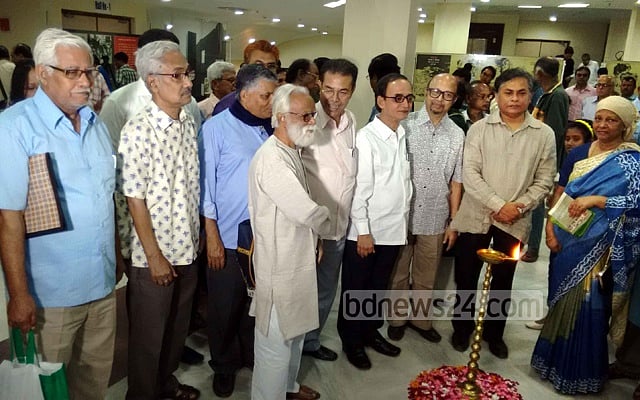
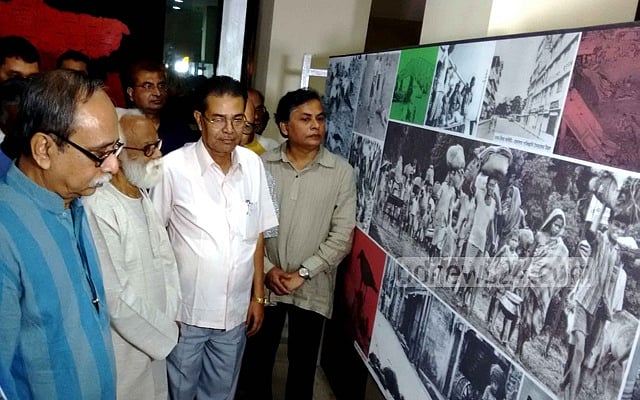
The show, titled ‘1971 Genocide and Torture’ began Monday.
Dhaka University Prof Muntasir Mamun spoke about the exhibition at the Agartala Press Club.
He is one of the key figures in the Bangladesh Itihas Samiti (BIS), a voluntary body of historians.
The Indian state had played a vital role by giving shelter to thousands of refugees fleeing in the face of Pakistani army brutality.
“We feel that the Liberation War will remain incomplete and will be forgotten if the atrocities of the genocide are not made known to everyone.
He said Bangladesh was, for a long time, under the army rule after the assassination of the country’s founding father Bangabandhu Sheikh Mujibur Rahman.
He lamented that the US, China, and countries of the Middle East had actively supported Pakistan while it committed the genocide.
“They never expected that Bengalis would win the war and once Bengalis were victorious, it was natural for those countries not to allow the raising of the genocide issue,” Mamun said.
“But it is not mentioned anywhere because if the details of the mass-killing were to come to light, the names of countries like America, China and others would be dragged along with it.”
He added Bangladesh was under army rule for a considerable period from 1975, during which time pro-Pakistani forces distorted the country’s history to confuse the new generations.
But he said he was confident that the photographs would help younger people know the facts about the mass killings organised by Pakistan and of India’s role in the liberation of Bangladesh.
“We have not been able to project all this because of our internal politics. Pro-Pakistani elements still in Bangladesh are raising question about our Liberation War, the genocide, and our relation with our friendly neighbour India, said Mamun.
He said a unique museum-cum-archive on the genocide and torture during the Liberation War had been set up in Khulna.
Mamun, accompanied by renowned contemporary artists Hashem Khan and Sheikh Baharul Khan, all members of the 1971 Genocide-Torture Archive and Museum Trust and the principal organisers of the exhibition, said that the photographs being displayed at the Rabindra Centenary hall would expose the horrors of the genocide committed by Pakistan in Bangladesh.












