Published :
05 May 2014, 09:48 PM
Updated :
08 Aug 2022, 06:44 PM
The government’s disease monitoring agency, IEDCR, says about four among every 10 Japanese Encephalitis (JE) patients are from Rajshahi, Rangpur and Naogaon districts.
“Its (JE) mortality is as high as 30 percent,” director Prof Mahmudur Rahman said on Monday while briefing journalists on this apparently new disease.

Almost 50 percent of survivors live with “different types of neurological problems”, he said, while at least 40 percent of the patients were found to be children below 15.
But it is the only mosquito-borne disease that, according to the World Health Organisation, has a preventive vaccine.
There is no specific treatment for this disease like dengue.
There is no study to say why the virus is more common in the northern part, but Prof Rahman said, “May be pigs and birds that host the virus are more common there.”
JE infected patients turn up with symptoms associated encephalitis like headache and fever, followed by confusion and convulsion.
This baffles doctors as the signs point to the nipha virus as well as bacterial encephalitis.
Lab tests alone can confirm the infection. “But it (diagnosis) does not matter, since there is no specific cure,” Prof Rahman said.
“Prevention is the key,” he said.
JE first reported in February 2007 in Bangladesh and 294 cases had been identified till October last year, nearly seven percent of the total encephalitis cases.
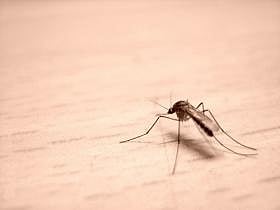
Mosquito-borne disease is a world-wide concern that prompted WHO to observe this year’s health day on the issue.
Bangladesh is one of the few countries in the world that hosts six mosquito-borne diseases – malaria, kala-azar, filariasis, dengue, chikungunya and JE.