


Published : 29 Apr 2020, 09:37 PM
Updated : 17 Oct 2022, 11:06 AM


Neither Gilead nor officials at the National Institute of Allergy and Infectious Diseases, sponsor of the federal research, provided further details. A spokeswoman at NIAID, part of the National Institutes of Health, confirmed plans to make an announcement later Wednesday.
The brief announcement by Gilead read: “We understand that the trial has met its primary endpoint and that NIAID will provide detailed information at an upcoming briefing.”
Trading in the company’s stock was halted before the market opened.
The federal study includes 400 patients who were hospitalised with COVID-19, the illness caused by the coronavirus, and randomly assigned to take remdesivir or a placebo. Outcomes were scored on a scale ranging from recovery to death.
Remdesivir has never been approved as a treatment for any disease. It was developed to fight Ebola, but results from a clinical trial in Africa were disappointing.
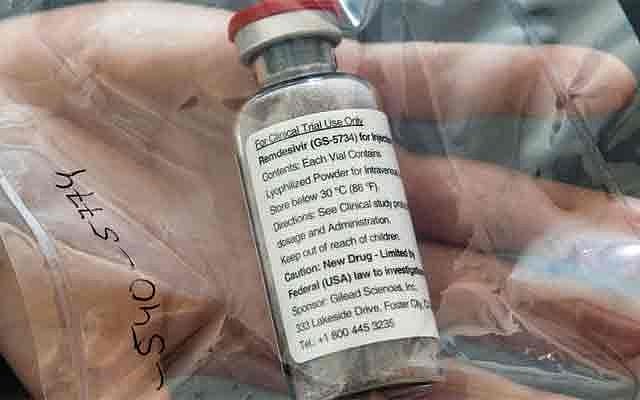
An ampule of Ebola drug remdesivir is pictured during a news conference at the University Hospital Eppendorf (UKE) in Hamburg, Germany, April 8, 2020, as the spread of coronavirus disease (COVID-19) continues. Ulrich Perrey/Pool via REUTERS
Expectations were fuelled by anecdotal reports of COVID-19 patients who took remdesivir and recovered.
Two such reports were published in the prestigious New England Journal of Medicine, lending credibility to what researchers later said were uncertain results.
Without trials comparing the drug to a placebo, it has been impossible to know whether the drug made a difference or patients got better on their own with normal supportive care.
Acceding to demands, Gilead has distributed the drug to hundreds of patients under so-called compassionate use, a regulatory exemption by which patients may receive a drug apart from a clinical trial.
Gilead itself published reports of uncontrolled studies. On Wednesday, in another press release, the company announced that a study comparing a five- to ten-day course of treatment with the drug showed that those getting the shorter course of treatment did just as well.
That study had no control group, and was “non-informative,” said Dr. Eric Peterson, a clinical trials expert at Duke University.
©2020 The New York Times Company












