
Published : 25 Nov 2026, 01:09 AM
Updated : 25 Nov 2026, 01:09 AM


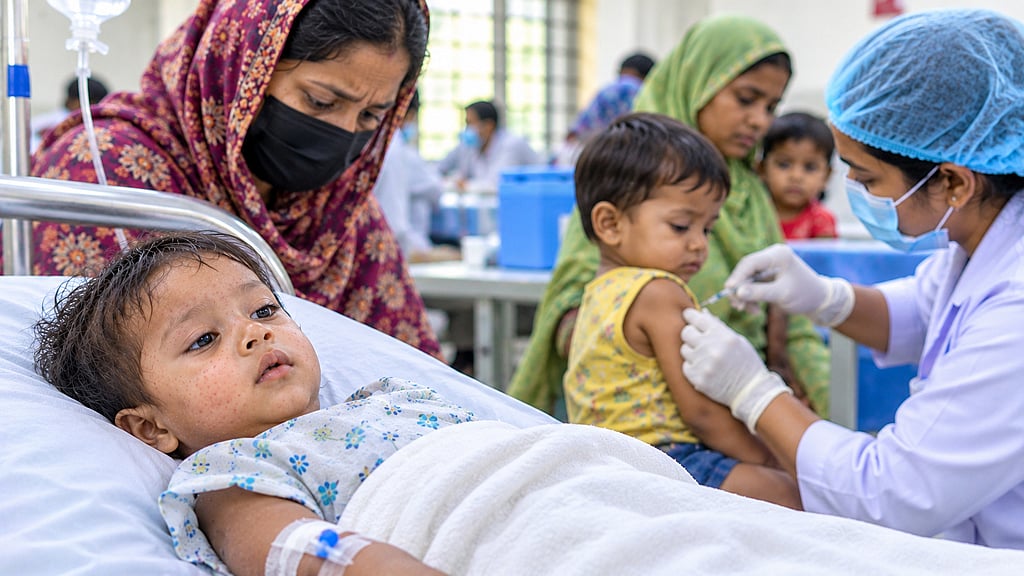
The children were vaccinated. The campaigns were repeated. The government maintained that routine immunisation was continuing as planned. Yet measles kept spreading across Bangladesh, claiming lives and exposing questions about whether the country's vaccination initiative was reaching the children it was meant to protect.
Four rounds of vaccination have been carried out within six months, including efforts to find children who had missed earlier doses. Still, infections and deaths have not fallen as expected.
Is the vaccine failing? Are children receiving all the doses they need? Has the quality of the vaccine been compromised? And do the government's coverage figures reflect what is happening on the ground?
Health experts say the continuing outbreak points to serious weaknesses in the vaccination effort. Without a closer examination, they warn, the disease could eventually infect people across the country.
A Toll without Precedent
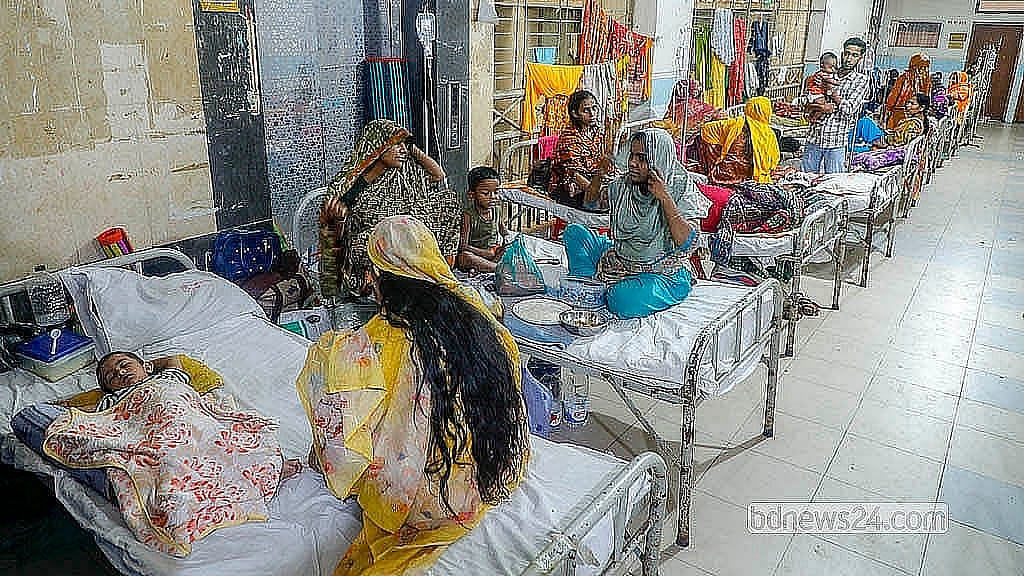
By Nov 24, measles and suspected measles had claimed 1,361 lives this year, according to figures published by the media. Of these, 105 deaths were confirmed as measles. Almost all the victims were children.
The toll is the highest recorded in the country's history. A 2006 survey based on random sampling found four deaths. The next highest figures were 10 in 2017, six in 2018 and seven in 2020.
The first cases this year were detected in Rohingya camps in Cox's Bazar in January, followed by outbreaks in several Dhaka slums in February. The government began publishing official infection and death figures on Mar 15.
By Nov 24, the Directorate General of Health Services (DGHS) had recorded 259,190 measles cases. Dhaka accounted for 177,038, the highest among the divisions, while Rangpur had the fewest, at 5,042.
Deaths and suspected measles cases were also concentrated in Dhaka, where 631 people had died. Rangpur recorded 18, the lowest divisional toll.
These figures do not capture the full scale of the outbreak. Not every patient arriving at a hospital, let alone those staying away from medical facilities, is tested for measles.
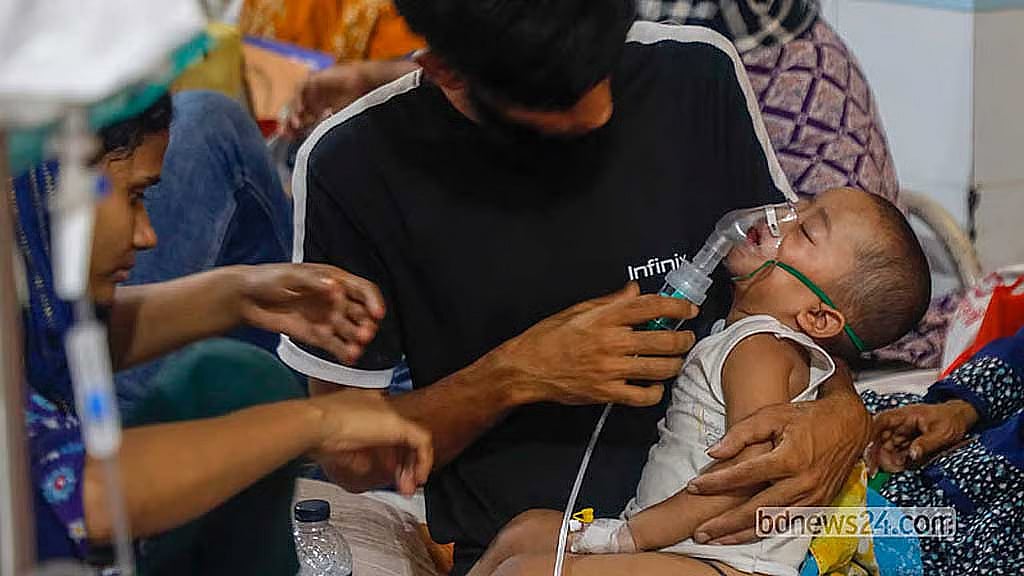
The health directorate records patients who seek treatment or are admitted, making the actual number of infections difficult to establish.
The trend over the months is troubling. In the first 30 days after official reporting began, 198 people had died and 19,361 patients with measles symptoms had sought hospital care. By day 60, the toll had reached 439 and the number of patients 54,419.
By day 120, deaths stood at 759 and hospital visits at 112,376. On day 180, the figures were 1,009 and 168,745 respectively. By Nov 9, 240 days after reporting began, deaths had climbed to 1,284 and the number of patients to 240,199.
The Nov 24 bulletin put the toll at 1,361 and the number of patients at 259,190. That amounted to an average of 1,016 patients a day by this point in the outbreak.
The data suggest infections accelerated after the second week of August. Deaths have eased somewhat, but more than five people are still dying each day. Repeated vaccination campaigns have yet to produce a clear reversal.
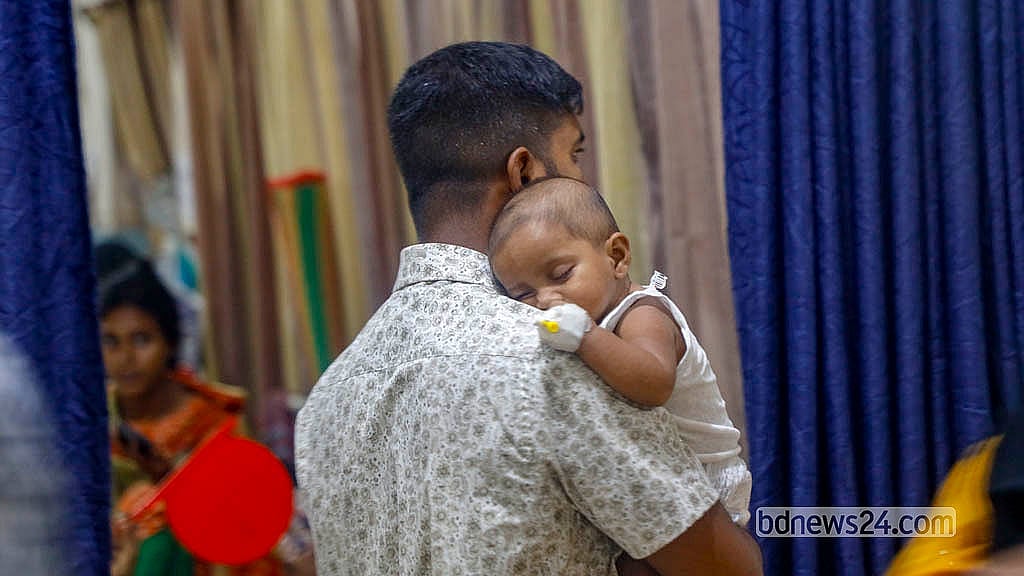
Did the Campaigns Reach Every Child?
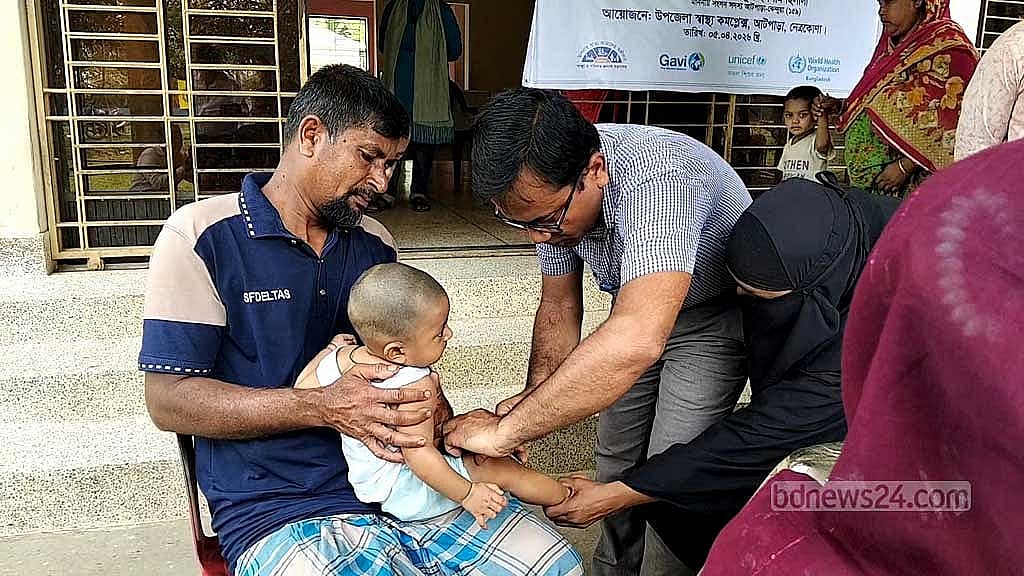
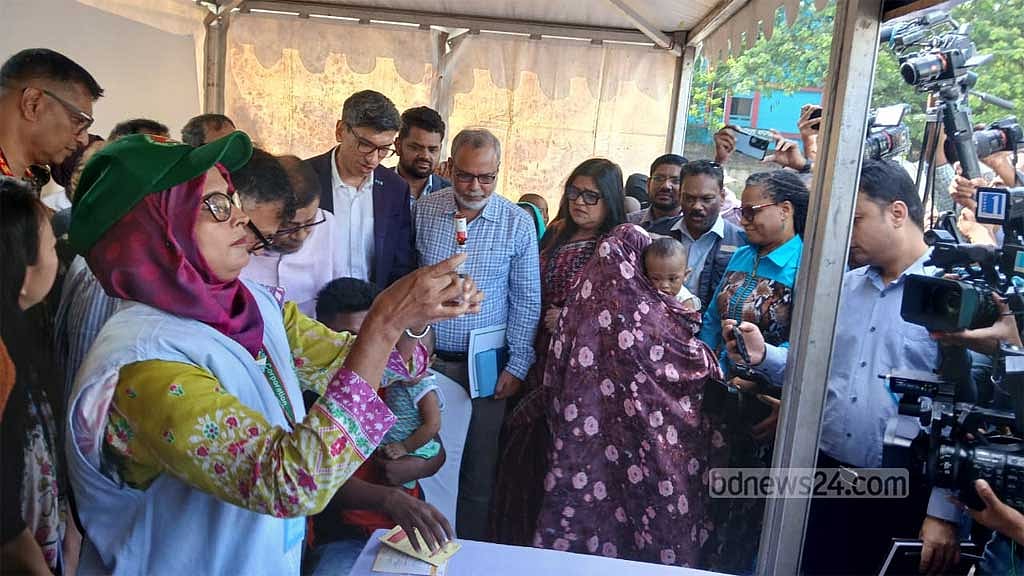
The government mounted three rounds of vaccination after the outbreak began. The first started on Apr 5 in 30 high-risk Upazilas, followed by four city corporation areas on Apr 12. A nationwide measles-rubella campaign ran from Apr 20 to May 20.
The health directorate reported that the campaigns had reached 100 percent of their target. But the coverage figures came under scrutiny when they were compared with the number of children included in the Vitamin A Plus campaign, which covered the same age group: 6 to 59 months.
According to the National Institute of Nutrition, 22.36 million children received Vitamin A capsules on Jun 28. The roughly 4.3 million-child gap between the two programmes prompted the health ministry to launch another search for children who might have missed measles vaccination.
The government then set a target of finding and vaccinating around 3.4 million children between Sept 26 and Oct 31. By Nov 17, the health directorate said more than 21.8 million children had been vaccinated, leaving about 300,000 still to be reached.
But the Expanded Programme on Immunization acknowledged that the target for the catch-up drive had been based on Vitamin A campaign figures.
That raises another question: how does the government count vaccinated children? Does it record each child who receives a dose, or calculate coverage from the number of vaccine vials distributed and returned?
Experts suspect the exercise may have focused more on reconciling vaccine figures than tracking down every missed child.
“Given the way vaccination coverage is being reported, measles should have declined, but that is not what we are seeing. We need to check whether there is false reporting in vaccination,” said Prof Mahmudur Rahman, an epidemiologist and chairman of the National Verification Committee for Measles and Rubella Elimination.
Mushtuq Husain, a public health expert and former chief scientific officer at the Institute of Epidemiology, Disease Control and Research, pointed to a shortage of nearly 20,000 field workers in the EPI.
“Such a huge shortage of workers makes it impossible to run a successful programme.
“On the other hand, vaccines were administered on an emergency basis at the beginning of the measles outbreak. But the microplanning required for a national vaccination campaign, which involves spending at least three months counting children, has not been done so far. As a result, children in remote areas, chars and small communities may have been missed.”
Are Children Developing Enough Immunity?
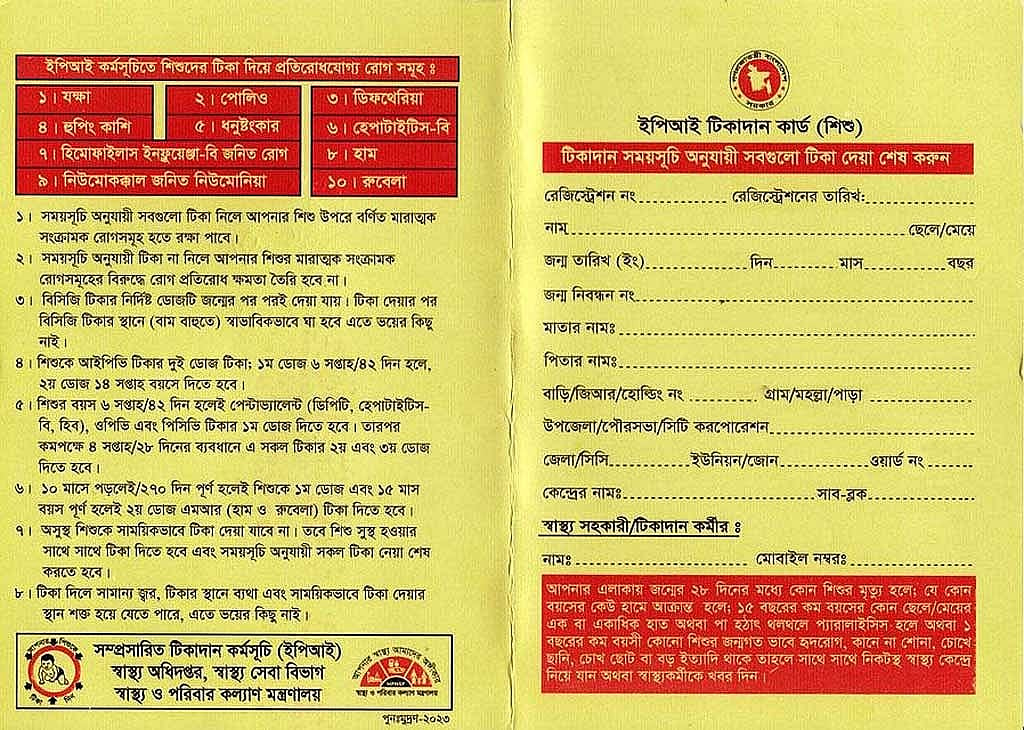
Under the EPI schedule, children receive 10 vaccines between birth and 15 months, including two measles doses: the first at 9 months and the second at 15 months. In response to the outbreak and the age profile of infected children, an expert committee also recommended vaccinating babies from 6 months old.
Campaigns began on Apr 5, Apr 12 and Apr 20, with another round starting on Sept 26. Four weeks had not yet passed after the latest campaign ended, the period needed for antibodies to develop.
But an IEDCR-led study of more than 300 children in three districts has examined the antibody response following earlier vaccination rounds. More than 200 children, or around 70 percent of the sample, had developed measles antibodies.
Another 6 percent had antibodies at marginal levels, while 24 percent had not developed enough to provide protection.
An IEDCR official, speaking on condition of anonymity, said the findings could raise questions about vaccine quality.
“The quality of the vaccine may be questioned if antibodies are not being produced. The quality of the vaccine can deteriorate because of various flaws, from storage to administration.”
Prof Mirza Md Ziaul Islam, director of Bangladesh Shishu Hospital and Institute, said widespread malnutrition among children could also weaken their immune response.
“If there is not proper nutrition, the body cannot produce enough antibodies with anything. In this situation, not only measles but other viruses and bacteria can also attack quickly.”
Prof Mahmudur cautioned against drawing conclusions from the study without knowing how it was conducted.
“I do not know what method was used in the research. A single dose of vaccine does not necessarily produce enough antibodies.”
Vaccine expert Tajul Islam A Bari said the entire supply chain needed scrutiny. Around 80 percent of Bangladesh's vaccines come from India, with the rest sourced from other countries, he said.
“So the chain from after production of the vaccine until it is injected into children's bodies needs to be checked.
“Within this chain, the quality of vaccines can deteriorate for various reasons, including flaws in storage.”
The public health expert called for a comprehensive review of the vaccination system to identify errors and weaknesses, followed by age-specific surveys to establish how much immunity children were developing.
“The entire vaccine management system needs to be examined to see whether there are any flaws or mistakes. Then age-based surveys should be conducted to assess the effectiveness of vaccines. That means looking at how many antibodies are being produced in different age groups and taking measures accordingly.”
A System in Need of Repair
The three experts interviewed by bdnews24.com agreed that the EPI needed strengthening and that the eligible age range for vaccination should be widened.
Prof Mahmudur said the programme needed a decision-making official with clear authority. Without a stronger EPI, he argued, vaccination campaigns could not succeed.
Calling for an emergency response, he said: “To overcome this situation, measles must be prioritised and a crash programme launched. The age limit for vaccination must also be increased.”
An EPI official, also speaking anonymously, said the antibody study involved too few children to support broad conclusions. But the official stressed that two doses were essential for effective protection.
“If 100 percent of the population across the country receives two doses of the vaccine, 95 percent will be protected. This creates herd immunity and can stop the transmission of infectious diseases.
“But the two doses of the vaccine were not given.”
Other factors, the official added, also influence whether people develop protection.
EPI Assistant Director Hasanul Mahmud acknowledged the shortage of field workers, saying recruitment had already taken place in 27 districts, though the remaining vacancies had yet to be filled.
On allegations of inaccurate reporting and the need to maintain the vaccine cold chain, he said: “We mainly organise the programme and monitor it. The cold chain is maintained to the highest possible standard. However, internal work is under way to verify false reporting.”
Director General of Health Services Professor Pravath Chandra Biswas said the government would seek expert advice on the next steps once it reached its latest vaccination target of around 22.6 million children. Several hundred thousand children were still to be vaccinated.
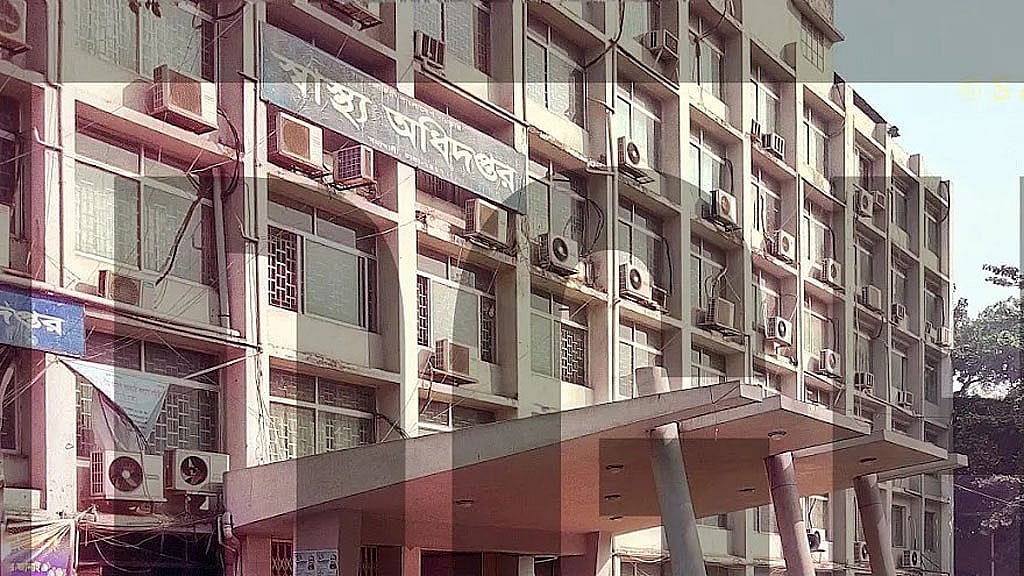
He said an international assessment of the EPI had recently been conducted and had not identified any specific problems, although it made recommendations, including reducing staff shortages and improving vaccination arrangements at temporary centres.
Training could also be introduced to improve the skills of frontline vaccination workers, he said.
“Two issues have come to our attention: infections among children below six months and those above 59 months. We are considering what can be done for these two age groups.”
The outbreak has left a question that repeated campaigns and official coverage claims have yet to settle: whether Bangladesh's vaccination system is providing children with the protection they need.