Published : 05 Oct 2026, 01:18 AM
Updated : 05 Oct 2026, 01:18 AM


For a vaccination campaign meant to find children who slipped through the cracks, Bangladesh is starting with a number that is itself difficult to pin down.
The government says 3.4 million children are being brought under its latest measles-rubella catch-up drive, including 2.4 million who were missed during earlier campaigns.
Yet two days before the new campaign began, the Expanded Programme on Immunization said it had received information on only around 1.2 million children who had missed measles vaccination.
How, then, did the list of 3.4 million come together?
The question goes beyond simple math. With measles still spreading and children outside the campaign’s age range also falling ill, health experts are questioning whether the latest drive can find those who remain unprotected.
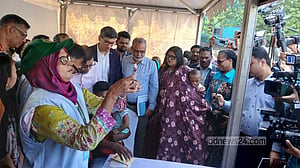
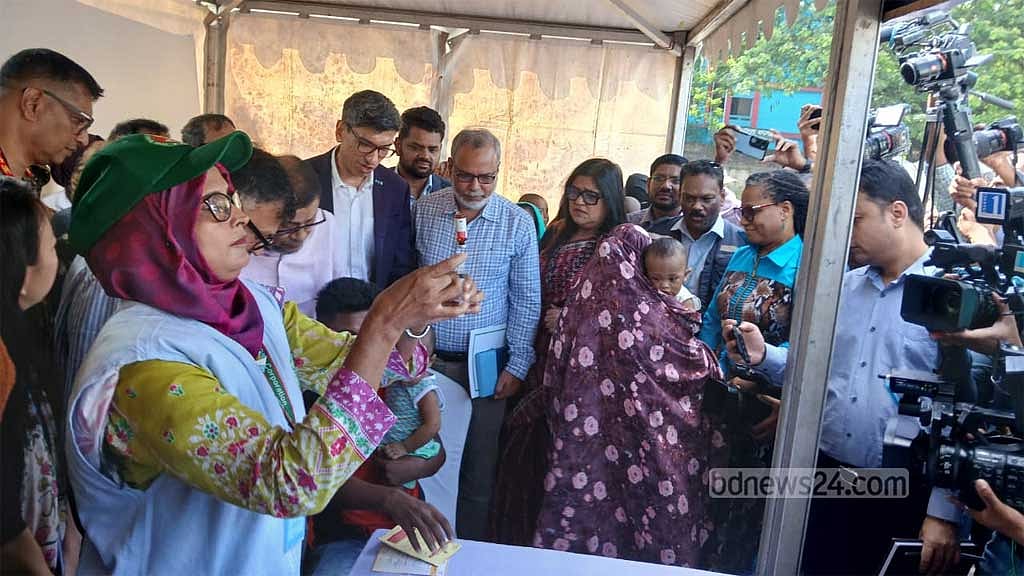
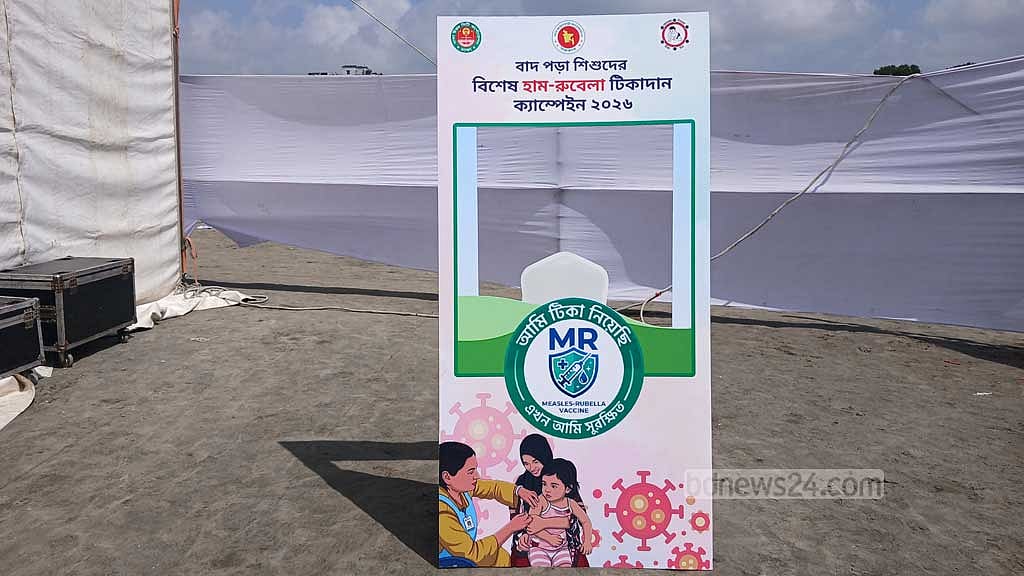
The month-long campaign began on Sept 26 and will continue until Oct 31.
How the Number Took Shape
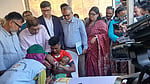
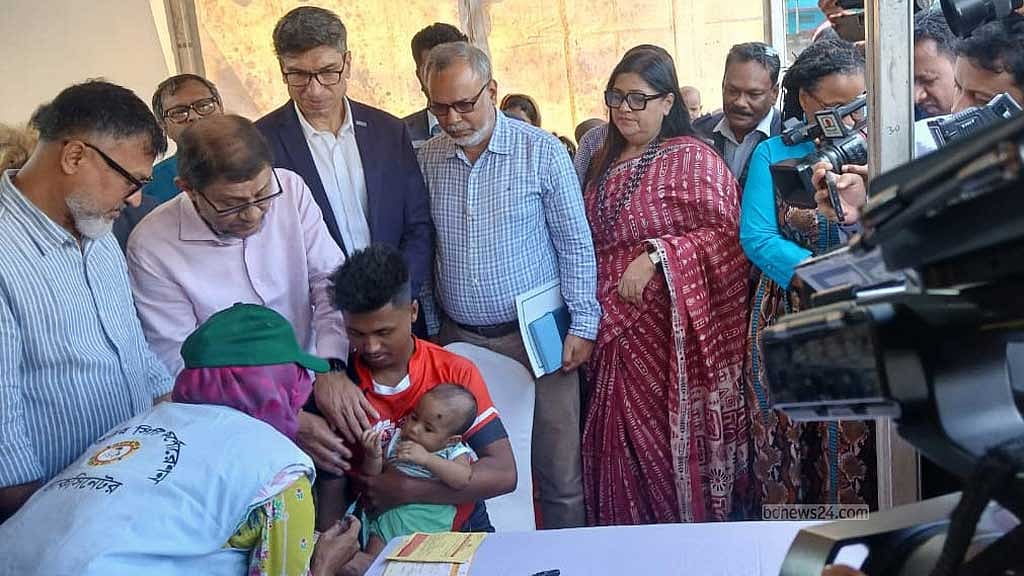
Health Minister Sardar Md Sakhawat Husain Bakul, opening the campaign in Dhaka’s Korail, said 3.4 million children were being brought under the catch-up initiative.
“We have newly targeted 3.4 million children. Of them, 1 million are children who have newly reached six months of age, while the remaining 2.4 million are our previously missed children.
“We have brought 3.4 million children under this catch-up programme nationwide.”
The campaign follows three emergency vaccination rounds launched from Apr 5 in 30 high-risk Upazilas amid a surge in measles cases and protests over child deaths. Those drives covered children aged six months to 59 months.
On May 14, the Directorate General of Health Services (DGHS) said more than 18 million children had been vaccinated, with coverage reaching 100 percent.
Then came another benchmark. On Jun 28, the National Institute of Nutrition reported that 22.36 million children aged 6 months to 59 months had received vitamin A-plus capsules.
Compared with the measles vaccination figures, that suggested 4.36 million children had not received measles vaccination.
By Sept 23, the health directorate measles bulletin reported 19.85 million vaccinated children across the eight divisions, equivalent to 110.2 percent coverage.
The health minister said the first three rounds had covered 18.5 million children, followed by another 1.4 million children left unvaccinated.
The latest campaign therefore set out to reach 2.4 million children who had previously missed vaccination, alongside one million who had newly reached six months.
But the field data collected in preparation for the campaign told a different story.
The 1.2mn Question
On Sept 13, the EPI instructed its field offices to identify children aged six months to 59 months who had missed measles vaccination. They were asked to submit the numbers within three days and upload the information to the central server by 2pm on Sept 16.
Yet on Sept 24, EPI Assistant Director Hasanul Mahmud said the programme had received information on only around 1.2 million children who had missed vaccination. He could not provide a divisional breakdown.
“We instructed them to find the children who were missed. We received information on around 1.2 million missed children.”
Asked how the nationwide plan had been prepared, he said the health ministry had communicated the number of children to be vaccinated and officials were proceeding largely on the basis of figures from the vitamin A campaign.
“The number of children who will receive vaccines in the country has been communicated by the health ministry. We are basically proceeding based on the figures from the vitamin A capsule campaign.
“Based on those figures, information on the gaps in different areas is being sent, and instructions have been given to fill those gaps by targeting the missed children.”
He added that the number of eligible children was constantly changing as routine vaccination continued.
“Since our vaccination programme continues every day, no specific number has been set for the campaign. Besides, as the vaccination programme has been running for a long time, some children have newly reached the age for vaccination. Again, some have passed the eligible age.”
His explanation suggests that the 3.4 million figure was not simply a headcount of children reported by field offices. The government was also drawing on broader estimates and the changing pool of children entering the eligible age group.
Still, the gap between the 2.4 million described as previously missed and the 1.2 million reported to EPI has left a central question hanging over the campaign.
What Happens at the Doorstep?
EPI Assistant Director Mohammad Sabbir Haider said the existing field network could find the children quickly.
“With the workers we have, it is possible to find them within three days. The wards in every union are divided into several blocks. In these areas, they will find the children and vaccinate them when necessary during the new vaccination drive.”
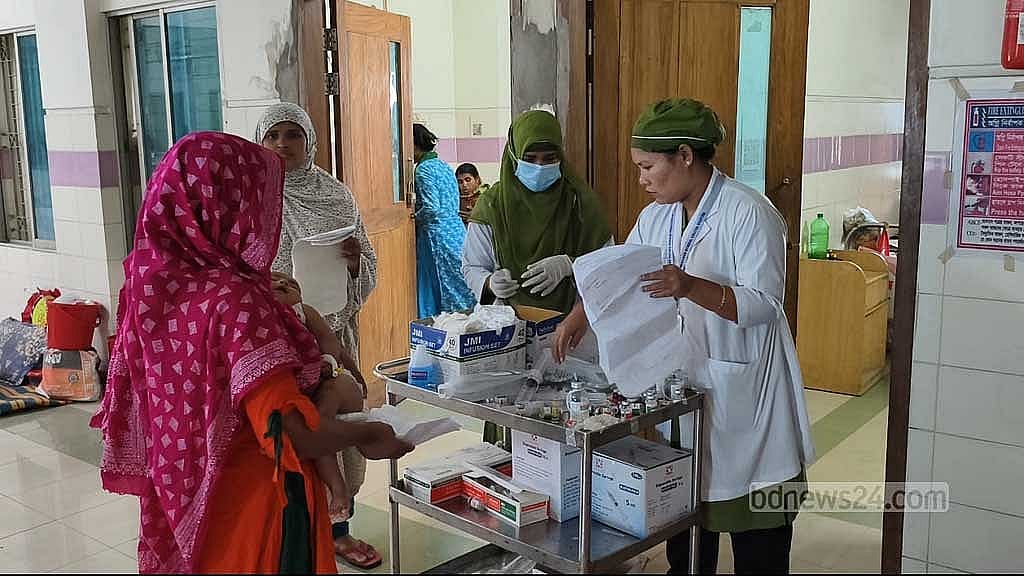
Field checks in Barishal, Cox’s Bazar Sadar, Mirpur and Naogaon, however, found no door-to-door EPI workers asking families about unvaccinated children. Cox’s Bazar Sadar had loudspeaker announcements publicising the campaign.
In Barishal city’s Ward 4, Tanisha Islam said her 11-month-old daughter had not been vaccinated and no one had come to ask about her.
In Mirpur-12, resident Abdul Hashem, 47, said he and his neighbours had also not seen EPI workers visiting homes.
“My neighbours and I have not had EPI workers come to any flat or house. At the beginning of the vaccination programme, I heard an announcement on a loudspeaker once, several months ago. I do not know what has happened since then.”
At Charcowa in Barishal, health assistant Sohel Sikder said workers had gone door to door after measles cases began rising again, prepared lists and submitted them for vaccination.
Barishal Civil Surgeon Dr Md Saidur Rahman said children aged 6 months to 5 years were eligible and many had been missed because they had only recently entered the age group.
At Radda MCH-FP Centre in Mirpur-1, Executive Director Nasrin Akhter said health workers normally track children by age and vaccination needs and inform parents, who then come to the centre.
Parent Asma Begum, meanwhile, said she did not know about the special campaign and had brought her child because it had reached the age for a second dose.
For public health and vaccine expert Tajul Islam A Bari, the problem starts with how the children are identified.
“Previously, workers used to go door to door and make lists of children. This time, that did not happen from the beginning. Such a method was necessary to identify missed children, but it was not done.”
Who is Still Outside the Net?
The uncertainty does not end with the 3.4 million target.
Routine EPI gives the first measles-rubella vaccine at nine months and the second at 15 months. Because of the outbreak, eligibility was expanded to children aged six months to 59 months.
But government data show that children below 6 months and those above 5 years are also at risk. No decision has yet been made on how to vaccinate or otherwise protect those groups.
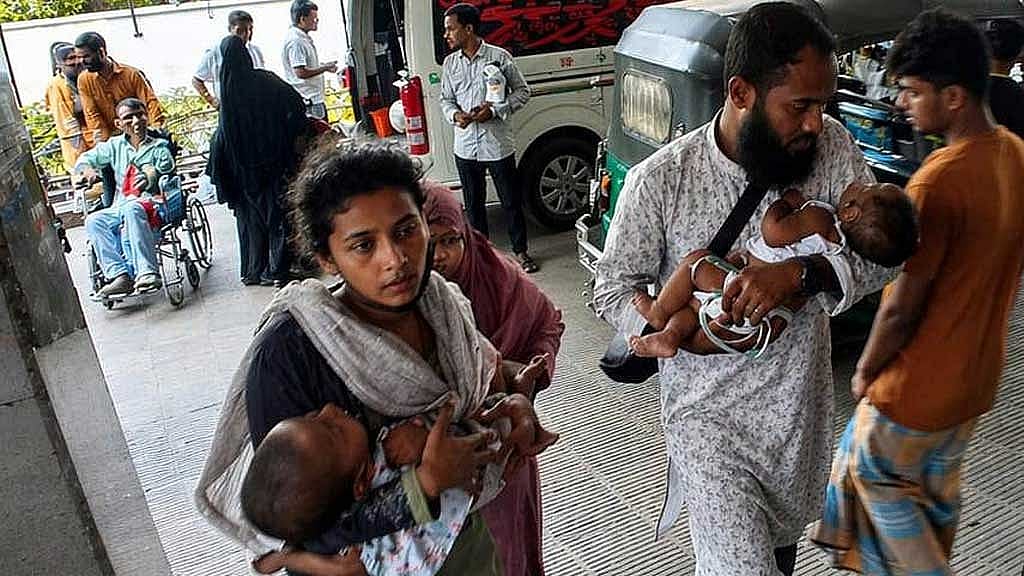
The outbreak remains severe.
By Oct 2, official figures showed 1,114 deaths from measles and measles-like symptoms and 172,021 hospital admissions since the government began publishing measles data on Mar 15.
More than 5,000 patients were still hospitalised, although most had not been tested and were being treated based on symptoms.
Former IEDCR director Mahmudur Rahman said the campaign could produce some results, but leaving older children and young infants outside would limit its impact.
“This vaccination may produce some results. But to achieve good results, children over five years of age must also be vaccinated.
“Besides, intensive research is needed to protect children below 6 months of age. The number of children in these two groups is not small, so it will not be possible to achieve a good long-term result by leaving them out.”
NVC Chairman Prof Mahmudur Rahman said nearly one in 10 current measles patients were below six months old, while another affected group was above five.
“If we cannot make these two age groups safe, it will not be possible to stop measles transmission,” he said.
“We have long been analysing age-specific infection rates and calling for decisions on vaccination and on those who cannot be vaccinated. But although people listen, no one is giving it the importance it deserves.”
DGHS Director General Pravath Chandra Biswas said the government was considering the issue.
“We have thought about the matter. IEDCR and icddr,b are working on it for research.”
Numbers on Paper, Children on the Ground
Prof Mahmudur Rahman has also questioned the reported vaccination coverage, arguing that the numbers should have translated into a visible decline in the outbreak.
“If the vaccination coverage rate being shown by the current government were true, its impact would have been visible at the field level. But that has not happened. So there needs to be a great deal of honesty in vaccination planning and implementation. This has to be examined very carefully. Perhaps that is not happening in the way it should.”
Tajul Islam A Bari believes the immunity gap is much larger than the current campaign suggests.
“Given the level of immunity gaps in the country, [60 million] people aged from 6 months to 15 years need to be vaccinated.”
He said a similar campaign in 2014 vaccinated more than 50 million children.
The EPI has previously explained that vaccination targets are based on Bangladesh Bureau of Statistics data from 2022 along with other factors.
But it has also acknowledged that field-level microplanning for a nationwide vaccination campaign requires at least three to four months.
That leaves the latest campaign confronting a problem that cannot be solved by a target alone.
Bangladesh says 3.4 million children now need to be brought under the measles-rubella drive.
Within that number are 2.4 million children the government says were missed before. But EPI says the field offices supplied information on only around 1.2 million such children.
The government has put a number on the children it says were missed. The challenge now is to establish whether that number corresponds to the children actually waiting to be found -- and whether the campaign can reach them.