Published : 23 Nov 2026, 01:07 AM
Updated : 23 Nov 2026, 12:44 AM


A distribution-regulating station has been built at the Hi-Tech City in Gazipur's Kaliakair, but the distribution lines needed to carry gas to industrial plots were not adequately budgeted.
At another government project, 121 advanced machines bought for a research laboratory remain unused for want of trained staff. At five of 15 public hospitals selected for medical-waste treatment facilities, meanwhile, land and design complications have held up construction.
The examples feature in a report by the Planning Commission's Implementation Monitoring and Evaluation Division (IMED), presented to the parliamentary standing committee on Oct 17.
It identifies poor preparation, weak coordination, delayed approvals and funding constraints as recurring obstacles to project implementation.
Work has slowed or stopped as contractors await approvals and payments. Tenders have been cancelled, while funds allocated to projects have remained unreleased.
Centre for Policy Dialogue Additional Research Director Towfiqul Islam Khan says agencies fail to coordinate: equipment is bought while recruitment stalls.
“This problem has persisted for years. As a result, even when the government invests, it does not get the expected benefits,” he told bdnews24.com, describing the failures as evidence of weak governance and inefficiency.
Committee Chair Zahir Uddin Swapon said the committee would examine gaps in project feasibility studies and why projects had been approved despite them. It would submit its findings and recommendations to the government and parliament, he said.
Project Director Siddiqur Rahman Talukder disputed the criticism, saying the gas distribution line was not included in the original plan because demand emerged later and funding was limited.
The findings stretch across industrial infrastructure, health research, hospital waste management, training facilities, customs infrastructure and environmental financing.
They reveal how flaws at the design stage can cascade through procurement and construction, ultimately holding back public services and tying up public funds.
A Distribution Station without the Lines
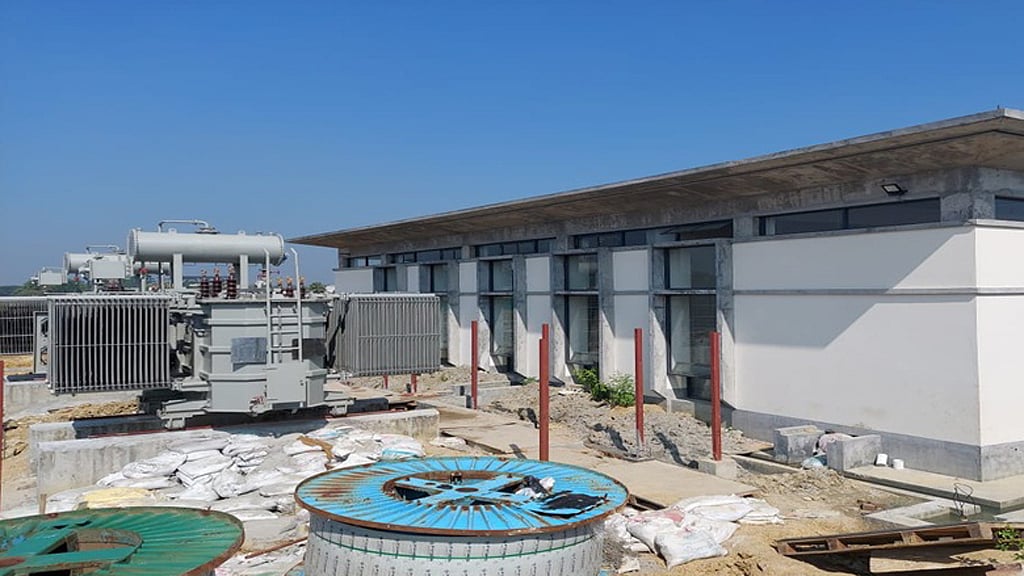
The Tk 4.34 billion Hi-Tech City-2 infrastructure project in Kaliakair includes a distribution-regulating station (DRS) to supply investors.
Of its estimated Tk 60 million cost, Tk 50 million has been paid. But the original project proposal did not provide enough money for the distribution lines needed to connect plots.
The project now has one operational 33-kV substation, with a second planned. But the 1,500m of cable needed to connect the second substation was missing from the original budget and had to be incorporated in the third revision.
Roads built in Block 7 also lack drainage, raising the risk of early deterioration. IMED says about 890m of drains are needed along both sides.
Submitted in May 2025, the third revision won Executive Committee of the National Economic Council (ECNEC) approval on May 13, 2026, almost a year later. Administrative approval followed on Jun 3 and funds were released on Jun 18.
While it was pending, contractors slowed or nearly stopped work for much of 2025-26, leaving targets unmet.
Project Director Siddiqur said the DRS was not part of the original plan because demand had emerged later.
“The DRS station was not there before. When the project was placed before the ECNEC, there was not always enough money in the original proposal. Besides, the demand came later. At the time, the idea was to develop the park first. Now there is demand, so work on the gas service line is being carried out under the third revision.”
He denied negligence in planning: “Now the demand has come; many people need gas, so we are installing the service line. It is for a limited area.”
He said the original proposal included one 33-kV substation, later expanded to three before one was dropped in the second revision. Two are now planned, one already operational. The connecting cable for the second was added in the third revision.
“If the entire park becomes operational at once, you will see that even these two will not be enough. That is why the government does not want to invest all at once. The plan is to invest again when demand comes. One was also dropped in that process; there were three.”
Machines without People
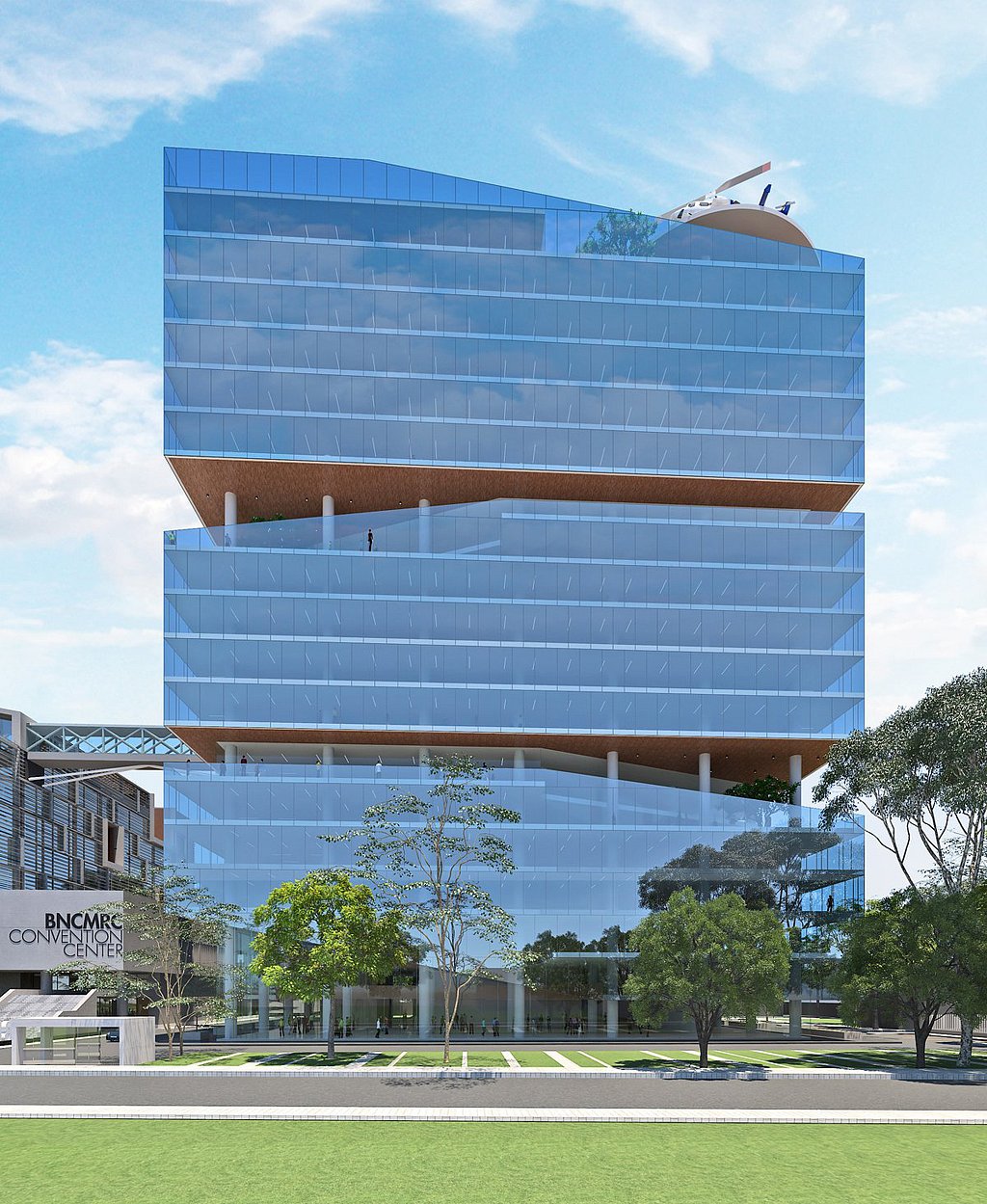
The Tk 15.13 billion National Centre for Cellular and Molecular Research project bought 121 advanced machines in the 2021-22 financial year. But the laboratory in Dhaka's Mohakhali could not become fully operational because it lacked suitable staff.
Land clearance problems and the termination of the architectural consultant's contract also delayed the project.
Hospitals Held Up by Land and Design
A separate Tk 2.64 billion health project was meant to install medical-waste treatment systems at 15 public hospitals. Work has been delayed at five because of land and design complications.
Scheduled for January 2022, substantive work began only in November 2023. The treatment systems cannot be installed until the buildings are complete, meaning construction delays have also held up the equipment.
Funds Locked behind Approvals
A project to establish 10 IT training and incubation centres illustrates how late revisions can block spending. Its term ended in June 2025, but the second revision was approved only on Jan 8, 2026. Construction bills could not be paid during the intervening seven months.
Against a Tk 1.56 billion allocation for 2025-26, Tk 615.8 million was released, leaving Tk 944.9 million of the revised allocation unreleased. A Finance Division spending-control directive on Apr 5 further restricted funds for buildings and computers.
Tender Cancellations and Legal Roadblocks
A Tk 4.37 billion tax building project in Chattogram spent only Tk 1.53 million of its Tk 102.2 million allocation in 2025-26. Tenders were invited and evaluated twice, but both were cancelled after approval.
Work at the Hili, Burimari and Banglabandha land customs stations was 97 percent complete. But delays in approving a revised project held up payments to contractors for work already carried out.
The Department of Environment's Bangladesh Environmental Sustainability and Transformation (BEST) project also failed to spend Tk 6.1 billion in assistance earmarked for an environmental fund because the required law was not enacted.
A meeting chaired by the finance minister agreed to reduce the project's foreign assistance by $6.1 million.
Swapon said the committee would report its findings and recommendations to the government and parliament. If the government does not act, parliament may use other means to demand accountability.
The cost of poor planning is measured not only in delayed projects or unspent allocations, but also in what the public is denied: a functioning laboratory, a hospital ready to treat patients, infrastructure that works as intended.
Development cannot be measured by the money allocated, the buildings erected or the machines delivered. It must be measured by what those investments actually make possible. Without better planning, coordination and accountability, public projects will keep producing assets on paper while leaving essential services out of reach.