


Published : 12 Apr 2022, 08:43 PM
Updated : 18 Jul 2022, 02:43 PM


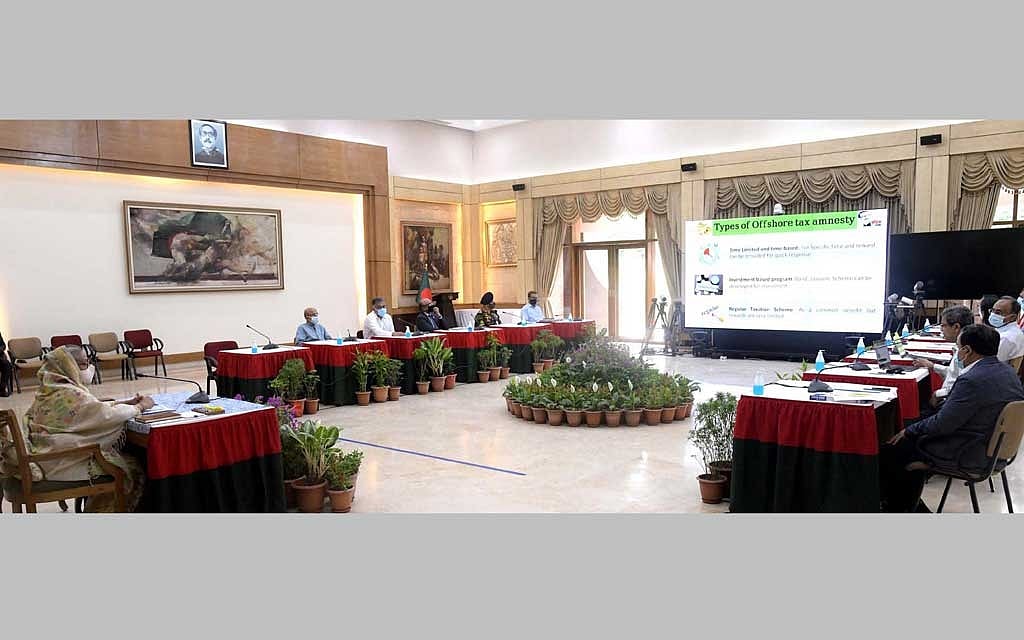
The conclusion was drawn during a presentation at the Ganobhaban on Tuesday. Prime Minister Sheikh Hasina attended the presentation.
The presentation covered the Offshore Tax Amnesty issue, Sri Lanka’s current worsening economic situation, and drew parallels into economic indexes with our neighbours.
After the presentation, the prime minister ordered all the stakeholders to keep the status quo, according to her Assistant Press Secretary MM Imrul Kayes.
The island nation is on the brink of bankruptcy as its foreign debt payments of around $4 billion are due this year, including a $1 billion international sovereign bond maturing in July.
Sri Lanka’s foreign reserves stood at a paltry $1.93 billion at the end of March,
People in Sri Lanka have been suffering from prolonged power cuts alongside shortages of food and medicines for weeks now, which resulted in massive demonstrations across the nation.
According to a press note from the prime minister’s press wing, after thorough analysing, government stakeholders now strongly believe that Bangladesh is at no risk of paying medium and long term foreign debt.
The NBR and Finance Division, however, emphasised implementing a coordinated tax and currency policies to tackle the inflation, mainly caused by the soaring prices of food items and energy in the international market.
Finance Minister AHM Mustafa Kamal, Energy Adviser to the prime minister Tawfiq-e-Elahi Chowdhury, PM’s Principal Secretary Ahmad Kaikaus, Bangladesh Bank Governor Fazle Kabir, NBR Chairman Rahmatul Muneem were among the attendees at the presentation meeting.
Drawing parallels to the situation in Sri Lanka, economists have issued a warning that the Bangladesh government must tighten its belt on the large infrastructure projects and cut government spending to avert the risk of defaulting on foreign debt.
According to the World Bank and the International Monetary Fund (IMF), a country will cross the danger mark if its external debts exceed 40 percent of the GDP.
According to a publication titled "Flow of External Resources into Bangladesh," by the Ministry of Finance in the last fiscal, Bangladesh’s total foreign loan is less than 15 percent of its GDP.
The report said the total outstanding foreign loan of the country stood at nearly $44.06 billion as of 2020-21.












