Published : 14 Oct 2026, 01:14 AM
Updated : 14 Oct 2026, 01:14 AM


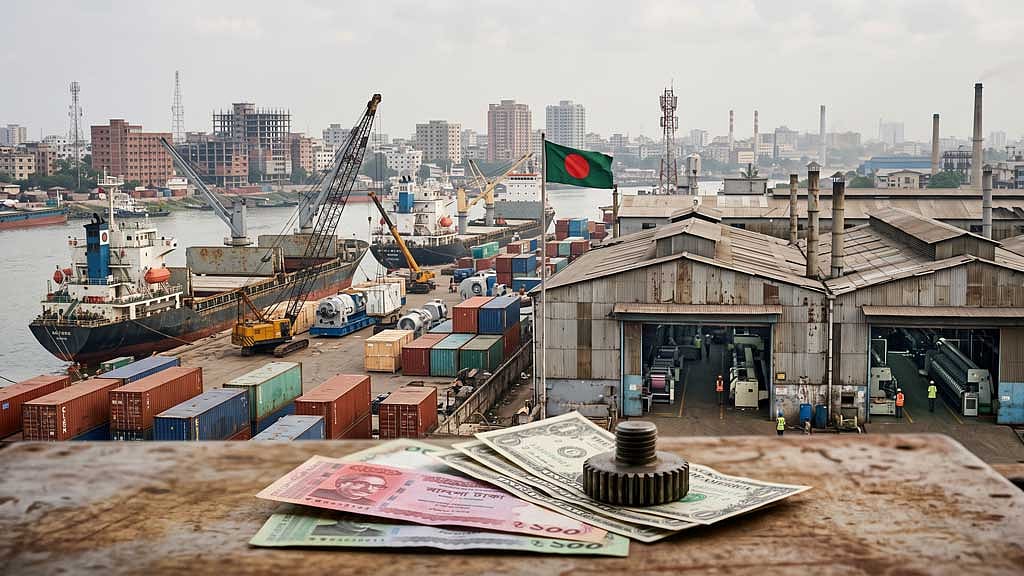
Bangladesh’s economy has found some breathing space in its foreign currency flows, but the relief has yet to reach the factories, businesses and investment decisions that drive growth.
Instead, three key indicators are flashing warning signs: imports of industrial machinery are falling, private-sector credit growth remains below 5 percent, and government development spending has slowed to a crawl.
Together, they paint a picture of an economy struggling to turn greater external stability into productive activity.
Business leaders blame high borrowing costs, energy shortages, concerns over law and order, and uncertainty over whether new investments will generate adequate returns.
Economists warn that if the slowdown persists, it could constrain industrial output, job creation and the growth of people’s purchasing power.
After a year and a half of turbulence under the interim government, the arrival of a new political administration in February had raised hopes of a more favourable investment climate.
Nearly eight months into its tenure, however, those expectations have yet to translate into a meaningful revival.
Machinery Imports Tell a Troubling Story
Bangladesh imported $506.9 million worth of capital machinery in July and August, the first two months of the 2026-27 fiscal year, according to Bangladesh Bank data.
That was down 32.5 percent from $750.7 million in the same period a year earlier.
The decline came even as overall merchandise imports increased. Import expenditure rose by around 12.1 percent year-on-year to $12.2 billion during the two months.
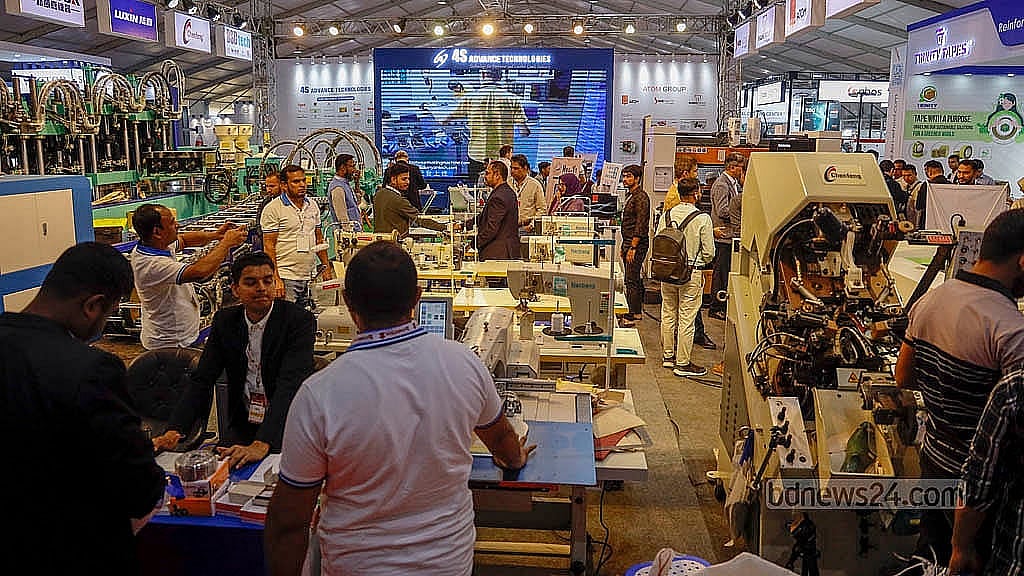
The contrast suggests that businesses are spending more on imports overall but pulling back on machinery needed to establish, expand or modernise factories.
Imports of other industrial capital goods also fell, dropping 12.5 percent to $1.1 billion from $1.25 billion a year earlier. Combined spending on industrial capital goods was $1.6 billion, down about 20 percent from nearly $2.01 billion.
For the full 2025-26 fiscal year, capital machinery imports reached $3.21 billion, up 4.93 percent from $3.06 billion the previous year.
But the longer-term picture remains uneven. Imports peaked at $5.15 billion in 2018-19 before falling and fluctuating in subsequent years.
The figures matter because machinery purchases often signal whether businesses are preparing to increase production capacity or build new facilities. Their retreat points to weakening appetite for fresh investment.
Businesses Struggle to See a Return
For entrepreneurs, the central question is no longer simply whether they can invest, but whether they can expect a return in an uncertain business environment.
Anwar-Ul-Alam Chowdhury Parvez, president of the Bangladesh Chamber and a former president of the Bangladesh Garment Manufacturers and Exporters Association (BGMEA), said the conditions for new investment remained deeply unfavourable.
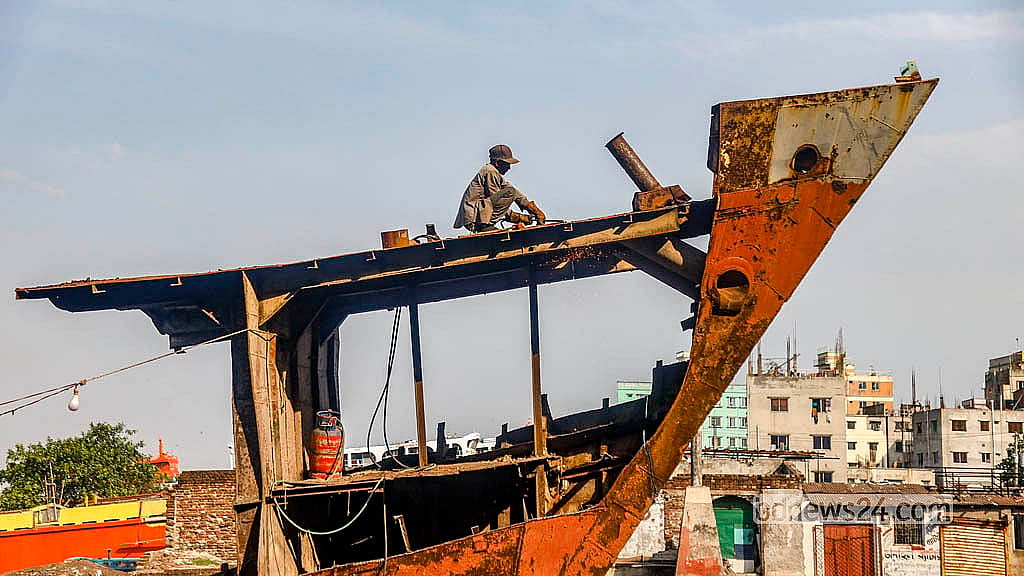
“How can there be new investment? Who will invest? Who can guarantee that an investment will bring returns? For many, even keeping their existing businesses afloat has become difficult,” he told bdnews24.com.
Problems continue to accumulate, he said, despite the arrival of a new government.
“One problem after another keeps cropping up. A new government has come in, and we thought everything would now run smoothly. Sadly, the situation has not improved. Many are disappointed.
“Law and order have not improved. Taken together, an investment-friendly environment has yet to return to the country, and interest rates are high. I do not know when a normal, favourable environment will return.”
Mohammad Hatem, president of the Bangladesh Knitwear Manufacturers and Exporters Association (BKMEA), also described a punishing climate for business.
“Business and investment are currently going through an extremely adverse situation. Entrepreneurs are fighting to survive in the market. Then came the energy crisis. These are major blows to business.
“Who would dare think of expanding a business in such circumstances? They say lending has grown by nearly 5 percent, but I do not know how that growth came about or who the borrowers are. Will they be able to repay their loans? I have serious doubts about that.”
Private Credit Remains below 5%
Private-sector credit growth, another key indicator of investment appetite, stood at 4.75 percent at the end of August, up slightly from 4.62 percent in July, Bangladesh Bank data show.
It had fallen to 4.47 percent in June, the lowest level recorded at the time, after standing at 4.98 percent in May. Despite small monthly fluctuations, growth has remained below 5 percent.
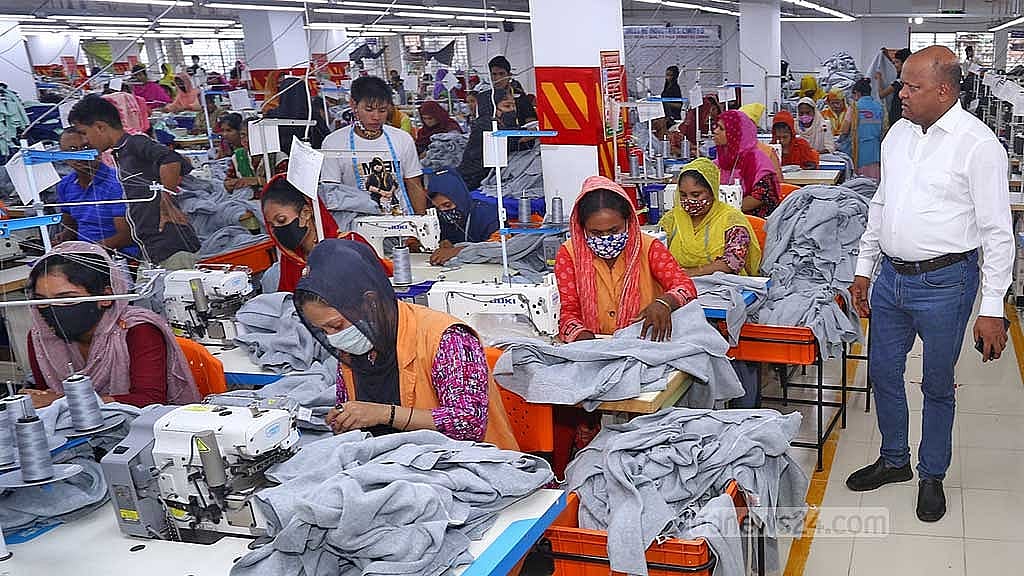
Weak credit growth can indicate limited demand for loans to finance new investment or business expansion. But lending also depends on banks’ capacity to provide credit, the quality of borrowers and demand across the wider economy.
In May, Bangladesh Bank Governor Mostaqur Rahman announced a special Tk 600 billion lending package to revive closed and struggling factories and stimulate economic activity.
Initiatives have been taken to implement the scheme across several sectors, but the anticipated acceleration in lending has yet to materialise.
The central bank had expected private-sector credit growth to approach 5.5 percent by June 2026. It later set a target of 6.8 percent by December under its next six-month monetary policy.
Shamsul Arefin, managing director of NCC Bank, said global uncertainty was also weighing on demand.
“The global economy is still facing a degree of uncertainty because of geopolitical tensions. Its effects are being felt in our economy, too. Credit growth is unlikely to be very strong at a time like this.”
Syed Mahbubur Rahman, managing director of Mutual Trust Bank, said the outlook could improve as the elected government settles into office. But demand remains decisive.
“There are many reasons for a decline in lending. The biggest is whether there is demand in the economy,” he said.
“Entrepreneurs will borrow only when they are confident they can use the money in a secure environment. They have to pay interest as soon as they borrow. Now that a political government has come to power and some time has passed, demand may begin to rise.”
Public Development Spending Slows
The government’s own investment drive is also lagging. In July and August, ministries and divisions spent Tk 57.1 billion under the Annual Development Programme (ADP), equivalent to just 1.85 percent of the total allocation, according to the Implementation Monitoring and Evaluation Division (IMED).
Implementation stood at 2.39 percent in the same period a year earlier, when spending reached Tk 57.15 billion. In the first two months of 2024-25, the rate was 2.57 percent, with expenditure of Tk 71.43 billion.
The slowdown in public development spending adds to the weakness in private investment, limiting another potential source of economic momentum.
World Bank Cuts Growth Forecast
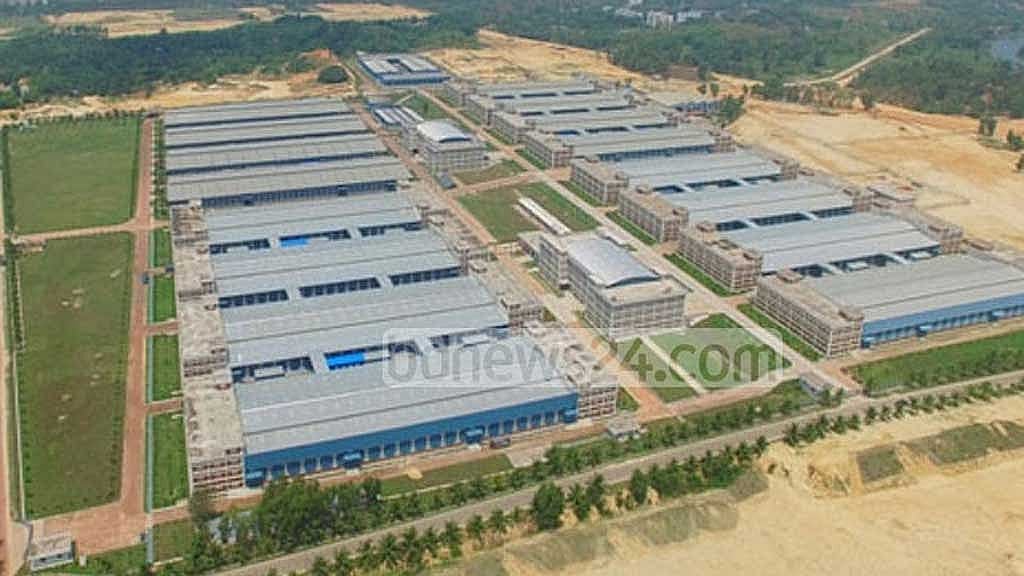
The investment malaise has prompted concern over Bangladesh’s growth prospects. In its latest report on the country, published on Oct 6, the World Bank forecast GDP growth of 3.4 percent for the 2026-27 fiscal year, down from its April projection of 4.6 percent.
The lender cited energy-sector constraints, weaknesses in the financial system, revenue shortfalls and global uncertainty as factors weighing on investment and economic activity.
Investment has weakened, export growth has slowed, and high inflation has eroded purchasing power while increasing business costs.
The World Bank expects growth to recover to 3.9 percent in 2027-28, but says improved energy supplies and faster reforms will be necessary. If its current forecast holds, growth would be lower than the 3.45 percent recorded during the first year of the COVID-19 pandemic.
Currency Pressure Eases, but Costs Remain High
Bangladesh’s foreign currency strain intensified after Russia’s military advancement into Ukraine in February 2022 drove up global food and energy prices, increasing import costs. The country introduced import restrictions to contain pressure on the dollar.
Remittance and export earnings later improved foreign currency inflows, easing some of that pressure. But stronger inflows have not produced a corresponding revival in private investment.
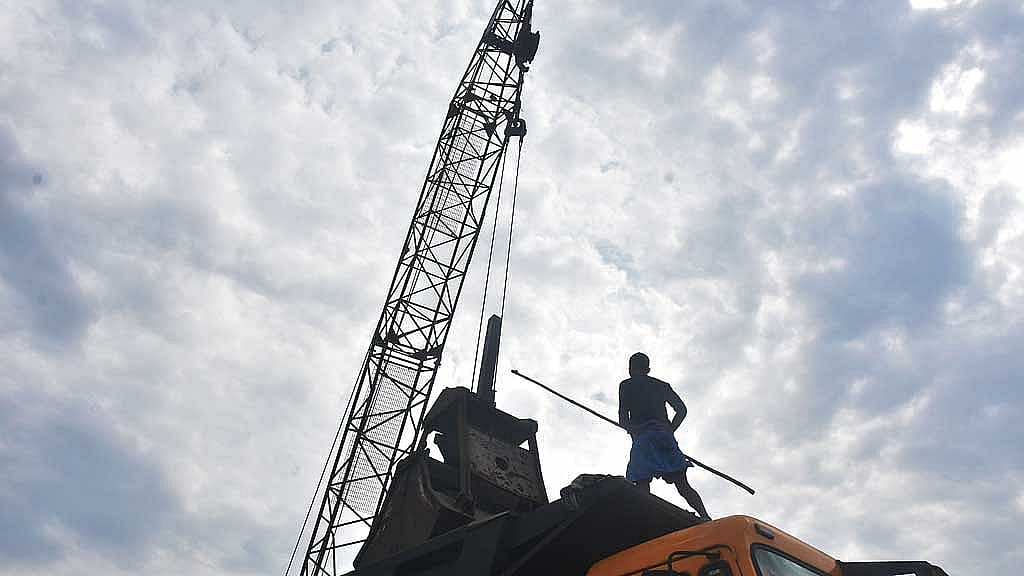
Inflation continues to complicate the outlook. Overall inflation rose to 8.34 percent in September 2026, from 8.26 percent in August, according to the Bangladesh Bureau of Statistics (BBS).
Food inflation increased to 7.22 percent, while non-food inflation edged down to 9.30 percent.
Businesses remain concerned about gas and electricity supplies, alongside high interest rates, energy costs and broader production expenses. These pressures make long-term investment decisions harder to justify.
Challenge of Turning the Economy around
The combined signals from machinery imports, private credit and public spending point to a persistent weakness in investment. When businesses build factories or expand existing facilities, they can increase production capacity and create jobs. A prolonged investment slump threatens to slow both.
Zahid Hussain, a former lead economist at the World Bank’s Dhaka office, said the lender’s latest assessment reflected familiar problems in Bangladesh’s economy. The government’s response would now be crucial.
Agreeing with the forecast of 3.4 percent growth this fiscal year, he said: “There does not seem to be much prospect of the economy turning around. Although growth is forecast to reach 3.9 percent in the next fiscal year, there is no guarantee that it will be achieved.”
He also considered the report’s findings on rising poverty, shrinking investment, exports, private-sector lending, women’s participation in the labour market and declining industrial output to be realistic.
One pressing concern is the potential inflationary impact of higher energy prices and recent public-sector pay rises.
“Based on past experience, I have calculated that the recent increase in electricity prices could add 1 to 2 percent to food inflation, while the rise in diesel prices could increase non-food inflation by 1 to 1.5 percent,” he said.
Zahid argued that monetary policy remained the principal tool for controlling inflation and said the central bank should not cut its policy rate further.
He also cautioned that refinancing schemes intended to revive factories must target viable industrial businesses rather than large loan defaulters.
“If the money goes to major defaulters instead of genuine industrial enterprises, it will not contribute to productivity; on the contrary, it could increase inflation.”
He said Bangladesh must protect its reserves while maintaining a flexible exchange rate, and address weaknesses in the financial sector, secure reliable energy supplies and ensure policy continuity to encourage investment and employment.
“The international crisis is not over. There are still many risks,” he said.
For now, the easing of dollar pressure offers only limited comfort. Until businesses see a more predictable environment in which to borrow, produce and earn returns, the recovery in foreign currency flows may do little to revive the investment Bangladesh needs.