Published : 06 Oct 2026, 08:55 PM
Updated : 06 Oct 2026, 08:55 PM


The World Bank has further lowered its gross domestic product (GDP) growth forecast for Bangladesh.
The global lender said Bangladesh may achieve a GDP growth rate of 3.4 percent in the 2026-27 fiscal year, which began on Jul 1, primarily driven down by a severe drought in investment.
This revised forecast falls below the growth rate recorded during the height of the COVID-19 pandemic.
In the 2019-20 fiscal year, the country recorded a 3.45 percent GDP growth rate -- previously its lowest on record.
The agency, however, projected that economic growth could modestly recover to 3.9 percent in the 2027-28 fiscal year.
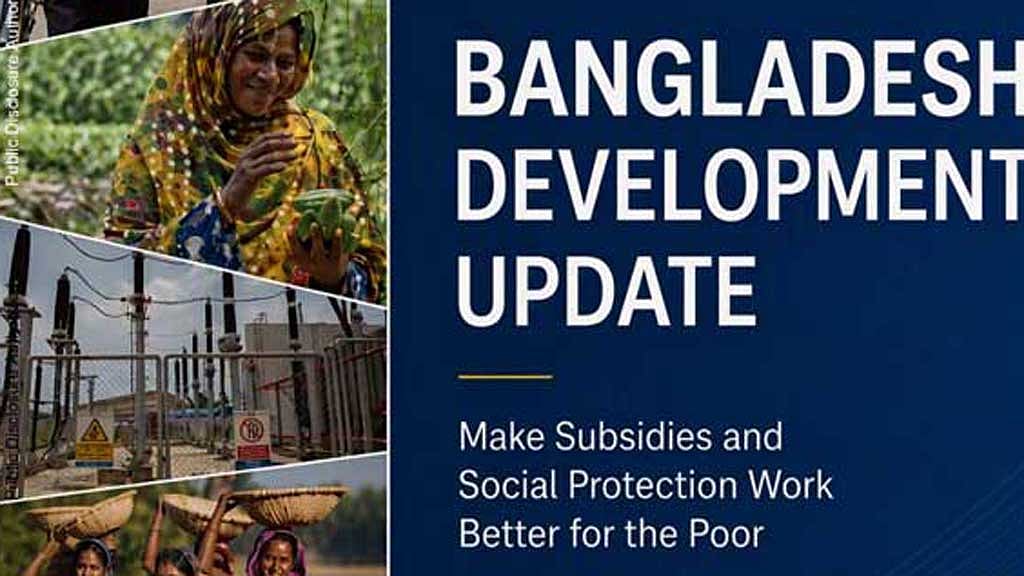
The projections were released on Tuesday in the October edition of the World Bank's Bangladesh Development Update.
A media briefing was hosted at the World Bank’s Dhaka office to launch the report, titled Make Subsidies and Social Protection Work Better for the Poor.
Outlining the reasons behind the downgrade, the report highlighted sluggish investment trends alongside decelerating export earnings.
Persistent high inflation continues to erode consumer purchasing power while driving up the cost of doing business, necessitating the downward revision of Bangladesh’s GDP outlook.
Earlier, in its Global Economic Prospects report released on Jun 16, the organisation projected a 4.6 percent GDP growth rate for Bangladesh for the current 2026-27 fiscal year, citing global spillovers from conflicts involving the United States, Israel, and Iran.
A report published on Jan 14 had previously estimated growth at 6.1 percent.
In contrast, the BNP-led government has targeted a 6.5 percent GDP growth rate for the 2026-27 fiscal year -- 3.1 percentage points higher than the latest World Bank projection.
On Jun 10, the Bangladesh Bureau of Statistics (BBS) published provisional GDP figures for the outgoing 2025-26 fiscal year, indicating that the country's economy expanded at a rate of 4.14 percent compared with the preceding 2024-25 fiscal year.
Although three months of the current fiscal year (July, August, and September) have elapsed, the final GDP accounts for the 2025-26 fiscal year have yet to be published.