Published : 26 Aug 2026, 02:40 AM
Updated : 08 Sep 2026, 09:35 AM


Bangladesh and South Korea have signed an agreement to establish a $13 million artificial intelligence (AI) training centre in Dhaka, in a move aimed at building the country's tech workforce and deepening bilateral cooperation.
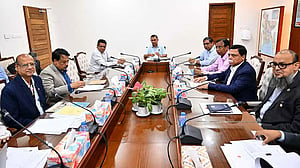
The Record of Discussion was signed on Monday by the Korea International Cooperation Agency (KOICA), Bangladesh's ICT Division under the Ministry of Posts, Telecommunications and Information Technology, and the Economic Relations Division of the finance ministry.
The grant, extended by the South Korean government through KOICA, will fund the construction of a dedicated AI-Hub Centre at Software Technology Park-2 in Kawran Bazar.
The Bangladesh Hi-Tech Park Authority will implement the project, which is scheduled to run from 2026 to 2029.
The centre will offer advanced AI education, applied research facilities, and a platform for collaboration between universities, industry, and government, as stated by the institute.
It also aims to improve the employability of Bangladeshi professionals both at home and abroad, including in South Korea.
"This reflects a shared vision to invest in people, in skills, and in the next generation of Bangladeshi technology leaders," KOICA's Bangladesh country director said at the signing ceremony.
A senior ICT Division official called the centre "a cornerstone for building AI capacity in Bangladesh," adding that it would connect academia, industry, and government around a common goal of preparing the workforce for the future of technology.