Published : 25 Nov 2026, 01:47 AM
Updated : 25 Nov 2026, 01:47 AM


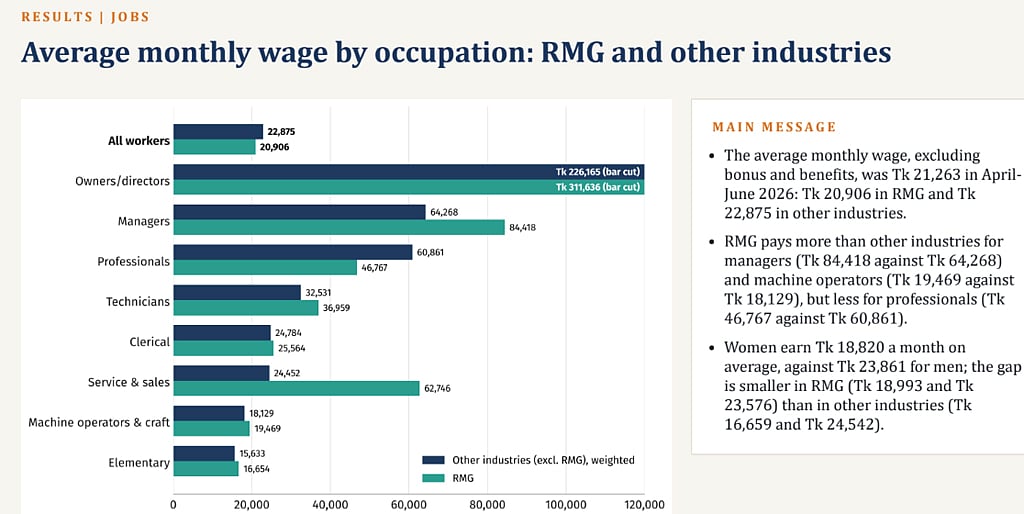
A new survey shows that owners and directors in Bangladesh's ready-made garment sector earn an average monthly salary of Tk 311,636, nearly 15 times the Tk 20,906 earned by workers.
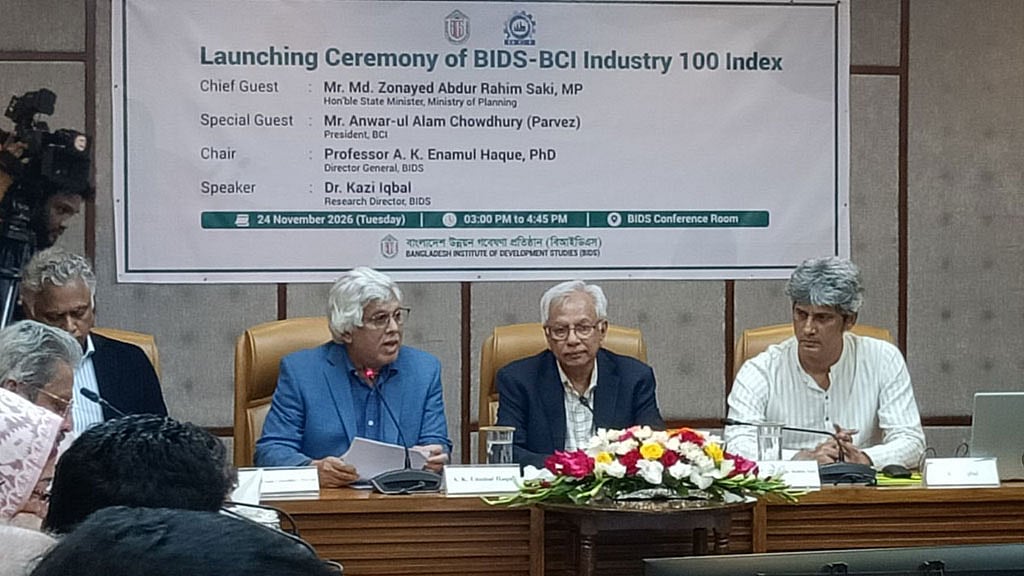
The findings of the survey were presented at an event jointly organised by the Bangladesh Institute of Development Studies (BIDS) and the Bangladesh Chamber of Industries (BCI) on Tuesday.
The survey also found that women working in industrial establishments earn 21 percent less than their male counterparts.
Titled “BIDS-BCI Evaluate 100 Indicators”, the survey covered 130 medium and large factories across 14 industrial sectors during the April-June quarter of 2026.
The average monthly wage across the surveyed industries was Tk 21,263. In the garment sector, it stood at Tk 20,906, compared with Tk 22,875 in other industries.
The average salary of entry-level workers was Tk 16,654 in the garment sector and Tk 15,633 in other industries.
Managers in garment factories earned an average Tk 84,418 a month, while professionals received Tk 46,767.
It also found that male workers earned an average monthly wage of Tk 23,861, against Tk 18,820 for women.
In the garment sector, women earned Tk 18,993 a month on average, compared with Tk 23,576 for men.
Regarding whether the survey examined pay differences between men and women performing similar jobs, researcher Kazi Iqbal said such details were not included in the data.
BIDS Director General AK Enamul Haque said the survey aims to regularly monitor industrial production, employment, wages, raw material costs, and changes in business conditions.
Production Hit by Energy Shortages
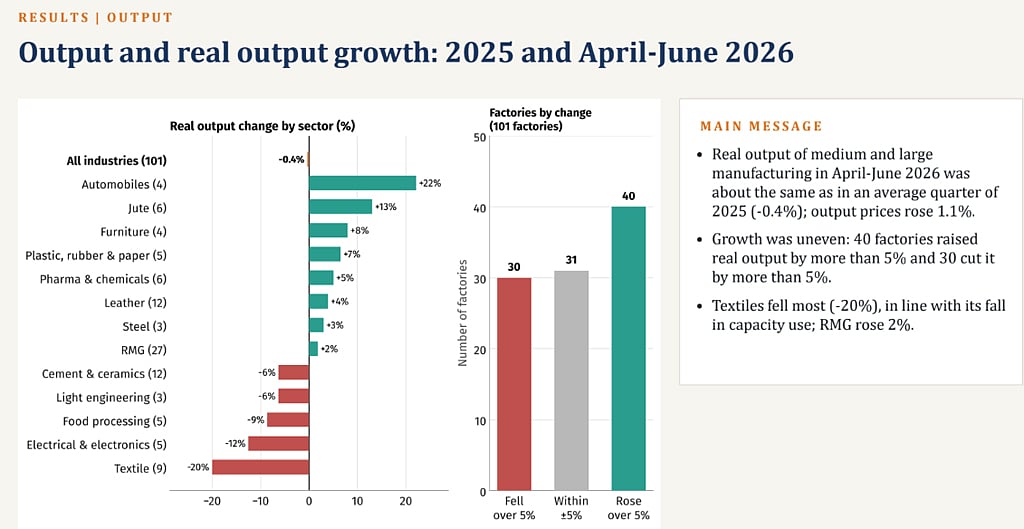
Industrial production remained almost unchanged during April-June compared with the quarterly average for 2025, while production costs increased and employment declined.
The survey found that average factory capacity utilisation fell from 67 percent to 66 percent. In the textile sector, it dropped from 73 percent to 55 percent, with production declining by 20 percent. Garment production, meanwhile, increased by 2 percent.
Electricity and gas shortages were identified as major obstacles to industrial operations, with 79 percent of surveyed factories reporting energy supply problems.
Raw material prices increased at 94 percent of the factories, while average fuel expenditure rose by 5 percent and transportation costs by 10 percent.
Industrial Employment Declines
The number of workers at the surveyed factories fell by around 1 percent, from 137,100 to 135,700, compared with the 2025 quarterly average.
New recruitment and employee departures both declined by 19 percent. Most new appointments were made to replace workers who had left rather than to expand the workforce.