Published : 29 Nov 2026, 10:38 PM
Updated : 29 Nov 2026, 10:38 PM


South Bangla Agriculture and Commerce Bank (SBAC) is placing greater emphasis on the quality of its loans than on expanding its business, its Managing Director and CEO SM Mainul Kabir has said.
He argues that banks must put limits on corporate lending and extend more support to small businesses and farmers.
Banks have concentrated too heavily on large corporate borrowers, often extending loans worth billions of taka to individual clients, while smaller entrepreneurs have struggled to secure financing, he said.
The trend has weakened private-sector credit growth and increased the risk of loan defaults, making a shift towards small and medium-sized enterprises (SMEs) more urgent, Mainul said in an interview on bdnews24.com’s discussion programme Chinwag with the Chiefs.
“Banks have gone more towards large clients and corporate lending. We are now realising that every bank should have a limit on how much it lends to the corporate sector,” he said.
Banks had sometimes lent Tk 1 billion, Tk 2 billion, Tk 3 billion or Tk 4 billion to a single large borrower, he said, adding that Bangladesh Bank was now urging lenders to reach more SME entrepreneurs.
Mainul also discussed the banking sector’s trust deficit, mounting non-performing loans, sluggish investment, regulatory reforms, the capital market and the growing role of artificial intelligence and digital banking.
Governance Key to Restoring Trust
Addressing customers’ inability to withdraw their deposits from some banks, Mainul attributed the problem to poor governance and the diversion of funds through lending.
“Because of the lack of good governance, money was disbursed as loans and, for various reasons, went elsewhere -- outside the banks,” he said.
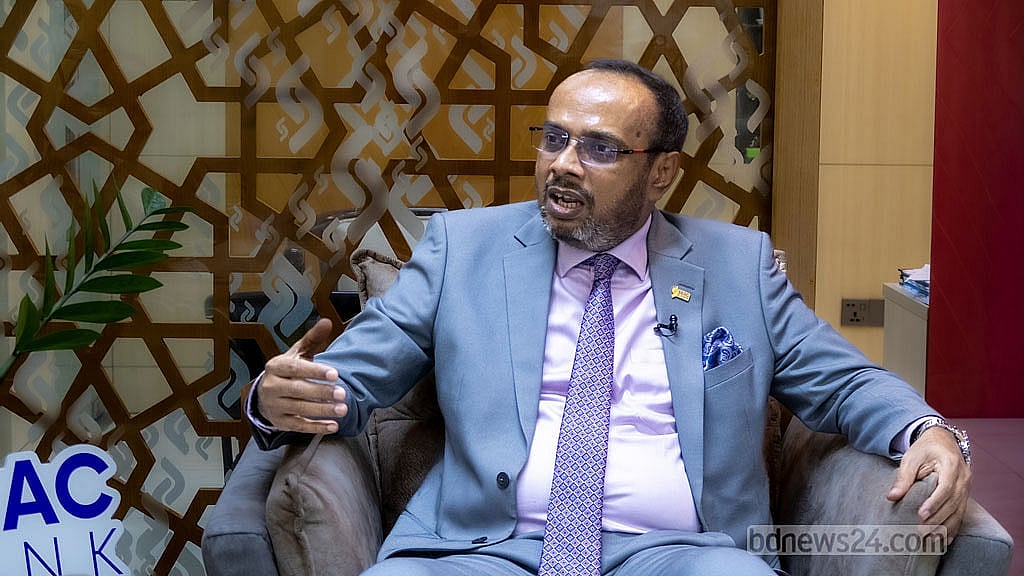
He believes confidence is gradually returning as governance improves across the sector, with customers increasingly able to withdraw their money.
Mainul said SBAC Bank had never faced a trust problem with its customers. He credited its board for appointing competent professionals to management positions, saying this had helped ensure good governance at every level and allowed the bank to meet customers’ withdrawal demands.
He called for bank boards to comprise skilled professionals whose role should be to guide management.
The scale of bad loans remains one of the sector’s biggest challenges. Bangladesh Bank data show defaulted loans exceeded Tk 6.27 trillion at the end of September, meaning Tk 34 of every Tk 100 lent by banks had become non-performing.
Mainul said stronger governance and proper due diligence before disbursing loans could substantially reduce defaults. SBAC Bank was taking legal action against wilful defaulters and making every effort to recover the money, he said.

SMEs and Agriculture in Focus
The slowdown in private-sector investment was partly linked to uncertainty over trade routes following the Iran war, Mainul said. Disruptions to shipping routes had made some importers and exporters cautious about making fresh investments.
He described the hesitation as temporary and expressed hope that the uncertainty would ease.
Mainul also welcomed proposed changes to the Bank Company Act aimed at reducing political influence on bank boards and limiting the number of directors from a single family.
For him, the central issue was not a director’s family or political background but their professionalism and ability to ensure good governance.
He said SBAC Bank had prioritised lending to SME entrepreneurs since its establishment 14 years ago and intended to maintain that approach. The bank was also working to help farmers and small entrepreneurs move away from high-interest NGO loans by educating customers and expanding direct agricultural lending to individuals.
Its strength, he said, lay in good governance and a skilled workforce, supported by a board that included established businesspeople, chartered and cost accountants, and university teachers.
A Technology-Driven Future
Mainul said SBAC Bank wanted to become the leading institution among fourth-generation banks by strengthening its financial foundations and making its operations more technology-driven.
The bank planned to equip its employees with skills in artificial intelligence and other technologies to serve customers more effectively, he said.
He also expressed optimism about the bank’s prospects in the capital market, saying shareholders and other stakeholders would benefit as its performance improved.
The full discussion was broadcast on bdnews24.com’s YouTube channel and Facebook page.