Published : 08 Oct 2026, 03:58 PM
Updated : 08 Oct 2026, 05:18 PM


A concession agreement has been signed with Dubai-based DP World to operate the New Mooring Container Terminal (NCT) at Chattogram port, despite objections from several groups.
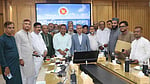
The agreement was signed at the Invest Bangladesh auditorium in Agargaon at 3pm on Thursday.
Chittagong Port Authority Chairman Sayed Md Moniruzaman and DP World Chairman Essa Kazim signed the deal on behalf of their organisations.
Shipping Minister Shaikh Rabiul Alam, State Minister Razib Ahsan, UAE Ambassador to Dhaka Abdulla Ali Alhmoudi and Invest Bangladesh Chairman Ashik Chowdhury were present.
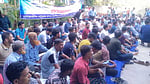
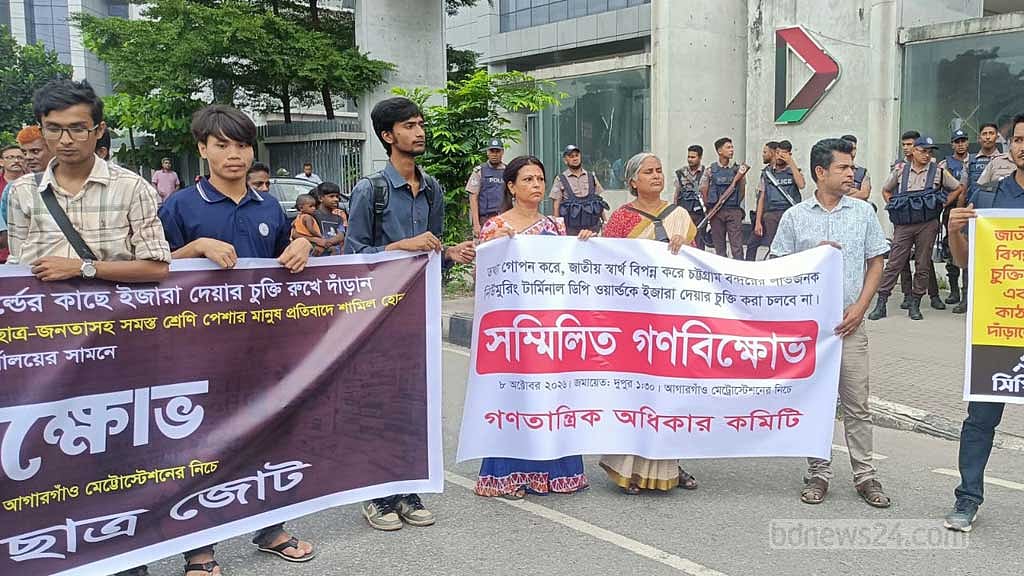
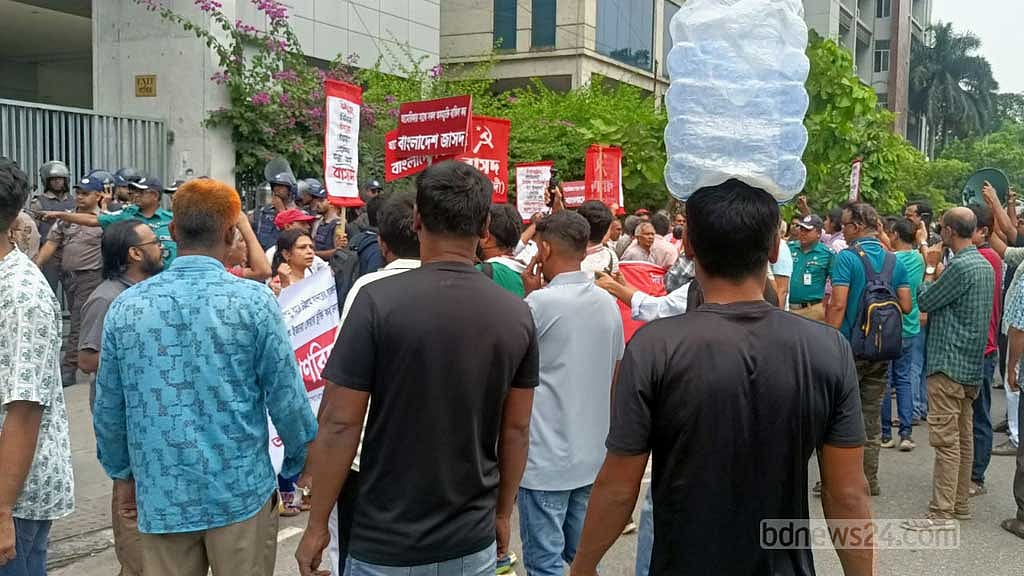
Several leftist political parties and organisations staged a sit-in outside the auditorium from noon in protest at the deal.
They include the Bangladesh Samajtantrik Dal (BaSaD), Democratic Revolutionary Party, Bangladesh JaSaD, BaSaD (Marxist), Bangladesh Samyabadi Andolon, Anti-Imperialist and Anti-War Alliance, Democratic Student Alliance and Democratic Rights Committee.
Invest Bangladesh said in a media statement that DP World, the Dubai government-owned international terminal operator, has been handed "operation and management" of the terminal for 15 years.
The land, infrastructure, ownership and control of the NCT remain with the port authority.
At a media briefing after the signing, officials said the deal carries an upfront fee of about Tk 6 billion and a commitment to invest more than Tk 10 billion in modernisation, equipment and technology over the first 10 years. The port authority will also receive a revenue share and a fixed annual fee.
Financial penalties will apply if key performance indicators (KPIs), regular reporting requirements and targets are not met.
The port authority will continue oversight through monitoring, audits and scheduled reports.
Invest Bangladesh said security protocols of state agencies, including the navy, coastguard, immigration and customs, will stay as before.
Shipping Minister Rabiul told the ceremony the government aims to quickly raise the capacity of existing key assets so the NCT becomes more competitive through modern equipment, digital systems, international-standard management and global logistics links.
"Our broader policy goal is to bring multiple international operators into different terminals and, by raising service quality and reliability, bring stability to the supply chain," he said.
DP World Chairman Kazim thanked the Bangladesh government and the port authority for granting the operating rights under a public-private partnership.
Bangladesh's importance as a trade and manufacturing hub is growing steadily, he said, and the company is committed to supporting the country's progress.
The partnership will plug the terminal into DP World's global network of ports, logistics infrastructure and supply-chain services, making Bangladesh's trade links with international markets “easier and more seamless”, he added.
Chittagong Port Authority Chairman Moniruzzaman said the agreement reflected the government’s commitment to strengthening the country’s maritime and trade infrastructure through public-private partnerships.
He said the deal would improve terminal efficiency, reduce logistics bottlenecks and strengthen links with international markets while supporting domestic industry and making cargo movement more efficient.

Invest Bangladesh’s Ashik said the aim is to keep the country's trade in step with global momentum, and bringing DP World into NCT operations is a major stride towards that goal.
"We are glad to have supported this important PPP initiative at the port.”
The agency wants faster operations, stronger connectivity and better service quality at one of the country's main trade gateways, he said, and hopes to raise the port system to a capacity that can meet the expanding trade the country seeks.
The NCT is the largest of Chittagong Port’s four main terminals for loading and unloading containers from ships.
During the Awami League government, an initiative was taken to hand over NCT operations to DP World under public-private partnership (PPP) and government-to-government (G2G) arrangements, but it did not materialise.
After the fall of the Sheikh Hasina government amid the mass uprising on Aug 5, 2024, the then interim government led by Nobel laureate Muhammad Yunus resumed efforts to hand over the terminal to a foreign operator.
As talks gathered pace towards the end of its tenure, port workers took to the streets, and the interim government suspended the lease process on Feb 8.
The new BNP government later wrote to the port authority on Jun 4 to continue negotiations with DP World.
Following the directive, the Chittagong Port Authority formed a 12-member support team to assist with the talks.
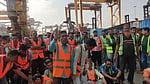
The Port Protection Committee has staged mass hunger strikes, rallies and other programmes for months, demanding an end to the lease process.
In September, the Jatiotabadi Sramik Dal and Port Protection Council announced agitation on the same demand.
The government says handing NCT to a foreign operator will raise the port's operational efficiency, speed up container handling with modern technology, draw foreign investment directly into logistics and port infrastructure, and accelerate the growth of international trade.
It also says world-class management will sharpen local workers' skills and bring modern port-management experience.
Protesters counter that foreign control would push the port into losses, drain skilled manpower and expose Bangladesh to geopolitical risk.
They also warn that leasing the terminal to a multinational would deprive the government of revenue, send huge sums of foreign currency out of the country and, under the "concession" deal, risk the clearance of dangerous goods.