


Published : 03 Mar 2016, 10:04 PM
Updated : 11 Apr 2022, 09:42 PM


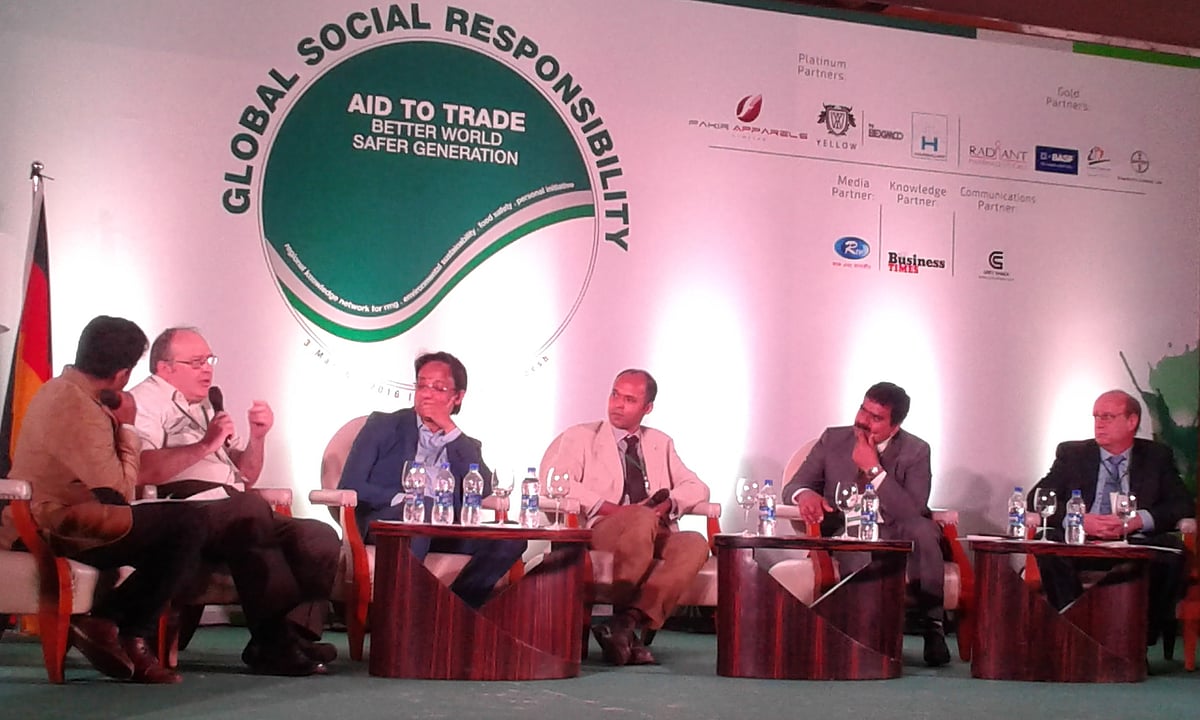
“This should be backed up by action to improve the quality of food,” Mike Robson said at a panel discussion in Dhaka on Thursday.
“Inspection is one element of the overall food control system,” he said at the global social responsibility conference of the Bangladesh German Chamber of Commerce and Industry (BGCCI).
He said the purpose of inspection was “not to raise money, not to fine people or not to police. This is to identify problems to try and improve the quality of food”.
Food adulteration, widespread in Bangladesh, is being seen as a commercial fraud.
The FAO representative said this was “particularly sensitive” to Bangladesh.
The government holds mobile courts to fine adulterators.
But, Robson observed, the practice persisted despite penalties.
“There is too much emphasis on punishment and policing. It’s not improving the safety of the whole sector,” he said.
He added he found that, in Bangladesh, like many developing countries, “everybody wants to be an inspector; everybody wants to give certificates, because that power brings financial reward”.
He, however, said “the most frequent problem” in food safety in Bangladesh is microbial contamination, which concerns food hygiene.
“It is eating dirty food”, he said, adding that ensuring food safety was “a shared responsibility”.
He said the government alone cannot guarantee food safety. “It’s the business, food handling people, and all have to work on this.”
Managing directors of various companies were present on the panel.
The discussion was moderated by ICE Business Times Managing Editor Tawhidur Rashid.
The bilateral chamber BGCCI organised the conference, fourth of its kind, focusing on issues of regional connectivity, social and environmental sustainability and personal initiative.












