


Published : 26 Apr 2020, 01:44 AM
Updated : 17 Oct 2022, 11:06 AM


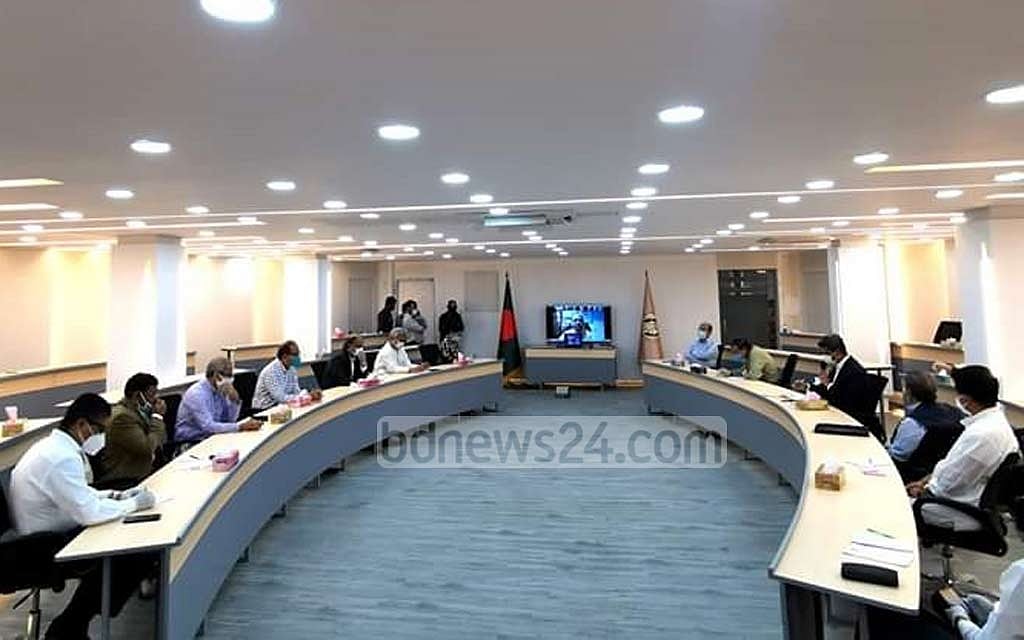
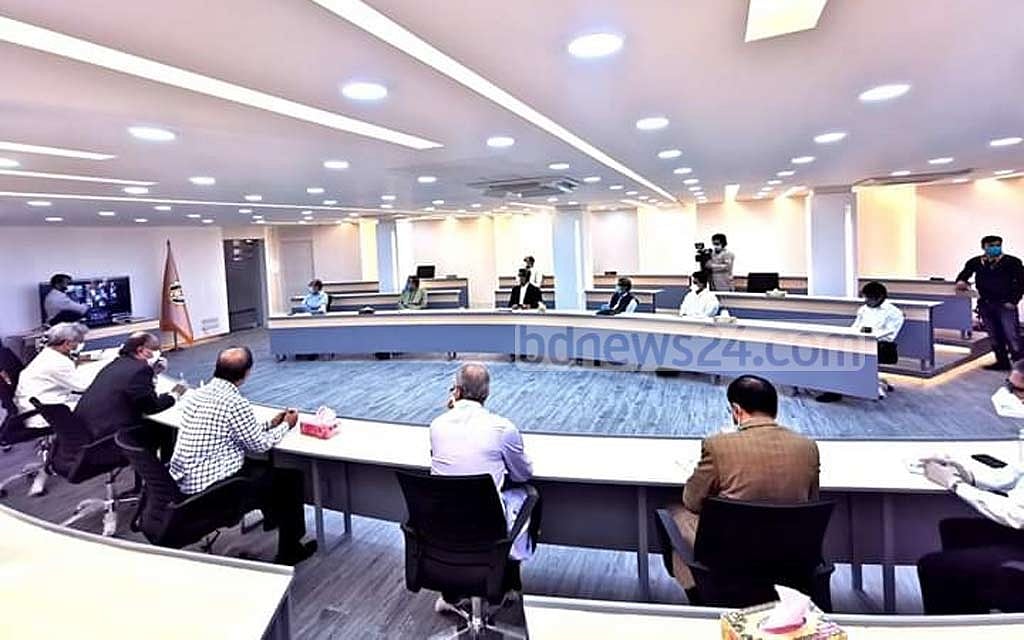
They raised the demand in a discussion organised by the Federation of Bangladesh Chambers of Commerce and Industries or FBCCI in Dhaka on Saturday amid the coronavirus lockdown.
“We are going through a difficult time. The factories must be reopened gradually even if on a limited scale to save the economy and livelihoods of hundreds of thousands of workers,” said Sheikh Fazle Fahim, the chief of the apex body of businesses.
He asked the government to take a look at the decisions made by countries that are competitors of Bangladesh in exports, such as China, Vietnam, India and Cambodia, and follow the same path.
In the order extending to May 5 the lockdown, which has been in place since Mar 26, the government had said, “Industrial units, agriculture and manufacturing and supply-related sectors will reopen gradually in light of the present situation.”
Drug makers and exporters will also be allowed to run their factories as long as they take steps to protect the health and safety of workers, the government had said.
Prime Minister Sheikh Hasina also said on Apr 20 that some factories can reopen on a limited scale during Ramadan if the situation permits and if the authorities strictly follow health directives to protect workers from the coronavirus infection.
Bangladesh Garments Buying House Association, or BGBA, later submitted a plan to the government to reopen the factories.
But workers’ rights groups, which have been demanding at least three months of paid leave, opposed the readymade garment traders’ proposal describing the owners' “haste” to reopen the factories as “unacceptable”.
Fahim thanked Hasina for the bailout package. “The FBCCI has been working with the finance and commerce ministries, Prime Minister’s Office, Bangladesh Bank and different business groups ever since the crisis began.”
Salman F Rahman, the Prime Minister’s advisor on private industry and investment, said the factories should reopen only after a“realistic decision” is made.
“We must review issues like damage to the economy and health risks before taking the decision to reopen the factories carefully,” he said.
“The entire world is at risk. Countries like Germany and France are reopening main industrial sectors slowly despite the coronavirus risks. We will also need to make a similar move,” Salman said.
He asked the FBCCI to draw up a strategy on the reopening of the factories and submit it to the government.
Mahbubul Alam, the president of the Chattogram Chamber of Commerce and Industry, urged the government to allow the businesses to have goods released from Chattogram Port without them having to pay fines until Apr 30.
He said shipping agents were closing offices at 2pm leading to a delay in clearance of papers and subsequently the fines. The shipping agents should keep offices open until 3pm, he said.
Mahbubul also said the small and medium entrepreneurs in the port city would face a loss of Tk 370 billion during Ramadan due to the lockdown. He urged the FBCCI to draft a strategy to reopen the businesses gradually.
Rubana Huq, who heads the garment sector lobbying group BGMEA, said they were under pressure from the foreign buyers to reopen 865 factories. The $34 billion sector has seen orders of as much as $3 billion cancelled due to the pandemic, according to her.
She solicited cooperation from all to make an area-based schedule to reopen the factories on a limited scale following the health guidelines.
“It will be difficult to bring back the orders if they are shifted to other countries who are our rivals. So it is necessary to reopen the factories with a limited number of workers,” the BGMEA president said.
Ahsan H Mansur, the executive director at Policy Research Institute, said it was necessary to flag the areas red, yellow and green based on the risk of infection before reopening the factories.
FBCCI, BGMEA and others can make a sector-wise plan to reopen the factories, he said.
Mansur also called for more incentives from the government.
Former FBCCI presidents Mir Nasir Hossain, Abdul Matlub Ahmad, AK Azad, The Daily Star Editor Mahfuz Anam, Prothom Alo Editor Matiur Rahman, Bhorer Kagoj Editor Shyamal Dutta, Ekattor TV Editor-in-Chief Mozammel Babu, DBC News TV Editor-in-Chief Mohammed Manzurul Islam, Bonik Barta Editor Dewan Hanif Mahmud and leaders of Sylhet, Khulna, Rangpur, Sunamganj and Jamalpur chambers of commerce and industries attended the discussion.












