Published : 08 Oct 2026, 01:17 AM
Updated : 08 Oct 2026, 01:17 AM


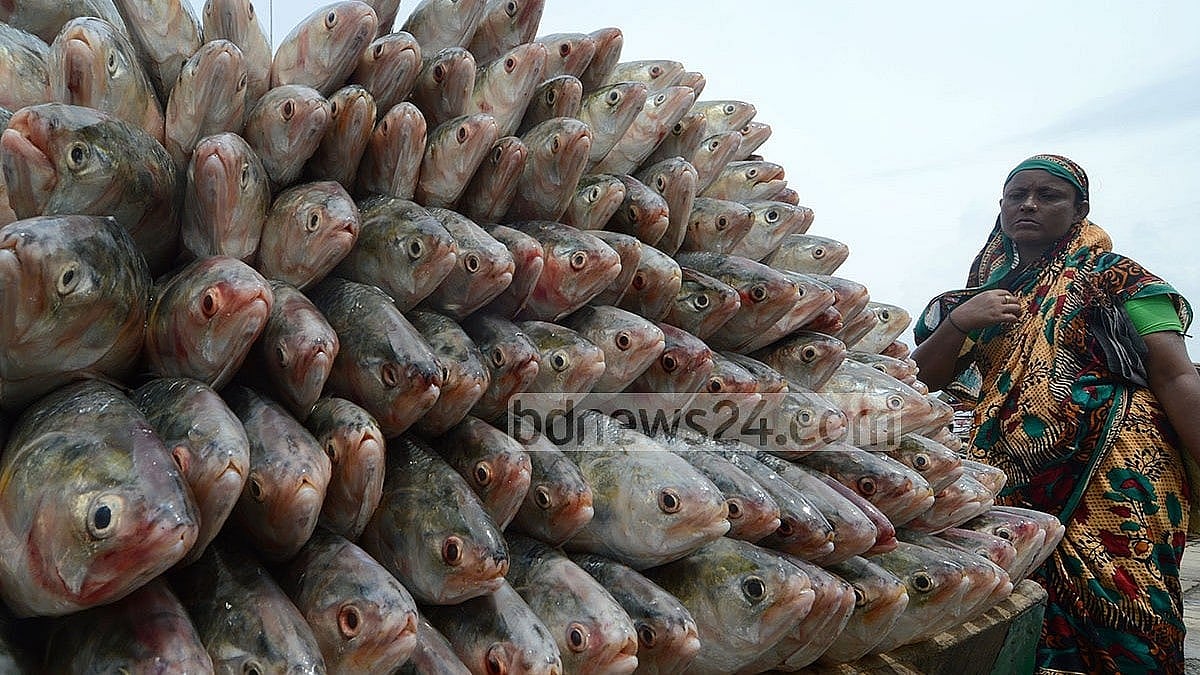
Seven years after Bangladesh began its annual Durga Puja hilsa exports to India, the tradition is facing uncertainty this year amid political tensions and doubts over Prime Minister Tarique Rahman’s proposed New Delhi visit.
Mahalaya, marking the start of the countdown to Durga Puja, falls on Saturday. But a 22-day ban on catching, buying, selling, transporting, storing and marketing hilsa begins at midnight on Wednesday and will run until Oct 29.
No government decision has yet been announced on exports to India.
Fisheries and Livestock Secretary Md Delwar Hossain told bdnews24.com he was unaware of the latest developments.
“I don’t know. I don’t know the latest about this. I can check with the office and tell you. I don’t know the latest,” he said.
Indian traders wrote to Bangladesh in August seeking hilsa imports.
On Sept 9, the Commerce Ministry sought the Fisheries and Livestock Ministry’s opinion on whether exports should be allowed after reviewing production and market conditions. No response has arrived in about a month.
A senior commerce ministry official said approval could take around 10 days even after a positive opinion, making exports before Puja unlikely.
7 Years of Special Exports
Bangladesh has allowed limited hilsa exports to India ahead of Durga Puja every year since 2019, after exports had been suspended following 2012. The shipments are particularly popular in West Bengal, Tripura and Assam.
In 2024, the interim government allowed 3,000 tonnes after India made a special request. Only 577 tonnes were eventually exported, while last year just 150 tonnes were shipped against approval for 1,200 tonnes.
This year, the flow has reversed. Bangladesh imported 553 tonnes of hilsa from India through Benapole between Jul and Sept 20, worth $910,000 in LC value.
The Department of Fisheries later cancelled 103 no-objection certificates for hilsa imports from India, halting the trade.
For the ongoing fiscal year, 1,739.5 tonnes had initially been approved for import.
Bangladesh’s export policy classifies hilsa as conditionally exportable, requiring government approval.
Meanwhile, Fisheries and Agriculture Minister Mohammad Amin Ur Rashid said there would be no relaxation in protecting mother hilsa.
“Strict action will be taken to protect mother hilsa and ensure sustainable production. Monitoring and drives will be intensified in major breeding grounds, including Barishal, Chandpur and Bhola,” he said.