Published : 06 Oct 2026, 03:13 PM
Updated : 06 Oct 2026, 03:16 PM


Zahed Ur Rahman, information advisor to the prime minister, believes that reconciliation with the Awami League is "not a bad idea," but says the basic conditions for such a process are absent because the party leadership has shown no remorse for its actions.
Instead, Sheikh Hasina has continued to blame and threaten her opponents since her ouster in the July-August 2024 mass uprising, according to him.
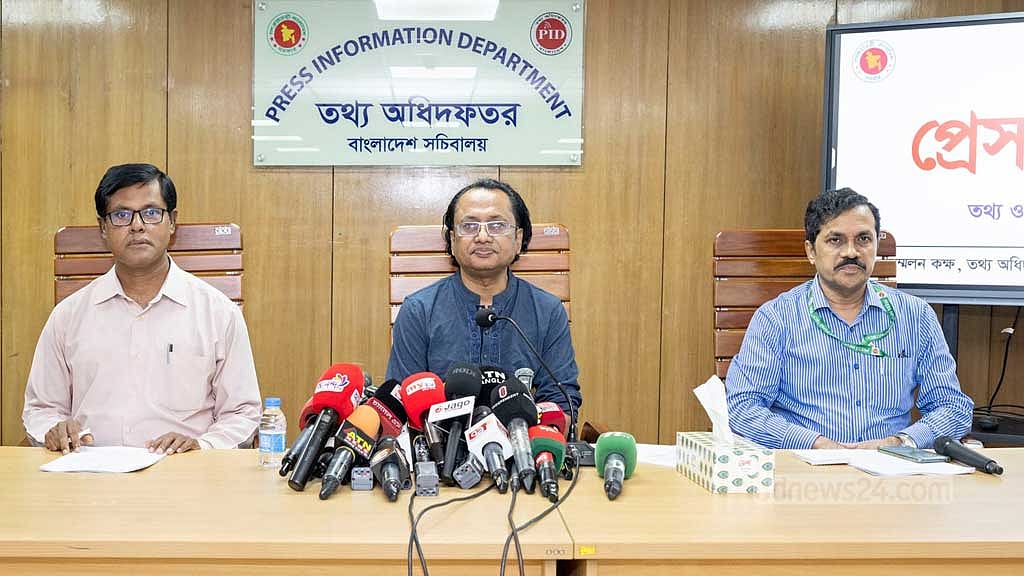
Responding to a question at a press conference on Tuesday, he said: "She keeps threatening that she will deal with everyone, telling people to retaliate and do this or that. She has continued to issue all sorts of threats.
"If that is the case, then in this context, it is difficult for us, at least, to entertain a discussion about reconciliation."
Hasina, who is currently in India, has been sentenced to death by the International Crimes Tribunal in a crimes against humanity case over the crackdown on the 2024 uprising.
The ban imposed on Awami League activities by the previous interim government has remained in place under the current BNP administration.
Asked about the government's position on reconciliation with the Awami League, Zahed said he did not disagree with the need for such a process, noting that the issue had been discussed since Aug 5.
"There is still a section of the country's population that supports the Awami League. These people, or those who are actively involved in the Awami League – taking the initiative to reconcile with them is not a bad idea. If that were to happen, that would have been good. But our question has always been – what are the basic conditions of reconciliation? On what is this reconciliation based?” he said.
Zahed pointed to South Africa's Truth and Reconciliation Commission as an example.
"Look at what happened in South Africa – the basic condition for reconciliation is that the group, faction or political party that committed the crime must acknowledge the crime and repent for it. However, just by admitting the crime, the legal liability for the criminal offence does not end. There is also a matter of taking legal action against it.”
Zahed said reconciliation could have been discussed if those basic conditions had been met, including questions over who would take part and how the process would work.
But we are very surprised to see that since Aug 5, the party and its top leader is still blaming and threatening us.”
Zahed said that attitude from the Awami League's top leadership made it difficult for the BNP government to entertain calls for reconciliation.
"They do not want it. They are the ones who have to want reconciliation. If someone in the middle is asking for reconciliation, if they think it is good, I also think it is good. They should contact the Awami League, talk to the Awami League leadership and start working on reconciliation after ensuring the absolute fundamentals.
If that happens, then we can talk.”