Published : 15 Apr 2023, 05:43 PM
Updated : 15 Apr 2023, 07:23 PM


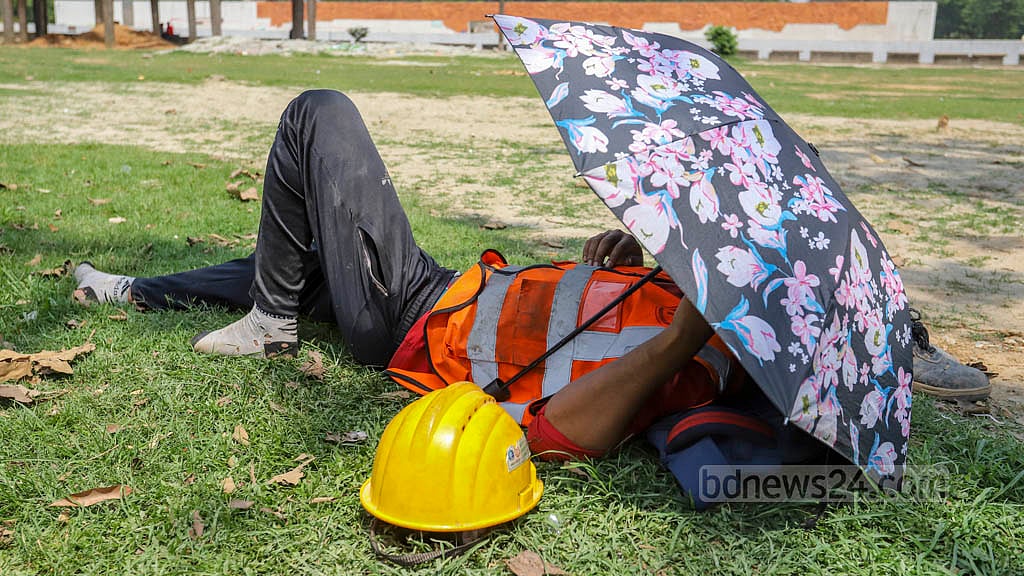
The second day of the Bangla New Year is even hotter than the first.
Chuadanga, which recorded a nationwide high of 41.7 degrees Celsius on Friday, hit 42.2 degrees Celsius on Saturday, according to the Bangladesh Meteorological Department.
The previous record high in Chuadanga was 42 degrees Celsius in 2014. Rajshahi reported the highest temperature on record in the country at 42.5 degrees Celsius in 2010.
In Dhaka, several weeks without rain culminated in temperatures of 40.2 degrees Celsius, a decade high, on Friday. It rose to 40.4 degrees on Saturday.
“The surge in temperatures will continue into tomorrow and will stabilise a bit for a few days before it is likely to drop slightly,” says meteorologist Shariful Newaz Kabir. “But temperatures aren’t likely to fall significantly for some time.”
The highest temperature on record for Dhaka was 42.3 degrees Celsius in April 2016. Since then, notable highs were 40.2 degrees Celsius in April 2014, and 39.6 degrees Celsius in 2009, according to meteorologist Bazlur Rashid.
Khulna, Dhaka, Faridpur, Manikganj, Rajshahi, Pabna and Patuakhali districts are experiencing a severe heatwave, according to a 24-hour weather forecast published on Saturday. A mild to moderate heatwave is sweeping over the rest of the country and may continue.
When the temperature hits 36 degrees to 38 degrees Celsius, it is considered a mild heatwave. Temperatures of 38 to 40 degrees Celsius are deemed to be a moderate heatwave.
Mercury readings of 40 to 42 degrees Celsius are categorised as a severe heatwave. Temperatures over 42 degrees constitute an extreme heatwave.
A trough of low pressure is currently lying over West Bengal and the adjoining area, as a seasonal low lies over the South Bay, according to the BMD forecast. The weather may stay dry with partly cloudy skies over the country.
7 DEGREES ABOVE AVERAGE
Meteorologist Shariful said Dhaka’s temperature usually remains at 33.7 degrees Celsius in April and it is 33.2 degrees Celsius for the entire country. “It means the average temperature has increased by 7-9 degrees Celsius.”
“Usually rains subdue the heat at this time of the year. But the trend of rainfall is very low, almost zero, at least for now, especially after Apr 4. This is why the heatwave has worsened.”
The extreme hot weather has affected daily life amid Eid-ul-Fitr shopping rush during Ramadan.
“It feels like a desert. I sweat so much that all the water in my body gets out within an hour from leaving home in the morning. I don’t sweat after that. My body feels like burning as I lose all my strength and feel like dozing off,” said Abdul Wadud, a bus passenger.
Rubaiya Farzana Poly, a shopper at Jamuna Future Park, said the heat during Ramadan this year was “unprecedented”.
To rickshaw-puller Matin Mia, the direct sunlight felt like fire. “I can’t continue work after making one or two trips. The heatwave is disastrous.”