


Published : 16 Jun 2016, 09:58 PM
Updated : 11 Apr 2022, 09:59 PM


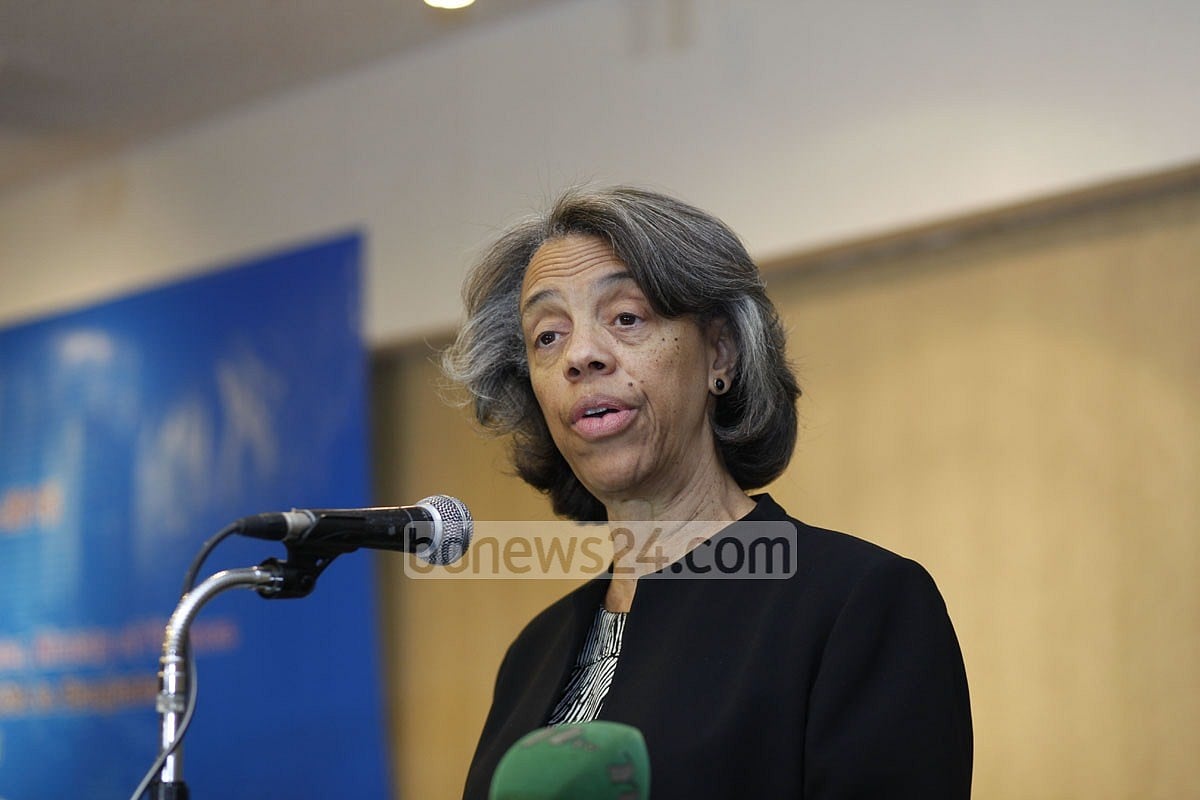
Marcia Bernicat on Thursday said the huge number of arrests put Bangladesh in the ‘spotlight’.
Police started countrywide ‘pincer operation’ last Friday after a series of targeted killings claimed the lives of secular writers, bloggers, foreigners and religious minorities.
On Jun 5 a policeman’s wife fell prey to a similar attack in Chittagong. Police have arrested over 2,000 people every day on average. So far, 176 among them have been identified as militants.
However, opposition BNP has accused the government of arresting their leaders and activists in the name of a crackdown.
The ambassador said she understands that there is a common police practice throughout the world that they concentrate on a week or a particular time to finding the people who have been suspects or have outstanding arrest warrants.
“Our concern is whether the arrest is being conducted in a transparent manner. We urge them to make sure that the process is transparent,” she said, while interacting with a group of journalists on the June 23-24 dialogue.
But she stressed the accountability of the police forces and “that it is important for people to know that police are being held accountable for human rights abuses, such as being fired, or jailed as part of the disciplinary actions.”
“This will increase people's confidence and this will also send a message to the forces that if they behave in a wrong manner, they’ll be punished,” she said.
The fifth episode of the annual partnership dialogue will be held in Washington where both sides will discuss all aspects of bilateral relations aimed at advancing “the robust and growing bilateral relationship and provide it strategic direction”.
This dialogue generally features three working groups – security cooperation, development and governance cooperation, and trade and investment. Issues of regional and global interest are also discussed.
This year the event came on the heels of the terror attack that left 50 people dead and many more injured at a nightclub in Florida. This was claimed by the radical group ISIL.
Many of the recent murders in Bangladesh were also reportedly claimed by ISIL. The government, however, has repeatedly rejected such claims.
Ambassador Bernicat said the current situation called for the need of strong collaboration to win the battle against the radical force ISIL.
She said stopping “lone wolf attacks”, such as the attack in Florida, is the “hardest task.”
“Tomorrow if one individual decides to do something, then it’s very difficult to find out and prevent it, even if we have the best intelligence system and best cooperation.”
She, however, suggested not to jump to immediate conclusions after any attack and that “the picture becomes clearer when everyone puts their pieces on the table.”
The investigation process is “like putting the pieces of a puzzle on the table.”
US-Bangladesh security cooperation
The ambassador said security would top the agenda in the partnership dialogue as always as “citizens’ security is always number one priority of a government”.
She said both US and Bangladesh are sharing security information, which is an ongoing issue.
“We work closely with all. We have really good cooperation in security information sharing.”
She said the US is “very interested to work on reducing violence and conflict here in Bangladesh.”
The ambassador expressed her “gratefulness” to Bangladeshi police for ensuring security of the diplomats and said they had cooperation with the police force “to make their security as robust as possible.”
She particularly mentioned cooperation in community policing and said both the US and Bangladesh forces are learning from each other under the programme.
The US also trains Bangladesh’s police, judges, prosecutors, and anti-corruption commission on tackling money laundering and terrorist financing.
Cyber security is also a new area in which the US is planning to help Bangladesh.
The ambassador said Bangladesh has sought cooperation on how to better control social media and the internet.
She said there are other “equally important aspects of protecting our systems as are run by computer systems. So there are defensive aspects of cyber security that governments must adopt as well.”












