Published : 14 Feb 2023, 03:01 AM
Updated : 14 Feb 2023, 03:12 AM


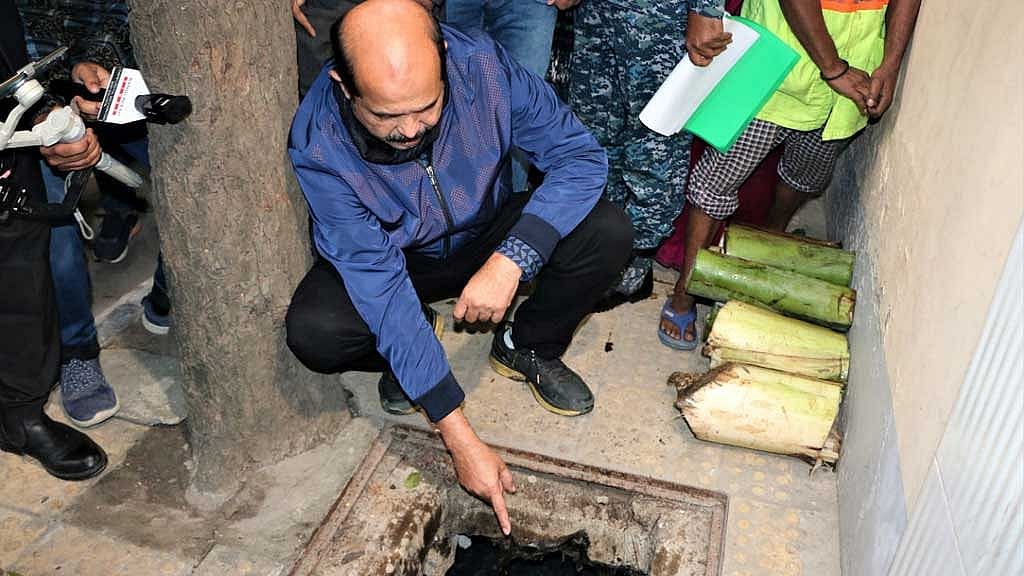
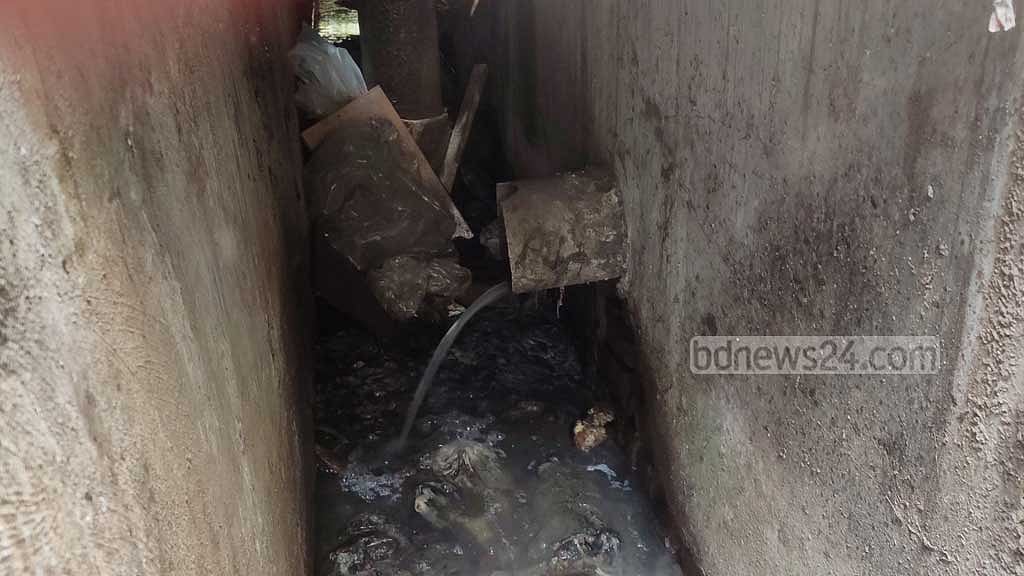
Dhaka North City Corporation workers blocked an illegal blackwater line of BTA Tower in Dhaka’s Banani in January by using banana trees, a technique ordered by Mayor Atiqul Islam. The building has no problem with the blocked pipe after a month has passed.
It has a separate illegal line for blackwater to flow out with the other one still blocked, said Rasel, a security guard who identified himself with a single name.
The same technique was used on house No. 16 on road No. 18 in the area, but its caretaker Shah Jahan said they removed the banana tree a day after the city corporation worker blocked the line.
Some others contacted for the article claimed their buildings had a legal connection or septic tanks. Still, city corporation workers pointed out that the buildings need a proper blackwater management system.
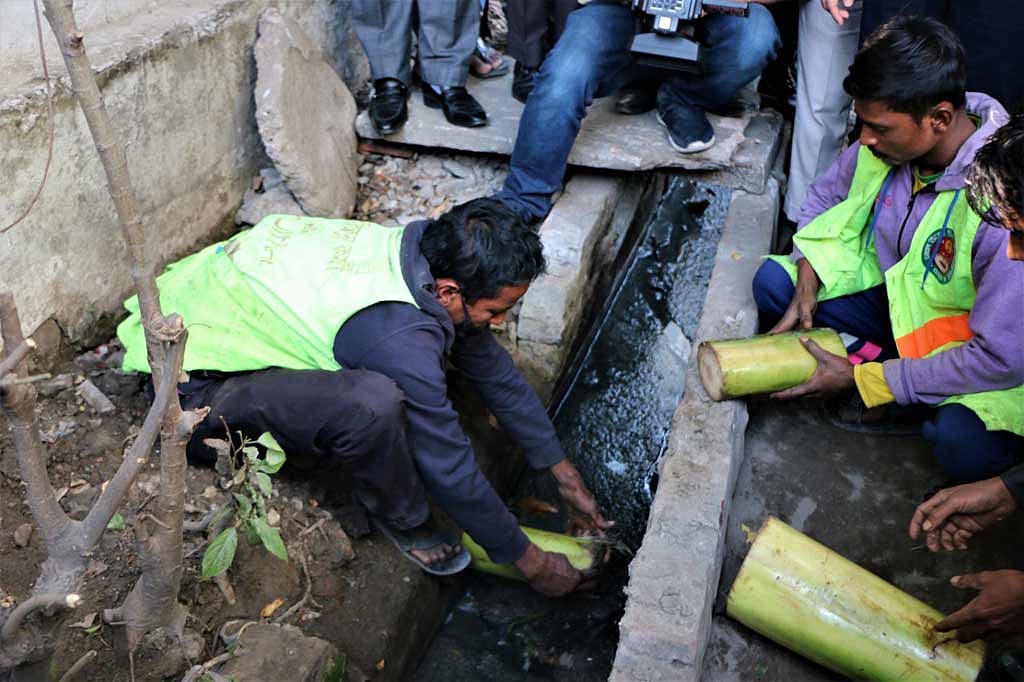
In 36 days of the drive to stop blackwater from flowing into canals or open drains, only 40 illegal connections in Gulshan, Banani, Baridhara and Nikatan have been blocked.
And the landlords had the banana trees removed to free the lines. Some have separate illegal lines.
ATM Shamsul Huda, president of Gulshan Society, said the society had told the members to set up septic tanks for blackwater management several times. Still, the landlords need to comply with the rules. “We don’t have enough manpower to check all the buildings.”
In line with the rules, blackwater from the buildings in Dhaka should be managed by using septic tanks or connecting the pipes with the sewerage lines of Dhaka Water Supply and Sewerage Authority or WASA.
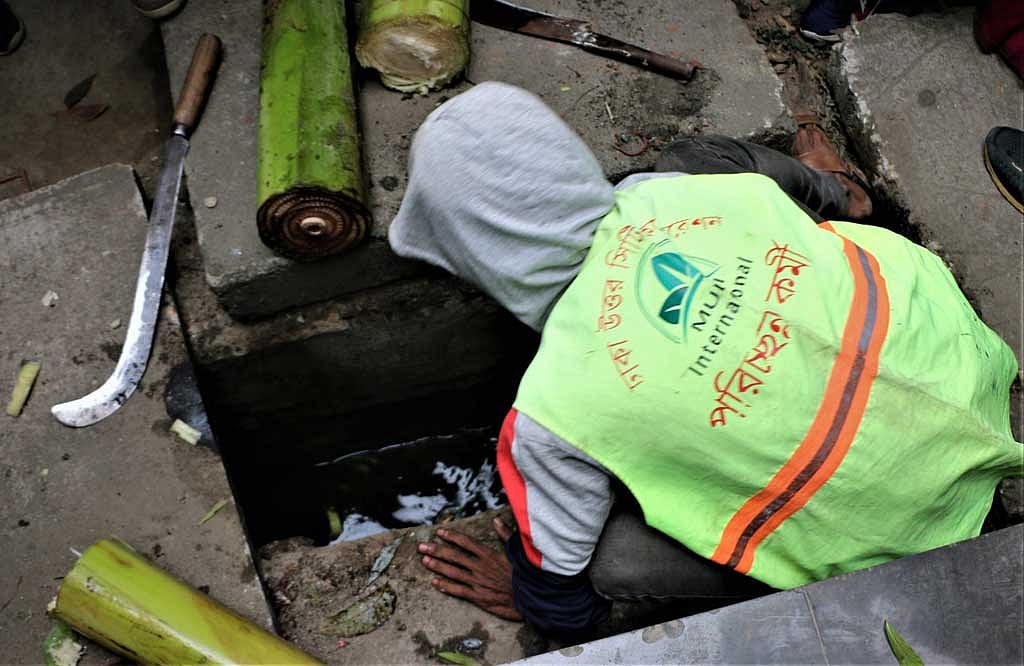
But errant landlords connect the blackwater lines to city corporation’s drains that flow to canals or lakes.
At the beginning of the campaign on Jan 4, Atiqul said he had warned landlords of consequences if they did not shift blackwater lines connected to surface drains, lakes or canals, saying 85 percent of the homes in the upscale areas have such lines.
As his warnings fell on deaf ears, the mayor came up with the strange idea,
which now appears to have little or no effect on the errant landlords.
He now says the campaign was aimed at raising awareness by giving a message.
Adil Mohammed Khan, an expert in urban planning, said blocking illegal blackwater with banana trees cannot be a permanent solution to the problem.
“It’s just something done for doing something. DNCC might have done it to raise awareness, but it’s not sustainable.”
Adil suggested giving an ultimatum to landlords for setting up proper blackwater management systems in line with their building plans.
Atiqul provided the data from a survey, which Mujibur Rahman, a former professor of the Bangladesh University of Engineering and Technology, headed.
Prof Mujibur said the WASA charges 52 percent of the houses in these areas for sewerage lines, but the system needs to be fixed most of the time.
CAMPAIGN HITS CONCRETE SLAB
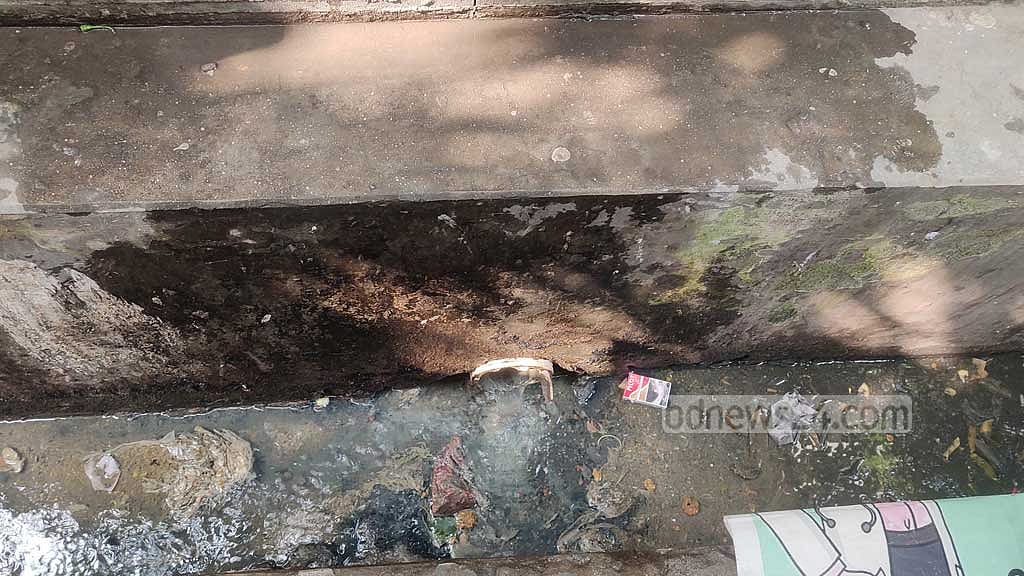
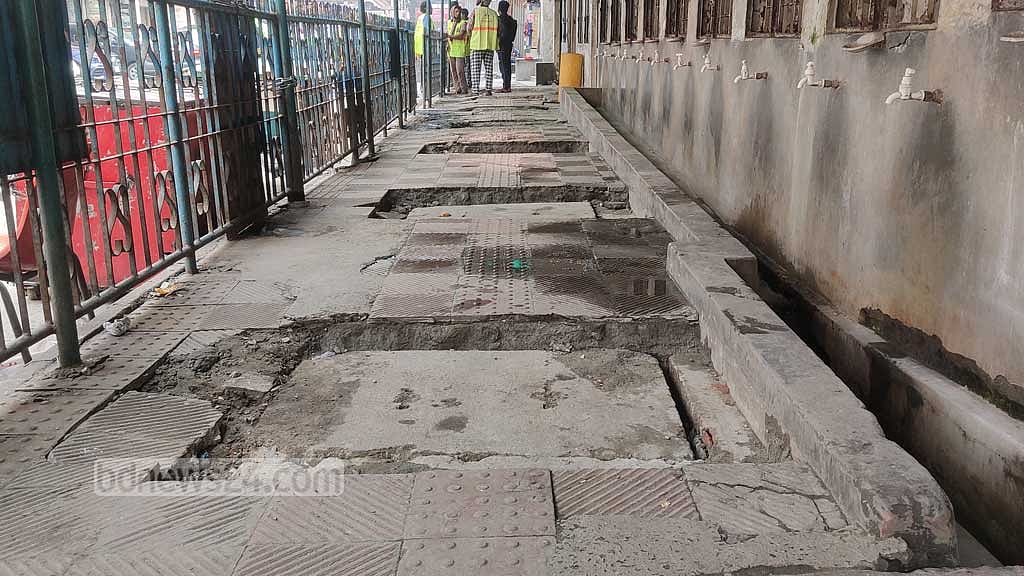
City corporation workers in the campaign said they block illegal blackwater lines whenever they see one, but reaching the pipes is difficult because they are usually covered with concrete slabs.
They need city corporation engineers’ permission to remove concrete slabs.
“If there is a removable cover, and the end of the pipe is near the cover, it is possible to block the line. But many owners cleverly set the pipes far from the cover,” said DNCC worker Nazrul Islam.
LIGHT AT THE END OF THE TUNNEL
Not all the landlords showed a complete disregard to the city corporation campaign.
The owner of house No. 14 on road No. 112 in Gulshan transferred the blackwater line to WASA’s sewerage pipe after the city corporation blocked the line with a banana tree.
“The blackwater of our building was blocked. We later called cleaners and transferred the line to WASA’s sewerage pipe,” said caretaker Santosh Kumar Deb.
Asked how successful the campaign was, Mayor Atiqul said: “It was possible to give a message through the drive. Owners are becoming aware of proper blackwater management. They have started contacting us for this.”

He said Defence Officer Housing Scheme Society was scheduled to sit with the city corporation on Monday, and Gulshan Society would meet the city corporation. Niketan Society talked to DNCC.
“They are thinking about cluster-based effluent treatment plants and sought places from us.”
Commodore SM Sharif-ul Islam, chief waste management officer at DNCC, said: “It’s difficult to keep blackwater lines blocked for a month. The owners removed the banana trees some days after the lines were blocked.”
“But we’ve received a good response after launching the drive. Baridhara Society has contacted us for help to manage blackwater properly by setting up a treatment plant.”
“We’ve talked to some organisations in Bangladesh and abroad for the plants. I hope we’ll be able to make a decision next month.”