


Published : 26 Jun 2014, 08:33 PM
Updated : 19 Oct 2022, 07:32 PM


Also Read:
India ready to partner BangladeshAlso Read:
Modi invites HasinaAlso Read:
Rs 600m Indian grant offeredAlso Read:
What Modi has written to HasinaAlso Read:
No visa-free entry mulled: IndiaAlso Read:
Trying for consensus on Teesta: SwarajAlso Read:
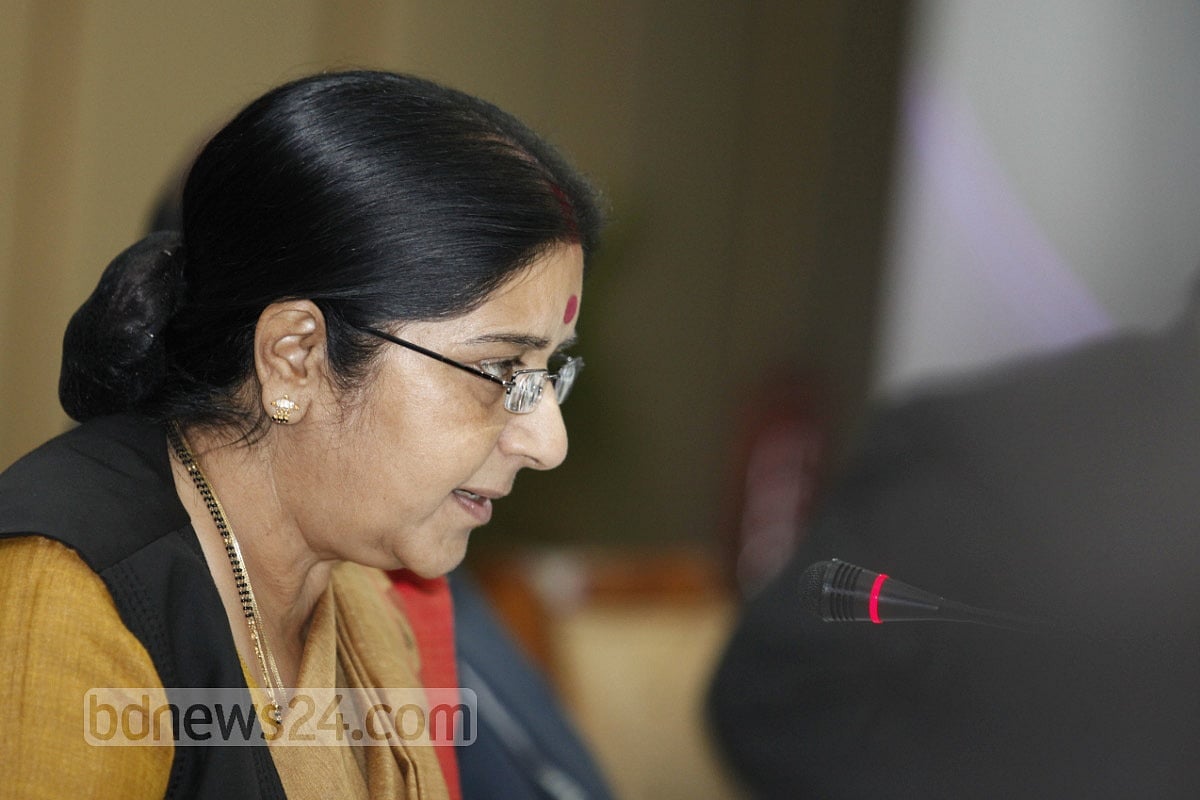
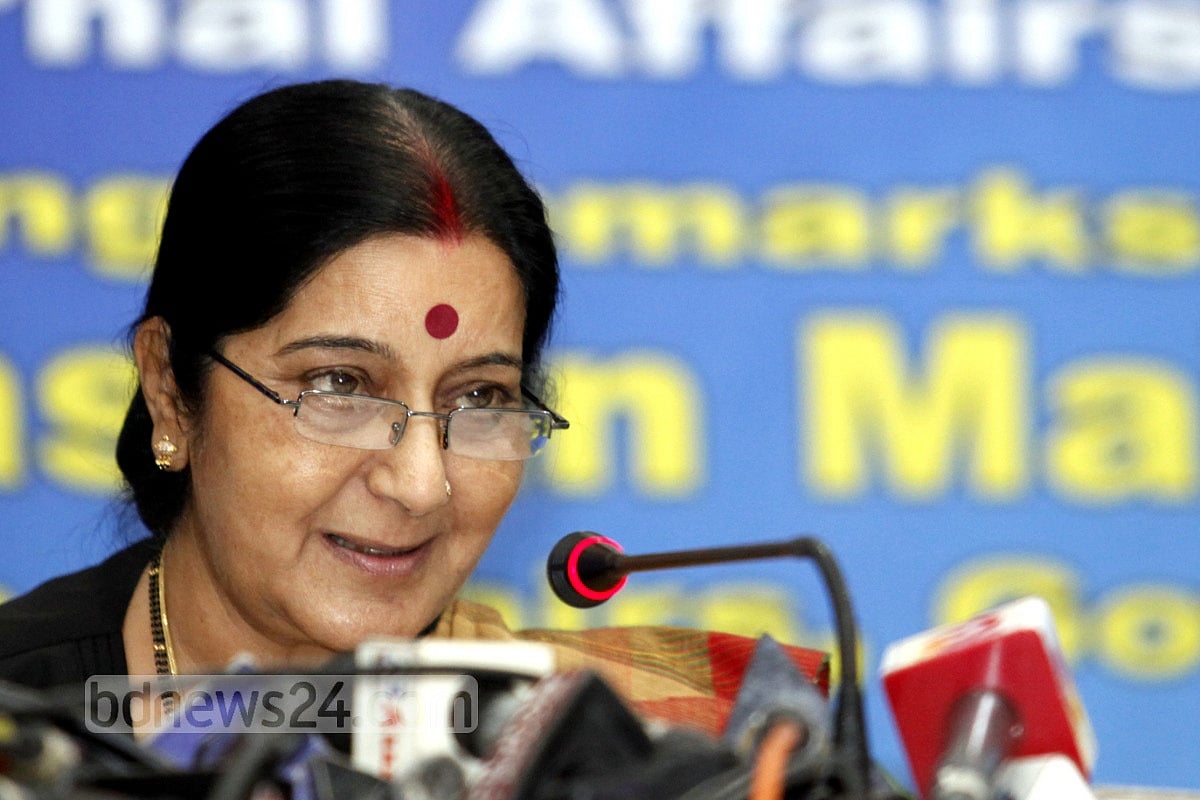
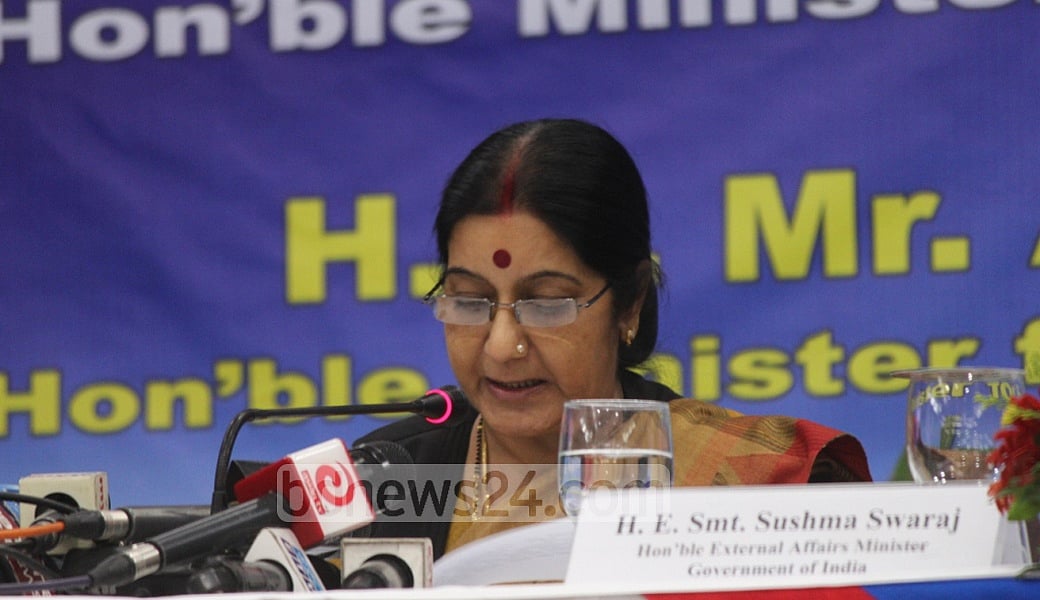
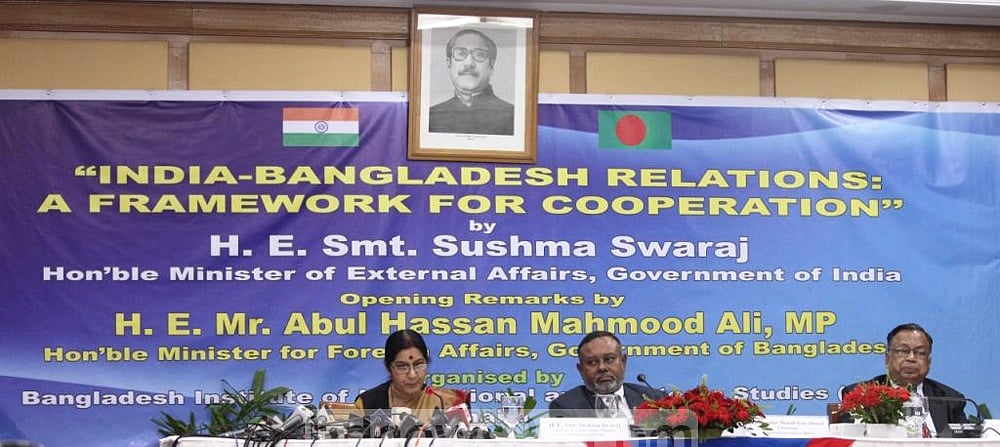
‘Want good relations with Bangladesh’Delivering a lecture in Dhaka on Thursday, she acknowledged that in the last few years when the Congress-led government was in power in Delhi “a great deal” had been achieved in India-Bangladesh relations.
Swaraj said they would continue and build the relations upon the “momentum”.
She said during meetings on her first day of visit she found a “strong desire” to strengthen the existing relations further that made her “optimistic” about the relations.
The foreign minister also said she was “confident that we will not only continue but also build upon the momentum that has characterised our relations in the last few years”.
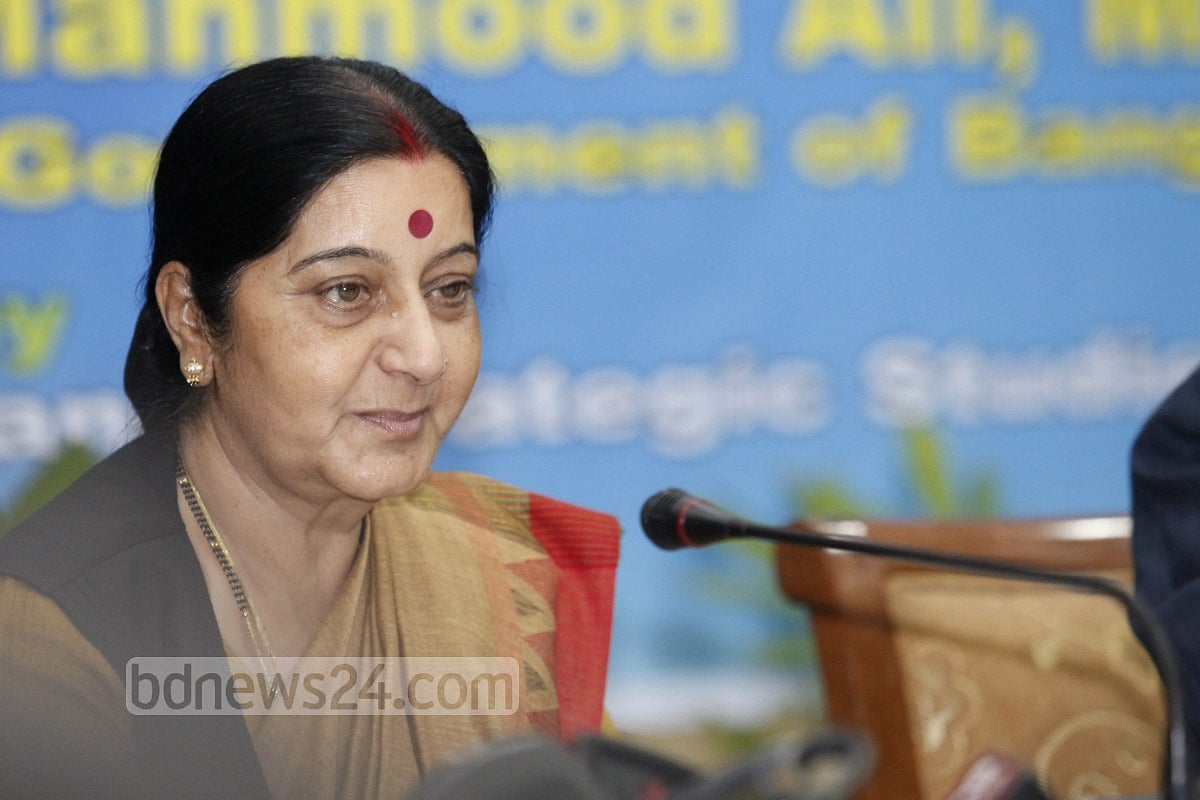
The Bangladesh Institute of International and Strategic Studies (BIISS) hosted the lecture at Hotel Ruposhi Bangla.
A nearly 500-strong audience including ministers, prime minister’s advisers, leaders of ruling Awami League and its allies, foreign diplomats based in Dhaka, Bangladesh’s former diplomats, teachers, senior journalists and business leaders were present.
Foreign Minister Abul Hassan Mahmood Ali delivered short opening remarks and thanked Swaraj for choosing Bangladesh as the first country for her visit.
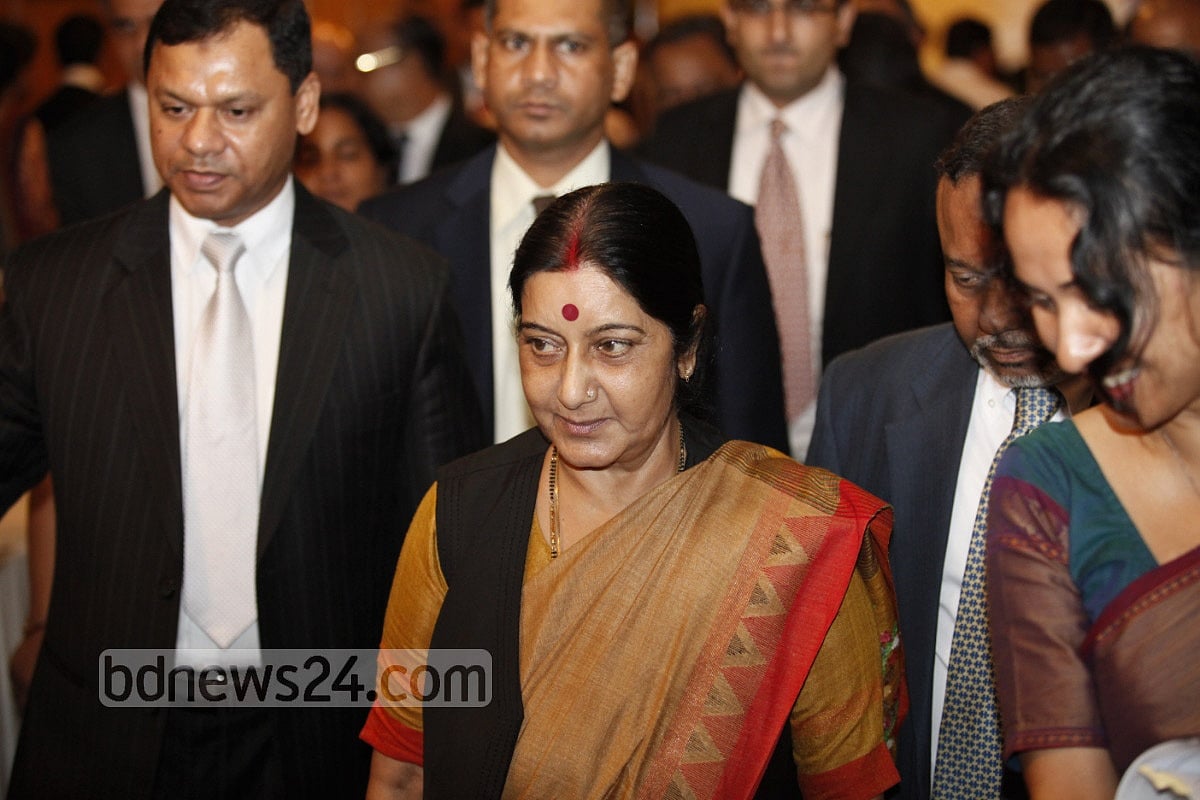
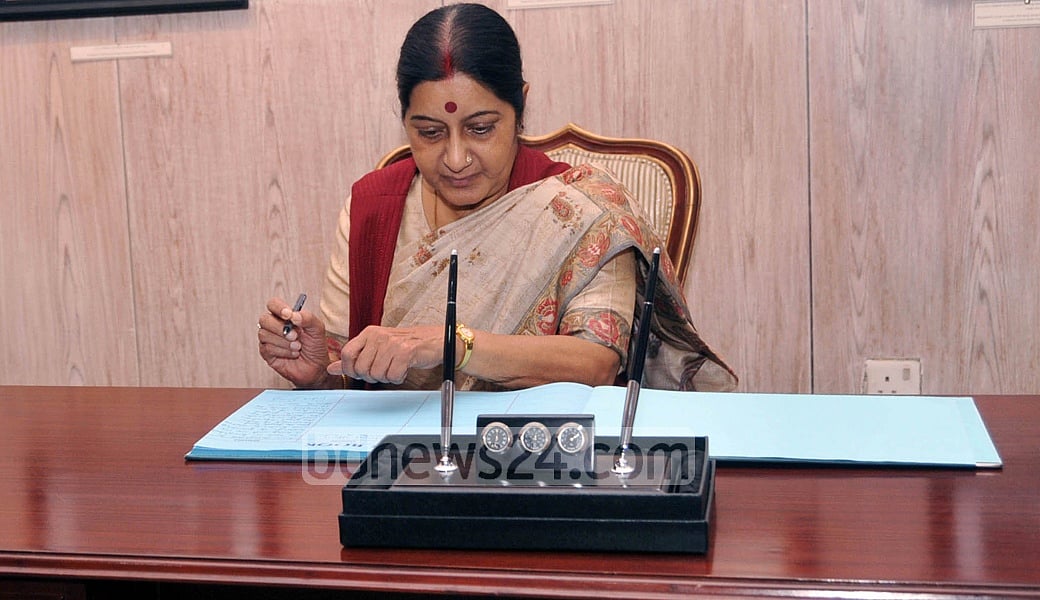
Swaraj arrived in Dhaka on Wednesday night, 16 years after her last visit in 1998 when she was the Minister for Information and Broadcasting.
But her visit is being keenly observed as there was scepticism about the prospects of relations if the BJP came to power in India.
There is a belief that Dhaka-Delhi ties witnessed “the best” phase during the last five years as the Awami League and the Congress party were in power.
Change in regime may change policies, some analysts say.
But veteran politician Swaraj, who became a Cabinet Minister in Haryana at the age of 25 in 1977, said she came to Bangladesh “with a message of friendship and goodwill” from the newly elected government in India.
“I come with the goal of enhancing our relationship and mutual understanding,” she said, adding that the potentials of partnership were “vast”.
She said she was also feeling “fortunate” to deliver the lecture on June 26, when her government just completed a month in power.
“On this special day, I feel fortunate to be in the midst of those with whom we shed blood together in 1971”.
She said India marvelled at Bangladesh’s courage in 1971, and “we marvel at your achievements today”.
She mentioned the name of Bangabandhu Sheikh Mujibur Rahman thrice in her about 20-minute-long lecture.
Once when she mentioned the names of great people of Bengal who, she said, had inspired “countless men and women to assert their individual human capacity for heroic and human unity”.
Second, she mentioned him as an architect of Bangladesh, and, finally, when she extolled Bangladesh’s socio-economic development.
“You have lived up to the faith that your founding father, Bangabandhu Sheikh Mujibur Rahman, had in his people and in the righteousness of his cause.”
She mentioned the name of Rabindranath Tagore, common poet of India and Bangladesh and said “this shared power of pen must write a new song of cooperation and progress”.
“We share not just our past but also our future,” she said, adding that they “we have a vision for the future development of our region”.
“Our people have given us the mandate to make a difference in their lives. We are determined to fulfil that mandate,” she said.
In her speech, she touched upon all issues in bilateral and regional cooperation and spoke of the “new beginning” in relations.
She stressed intensifying “dialogue and actions” for the collective development of the region and, in this regard, emphasised diversification of areas of cooperation and “share best practices”.
In the coming months, she said, “extensive” high-level bilateral visits had been planned. “We hope that our Prime Ministers will meet soon,” she said.
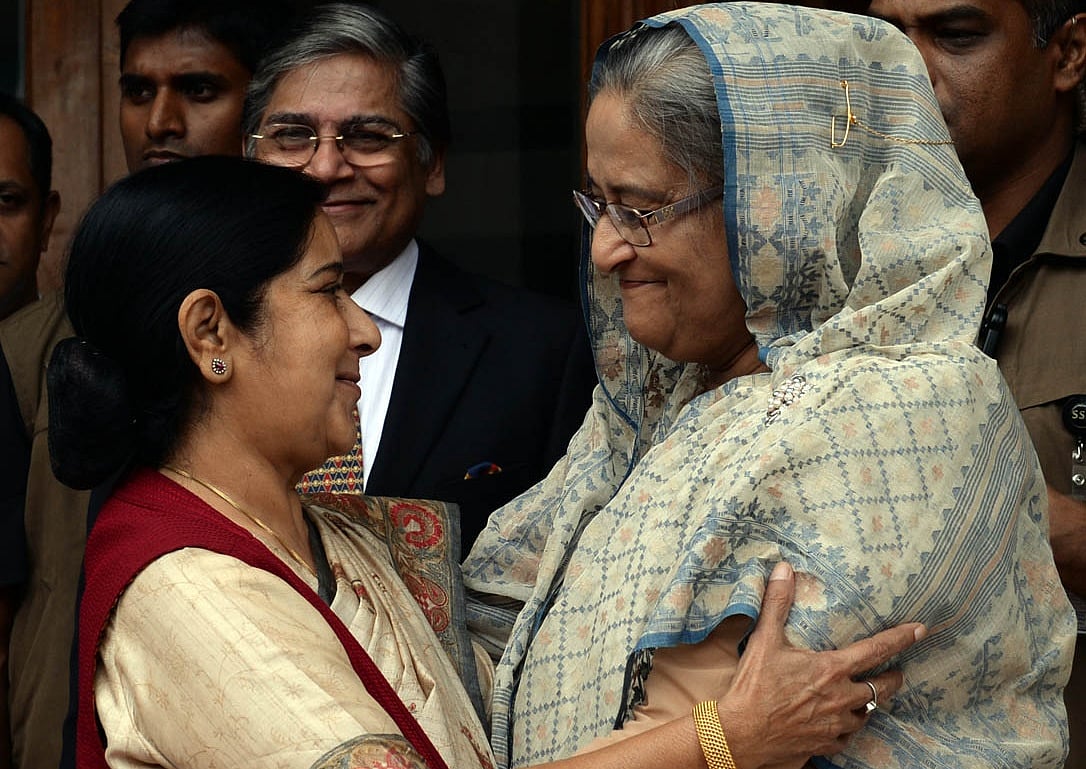
Earlier, she handed over India’s new Prime Minister Narendra Modi’s invitation letter to Prime Minister Sheikh Hasina.
Hasina, earlier, had invited Modi when he took charge a month ago.
Swaraj also acknowledged that India received Bangladesh’s help in combating terrorism and said “we are grateful for the cooperation we have received from Bangladesh in combating trans-boundary crime, insurgency and terrorism”.
“Indeed our cooperation in this regard is a model for others,” she said, stressing on the continuation of this cooperation.
“We know from experience that policies that seek to harm others only perpetuate a cycle of violence and underdevelopment that will undoubtedly boomerang on those who propagate them,” she said, stressing peaceful neighbourhood.
Photo: asaduzzaman pramanik/ bdnews24.com
“Rather we must dedicate our resources to channelling the energy of our youth into productive activities and development which can touch and benefit every single person in region.”
She said her government would work closely with neighbours and even walk the “extra mile” to create opportunities and “to build virtuous cycle of prosperity in the region.”
“We are convinced that India’s development cannot be complete and sustainable unless we succeed in building productive partnerships with our immediate neighbours.”
She said her government would pursue a policy of “active engagement” with neighbours in terms of “ensuring security, stability and prosperity for all”.
She said inviting all heads of states in Modi’s swearing-in ceremony was “a unique and bold signal” to this policy.
On Bangladesh’s concerns, she said she was “aware” that there were issues of concern to Bangladesh which “remain unresolved”.
She mentioned the name of pending issues including sharing of the Teesta water sharing, implementation of the Land Boundary Agreement and its protocols and better border management.
“My government is committed to addressing all these in a manner that improves the welfare and well being of both our people,” she said.
She acknowledged all the progresses in the bilateral relations in the last five years and said “fresh grounds had been broken” in the areas of security, economic development, sub-regional cooperation, border management, people to people exchanges and energy, among many others.
She said the first step of building an “energy corridor” had been taken with the commissioning of the Baharampur-Bheramara power interconnection, supplying 500 MW to Bangladesh.
To promote more interconnections, she said, an additional 100 MW of power would be supplied through the Palatana project.
She said her government would work with all partners to carry the initiatives of regional cooperation that include building the BCIM economic corridor.
She acknowledged Bangladesh’s ambitious plans to develop infrastructure and become a middle income country by 2021 and said India would like “to be your partner of choice in this endeavour”.
Photo: asaduzzaman pramanik/ bdnews24.com












