


Published : 26 Sep 2019, 02:29 PM
Updated : 17 Oct 2022, 11:46 AM


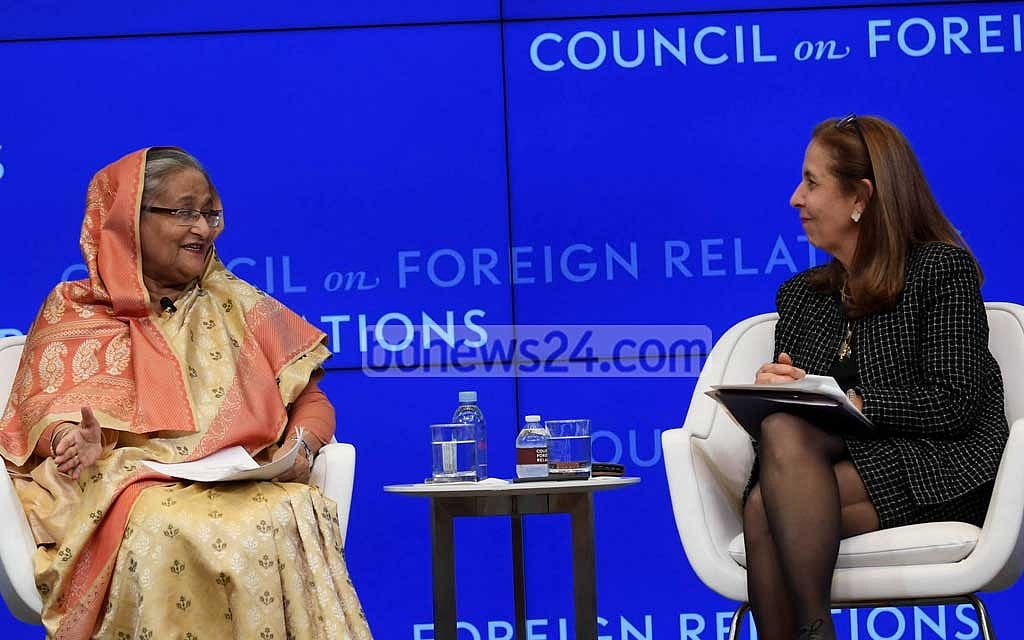
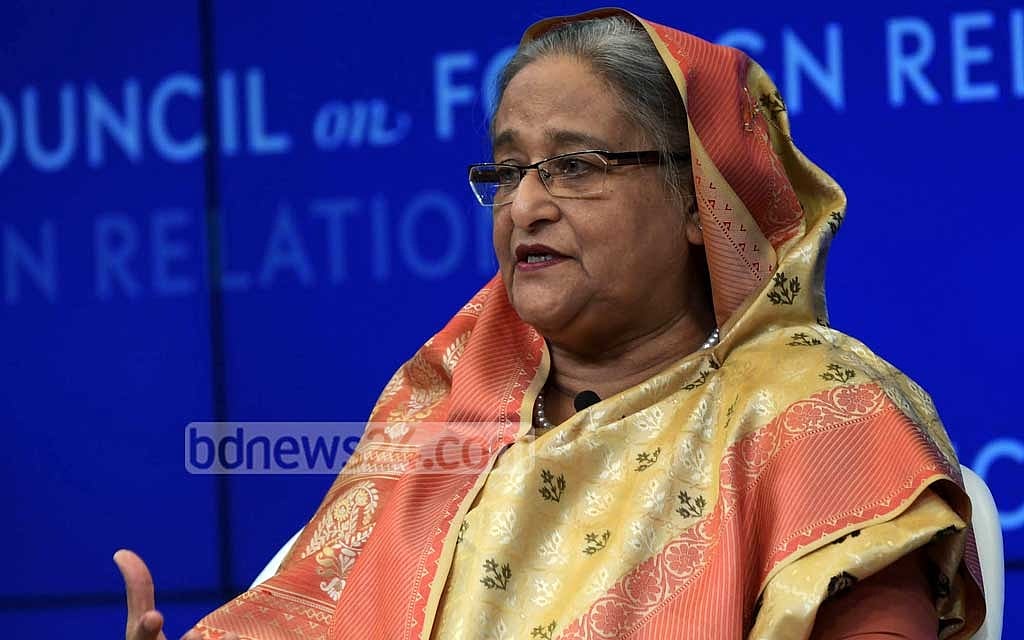
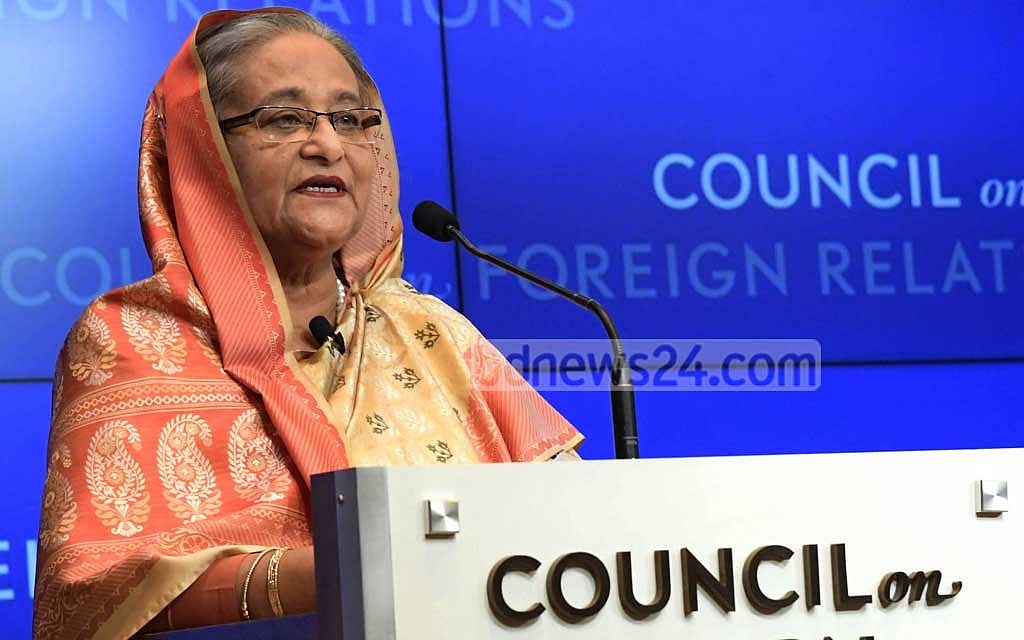
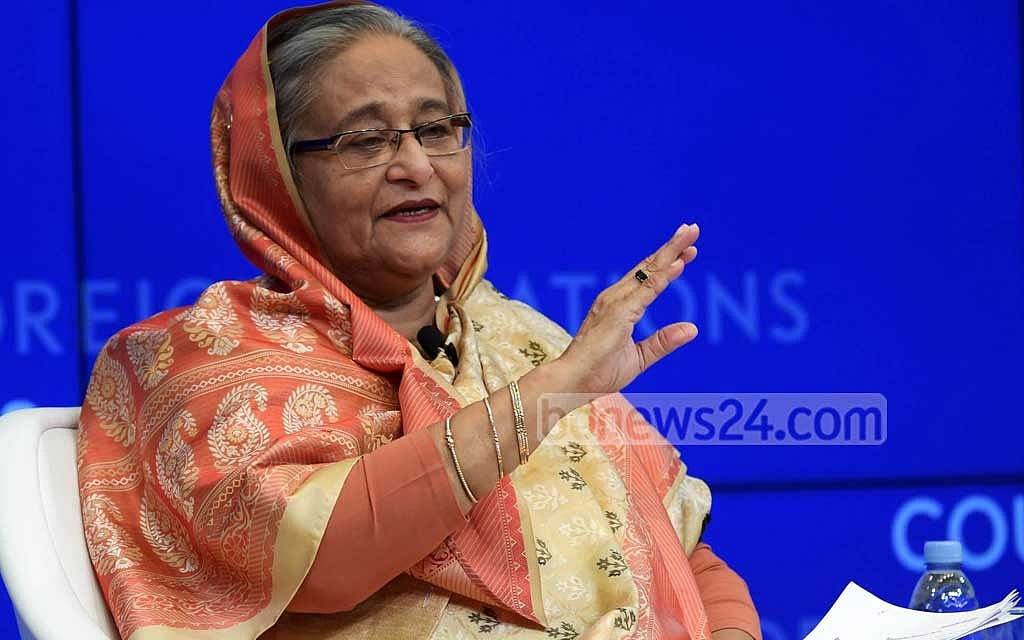
She made the remarks during a dialogue titled ‘A conversation with Prime Minister Sheikh Hasina’ organised by the US think-tank Council on Foreign Relations in New York on Wednesday.
Reiterating neighbouring Myanmar's role in creating and, in turn, resolving the issue, Hasina said, “We want a peaceful and immediate resolution of the crisis.”
The Bangladesh leader reflected on her last dialogue with the Council on Foreign Relations 19 years ago and noted that Bangladesh has made progress in several aspects since then.
“The Rohingya crisis is a formidable challenge for us. Through a planned atrocity, the government of Myanmar cleansed its Northern Rakhine State of the Rohingya minority. They fled violence and atrocities and we opened our border to shelter them on humanitarian ground,” said Sheikh Hasina.
Bangladesh is currently hosting more than 1.1 million Rohingyas. Over 700,000 Rohingyas entered Bangladesh following August 2017 military crackdown in the Rakhine State that the UN termed “ethnic cleansing”.
Despite attempts to repatriate the refugees, no-one returned to their homeland citing Myanmar's failure to create conditions conducive to their “voluntary, safe and dignified” return.
Hasina recalled the 10 million people of Bangladesh taking refuge in India during the country's Liberation War as she described the plight of the Rohingya refugees.
She also mentioned her own experience of living in exile with her younger sister following the assassination of their father Bangabandhu Sheikh Mujibur Rahman and family on Aug 15, 1975.
The decision to open the border to the forcibly displaced Rohingyas came from that experience, explained Hasina, adding that Bangladesh is providing humanitarian support to the best of its ability while acknowledging the international community, particularly the EU, China and USA, for their assistance in dealing with the crisis.
“We also urge you all to visit the Rohingya camps at Cox’s Bazar in Bangladesh. We believe, while in those camps, you will be shaken by their horrifying stories of atrocities at the hands of the Myanmar security forces and local vigilantes. I believe seeing their plight would wring your heart and you would want to see the end of their painful predicament the soonest,” she said.
Apart from the Rohingya crisis, the prime minister highlighted her government’s “Zero Tolerance" policy on terrorism and violent extremism while outlining her government's initiatives to confront the risk of climate change.
Terrorists do not belong to any religion or boundaries, said the prime minister as she proposed a four-point plan to fight terrorism and violent extremism.
The source of financing, supply of arms to the terrorists must be cut and the divisions within societies removed, she noted in her proposal.
Lastly, the authorities must pursue the principle of peaceful settlement of international disputes through dialogue for a win-win situation, according to Hasina.
The frequency and intensity of cyclones, floods and droughts have increased over the years due to the climate change, she observed.
"My government has, therefore, adopted the Bangladesh Climate Change Strategy and Action Plan in 2009," she explained, "Under this plan, Bangladesh Climate Change Trust Fund was set up with our own resources."
"Since then nearly 450 million US dollars have been spent on several hundred projects, mostly on adaptation and a few on mitigation."
Bangladesh is moving forward and confronting the challenges, said the prime minister while highlighting the country's rise to becoming the 30th largest economy in the world in PPP terms.
This year, Bangladesh’s GDP growth rate has hit a record high 8.13% and it is not very far from achieving double-digit growth, said Hasina.
According to the Spectator Index, Bangladesh achieved the highest GDP growth in the world during the last ten years.
Later, the premier took part in a question answer session and responded to questions on different issues, including the unity of Muslim community, the readymade garment sector in Bangladesh, food and social security and women's empowerment.
Bangladesh is continuing to have talks with Myanmar with the support of the international community, Hasina said during the session.
“The problem is that the Rohingyas are unwilling to return due safety concerns,”said Sheikh Hasina.
She also highlighted how Myanmar amended the constitution in 1982 to strip the Rohingyas of citizenship.












