Published : 27 Sep 2026, 12:46 AM
Updated : 27 Sep 2026, 12:45 AM


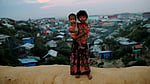
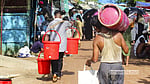
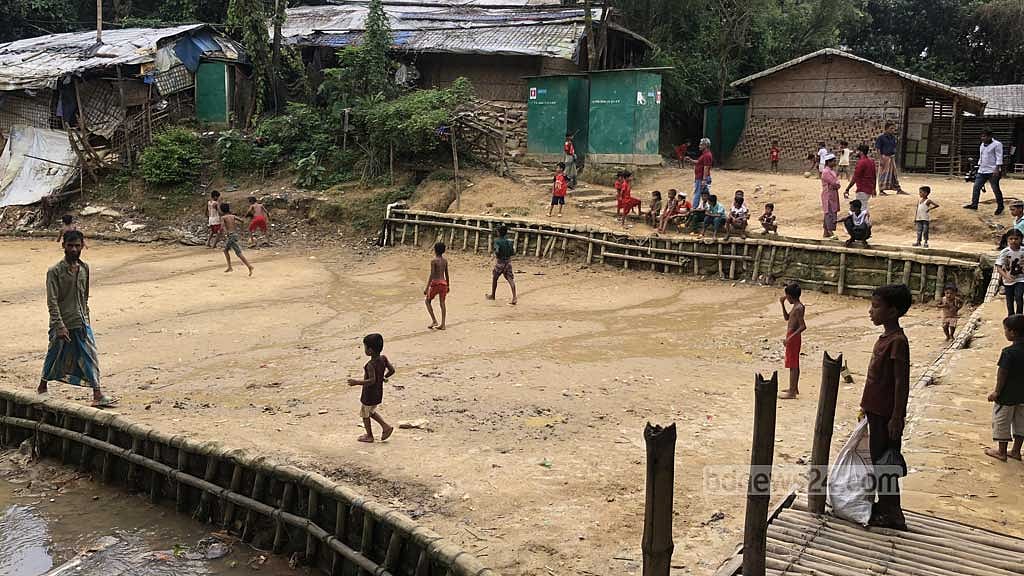
For many Rohingya refugees living in the sprawling camps of Cox’s Bazar, days can stretch endlessly with little work, income or opportunity.
In that vacuum, online gambling has found fertile ground.
What may begin with a small bet can quickly spiral into heavy losses, debt and desperation. In some cases, officials say, the financial pressure has been followed by violence, staged kidnappings, extortion and other crimes.
Jahedullah knows how quickly the habit can take hold. He began gambling online with Tk 100,000, but as losses mounted, he kept putting in more money in the hope of recovering what he had lost.
Eventually, he lost Tk 750,000. He sold his wife’s jewellery and borrowed another Tk 750,000, continuing to gamble until mounting debt and concern for his child forced him to stop.
His debts did not disappear. His brother took a loan in Malaysia, while savings from Myanmar were also used to repay what Jahedullah owed. He later joined CODEC, an organisation working with refugees.
Gambling, Debt and Violence
The scale of the problem has begun to emerge from protection monitoring in the camps.
According to UNHCR’s Joint Protection Monitoring, concerns over online gambling, family violence and the yaba trade were already being reported in early 2024. Between April and June, 470 incidents affected 592 Rohingya, compared with 455 incidents affecting 832 people between January and March.
The monitoring identified financial hardship and limited livelihood opportunities as factors contributing to gambling, disputes and violence.
One case highlighted the darker consequences of debt.
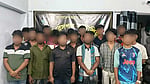
On Sept 8, Nobi Hossain was found naked and covered in blood near a field in Camp 4. A relative said he had been under financial pressure because of gambling debts and suggested that the incident was linked to an attempt to deal with those debts through a kidnapping arrangement.
Mohammad Siraj Amin, commander of APBn-14, said most reported kidnappings in the camps appeared to be voluntary or staged.
“About 95 percent of the kidnappings are voluntary or staged. The remaining 5 percent could be genuine kidnappings,” he said, linking many of the incidents to gambling-related debt.
Law enforcers face difficulties in tracking online gambling because operators and users can conceal their activities through VPNs and mobile financial services. Some use locally obtained national identity cards and SIM cards to facilitate transactions.
Gambling gatherings are also reportedly taking place in parts of the camps where mobile networks are stronger.
Despite the problems, Siraj said the overall law-and-order situation in the camps has improved.
“Law and order in the camps is better than at any previous time,” he said.
A Generation with Little to Do
The challenge is particularly acute because of the size and age profile of the refugee population.
There are 1.2 registered Rohingya refugees in Cox’s Bazar and Bhasan Char. More than half are children: 575,557 are aged 18 or above, while 626,477 are between 0 and 17. Some 450,518 children are under 11, accounting for 37.5 percent of the total population.
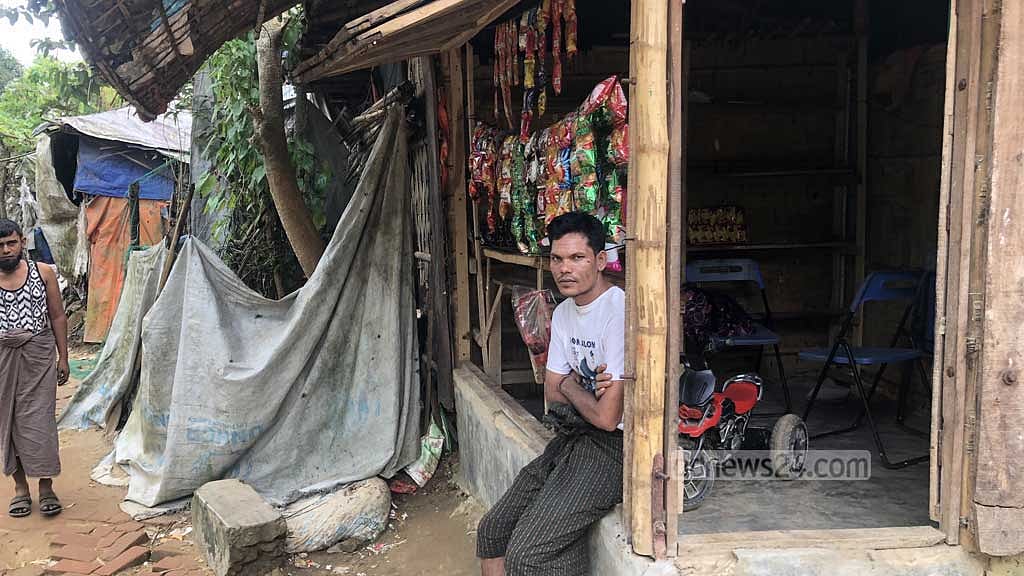
Learning centres and madrassas provide education, while libraries supported by Oxfam operate in seven learning centres. But opportunities for young people remain severely limited.
In Camp 4, Sadeq Hossain runs New Light of Rohingya, which serves around 400 children and young people.
He compared the spread of online gambling to an epidemic, saying young people have little to occupy them and can easily become drawn into gambling.
The problem, however, extends beyond gambling itself.
Rohingya refugees have spent years in confined camps after fleeing violence and persecution in Myanmar. With restrictions on movement, limited employment and few opportunities to build sustainable livelihoods, financial desperation can deepen existing vulnerabilities.
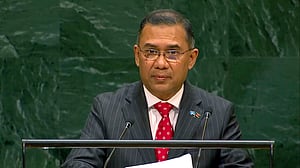
Mizanur Rahman, commissioner of the Refugee Relief and Repatriation Commission, said generations of Rohingya had grown up amid state-backed violence, without basic rights, adequate education or access to jobs.
He said the situation needed to be contained rather than allowed to grow into a wider social problem.
Intelligence agencies are working alongside the Armed Police Battalion to monitor activities in the camps, while law enforcement continues to track gambling networks and crimes linked to debt.
For refugees such as Jahedullah, the stakes are more immediate. What began as a way to make money became a cycle of losses, borrowing and family hardship -- a pattern that officials and aid agencies fear could spread further as long as thousands of young people remain with few livelihoods and little to do.