


Published : 12 Jan 2016, 10:31 PM
Updated : 11 Apr 2022, 09:33 PM


“We are a nation that emerged victorious in the Liberation War. No-one can keep us subdued. We will surely take our seat of honour among the comity of nations,” said Hasina, leader of the Awami League that had led the struggle for freedom in 1971.
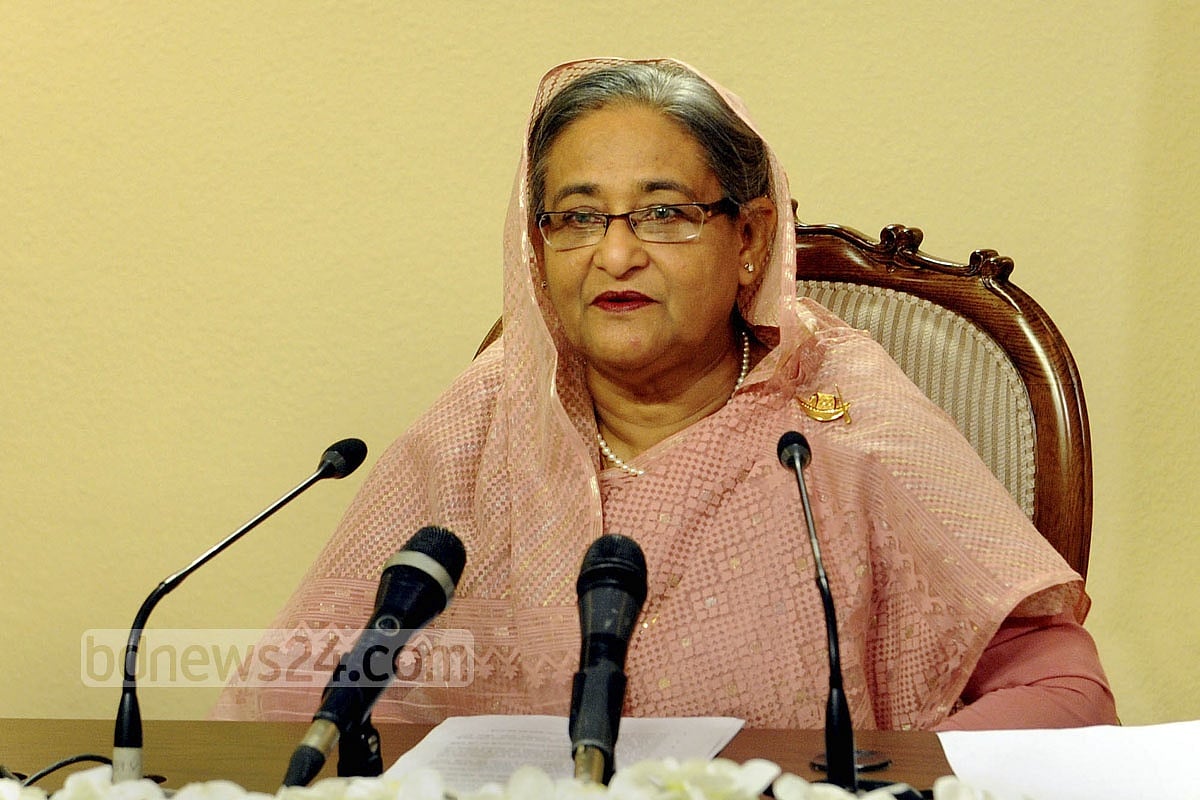
She expressed this sentiment in a televised address to the nation on Tuesday on the second anniversary of her second consecutive term in office.
Hasina has set her sights on transforming Bangladesh into a developed country by 2041.
She highlighted the momentum achieved in economic progress over the past seven years and spoke of her government’s tough stand against communalism and attempts to drag the Liberation War into controversy.
The Awami League chief rejected the BNP allegation that dissent was being smothered, saying the government was being criticised quite ‘freely’.
The Awami League came to power for a second straight term in a BNP-boycotted general election held on Jan 5, 2014, setting the stage for Hasina to be sworn in as prime minister for the third time.
In her address to the nation on the completion of her incumbent administration’s two years in office, the prime minister on Tuesday traced the tortuous political and economic course covered since 2009, when the Awami League came to power after the ninth parliamentary polls.
“The country’s economy was in a shambles because of the misrule, corruption, and terror of the BNP-Jamaat alliance and two repressive years under a caretaker government. We restored order in every sphere once we came to power, reviving people’s faith and confidence.”
She said Bangladesh was now on a ‘development highway’ and had become a role model of growth.
Hasina cited the country’s progress to the 45th position in global GDP ranking and the 33rd spot in terms of per capita income as proofs of progress.
“The country is at a historic crossroads of development. Come, let us rise above party affiliations and keep up the momentum of this development journey,” she said, citing a host of social indices.
The Hasina government had set out in 2009 to make Bangladesh a middle-income country by 2021. It has already become a lower-middle-income country in the meantime.
“We will make Bangladesh a middle-income country by 2021 and a developed nation by 2041 by working with optimistic and confident citizens,” the prime minister said.
In her address, Hasina rattled off a list of the major achievements of her government.
She said 'Digital Bangladesh' had been established after seven years of efforts.
About 200 types of digital services were being currently offered through the establishment of 5,275 digital centres throughout Bangladesh, she said.
Bangladesh is ahead of India and Pakistan in the use of the internet. The 3G service has been introduced and 4G services would be launched soon, she added.
The country has more than 130 million SIM subscribers and over 50 million internet subscribers.
The growth rate in the last fiscal year was 6.5 percent and the average rate in the previous five was 6.2 percent. The rate is expected to soon cross 7 percent, she said.
Six flyovers had been built in the past seven years, she said, adding the work on an elevated expressway and the metro rail in Dhaka was in progress.
The widening works of the Dhaka-Chittagong and Joydebpur-Mymensingh highways were also nearing completion.
The Padma Bridge was expected to be ready by 2018. A modern satellite town has also been planned circling Mawa, Shibchar and Jajira once the bridge is complete, the prime minister said.
She also highlighted the progresses in gas and power generation, food, education and health sectors, gender parity and hiking the salaries and allowances of government employees.
'Awami League brought democracy’
Hasina refuted the BNP criticism that the country has been stripped of democracy.
“The Awami League has given the country independence and democracy. Every time it has formed government, it has ensured development."
She accused the collaborators of the Pakistani occupation forces, defeated in the Liberation War, of trying to create instability and anarchy.
“The BNP and Jamaat leaderships cannot tolerate democracy and development. They cannot stand the prospect of people living in peace and happiness.”
Stressing the government’s resolve to try all the suspected war criminals, she said: “We are trying the war criminals and executing the verdicts. No-one will be able to hinder the trial process.”
[Sumon Mahbub, Shahidul Islam and Suliman Niloy co-wrote the report]













