Published : 17 Nov 2026, 02:17 PM
Updated : 17 Nov 2026, 02:17 PM


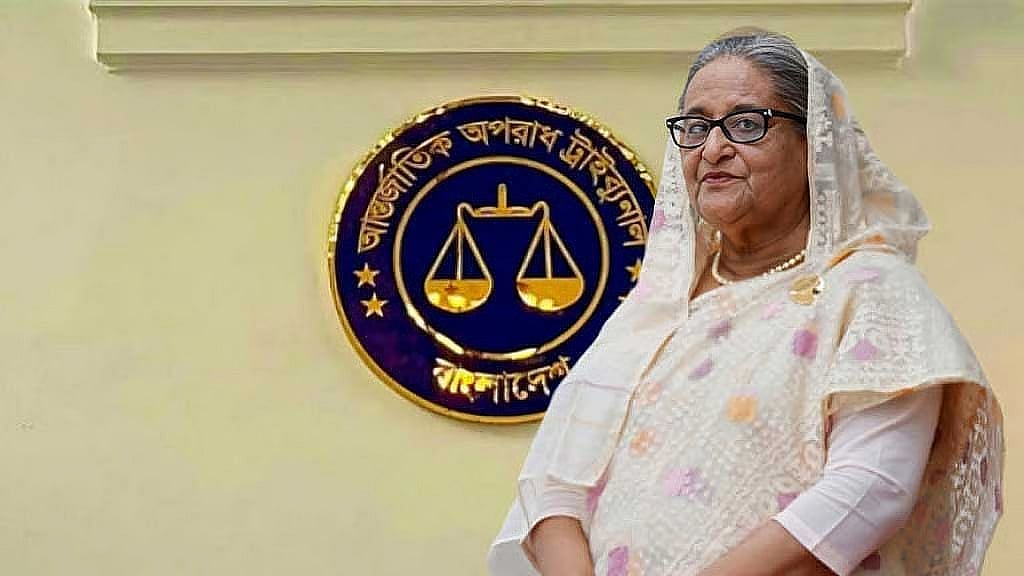
A year has passed since the International Crimes Tribunal sentenced former prime minister Sheikh Hasina to death for crimes against humanity over the crackdown on the 2024 July Uprising.
The state’s appeal to raise a separate life term to a death sentence is yet to get a hearing date.
Tribunal-1 delivered the verdict on Nov 17 last year. Living in India since her ouster, Awami League President Hasina missed the 30-day window to appeal.
Prosecutor Gazi Monawar Hossain Tamim says Section 21(4) of the International Crimes (Tribunals) Act requires an appeal to be settled within 60 days. The prosecution’s appeal is on the Appellate Division’s cause list, but is not being heard.
The same verdict sentenced former home minister Asaduzzaman Khan Kamal to death and gave former police chief Chowdhury Abdullah Al-Mamun, who turned state’s witness, five years in prison.
It also ordered Hasina’s and Kamal’s assets confiscated, and compensation for victims.
Hasina’s return remains unresolved. She recently sought a passport and national ID card from the government, but it has refused, with ministers saying she must return to Bangladesh under the extradition treaty.
Trial in 28 Working Days
The allegations against Hasina and two others were submitted to the chief prosecutor's office on Aug 14, 2024, and the probe began on Oct 14.
Charges were framed on Jul 10, 2025. Testimony began on Aug 3, with 54 witnesses deposing over 28 working days.
The 453-page full judgment followed on Jan 13.
What the Verdict Held
The judgment found that Hasina's statements and instructions had incited violence against protesters from the early stages of the quota reform movement.
It referred to her remarks calling protesters “Razakars” at a news conference on Jul 14, 2024, after which demonstrations spread across Dhaka University and other campuses.
The tribunal also considered a phone conversation that night with the then Dhaka University vice-chancellor ASM Maksud Kamal, in which Hasina allegedly spoke of ordering the arrest and killing of protesters.
A forensic examination by the Criminal Investigation Department found the audio recording authentic and found no evidence that it had been generated or altered using artificial intelligence.
The judgment said Bangladesh Chhatra League and Jubo League activists attacked protesters at Dhaka University on Jul 15.
It also cited the killing of Begum Rokeya University student Abu Sayed by police gunfire in Rangpur the following day.
The tribunal found Hasina, Kamal and Al-Mamun responsible under the doctrine of superior command responsibility.
It said Hasina had authority over law-enforcing agencies and the Awami League, Chhatra League and Jubo League, but failed to stop the attacks or punish those responsible.
Similar findings were made against the former home minister and police chief.
Orders on Weapons, Killings
The tribunal found that Hasina ordered drones to track protesters and helicopters and lethal weapons to kill them, citing phone calls with the then Dhaka South City Corporation mayor Fazle Noor Taposh and politician Hasanul Haq Inu on Jul 18.
Al-Mamun testified that Hasina’s orders were relayed to police through additional deputy inspector general Proloy Kumar Joarder after “core committee” meetings at the then home minister’s residence.
The judgment recorded violence in 50 districts, with lethal weapons used in 41. Investigators said police fired 305,311 rounds of ammunition.
The UN human rights office estimated 1,400 deaths in the violence, while an investigator put the number of injured at 25,000.
The tribunal held Hasina, Kamal and Al-Mamun responsible for 12 killings in Chankharpul and Ashulia.
The victims included six people in each area, among them an unidentified person in Ashulia.
In Ashulia, the judgment said, police shot the victims before their bodies were doused with petrol and they were set on fire.
Other cases, extradition
Six other cases against Hasina, involving enforced disappearances, torture, Shapla Chattar killings and raids on alleged hideouts, are awaiting trial. Investigations continue in two more cases.
On Nov 3, Chief Prosecutor Md Aminul Islam asked the home ministry to implement the order to confiscate Hasina and Kamal’s assets and compensate victims’ families.
Bangladesh has sought Hasina’s extradition from India, but the request remains unresolved. A BBC Bangla report on Nov 12 said India wanted assurances that she could appeal and receive a retrial.
Indian foreign ministry spokesman Randhir Jaiswal said on Nov 13 the extradition request would be handled through the appropriate legal process, without addressing the reported conditions.
On Nov 15, Aminul rejected a retrial, saying the law did not allow a person to be tried twice on the same charges.