Published : 26 Mar 2023, 08:33 PM
Updated : 26 Mar 2023, 08:33 PM


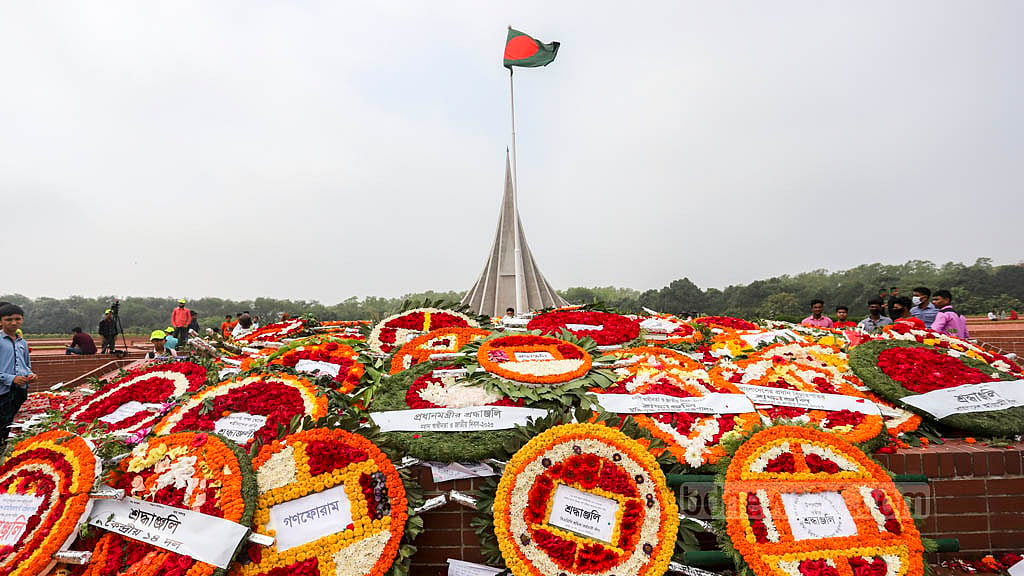
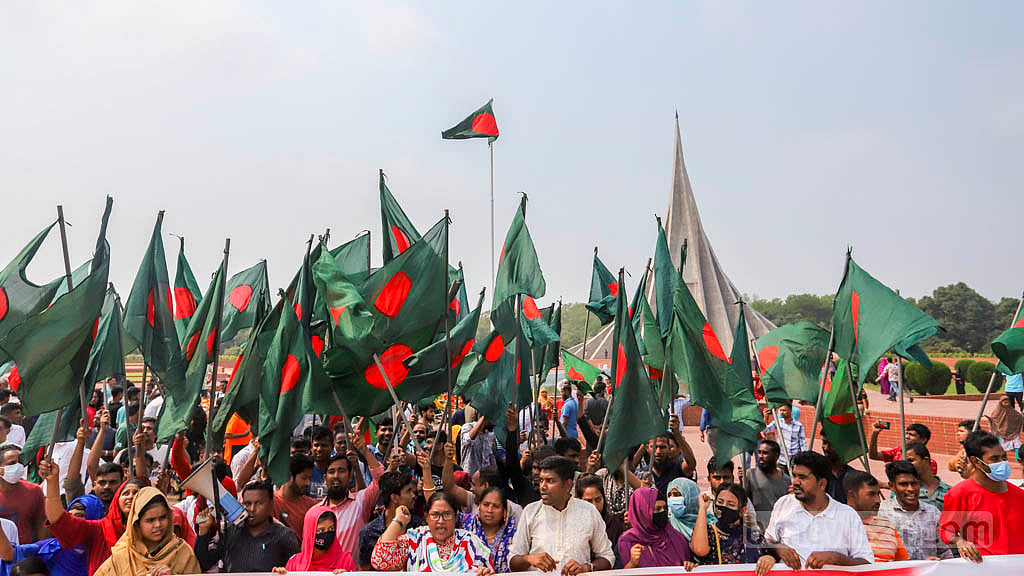
Citizens poured in their thousands at the National Memorial to pay tribute to the martyrs of the Liberation War, renewing their pledge to build a Bangladesh free from corruption and inequality.
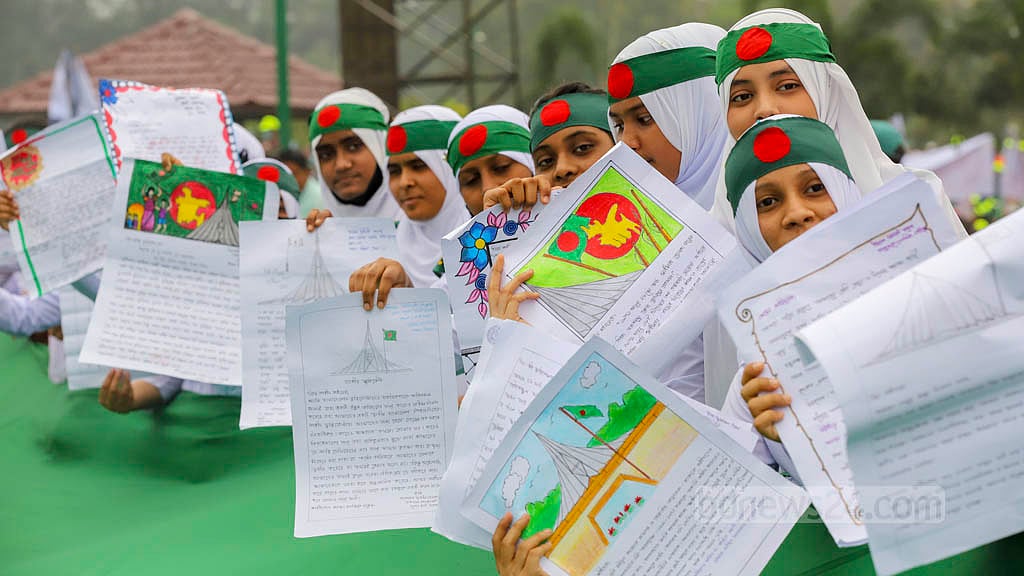
They thronged the memorial in Savar on Sunday, some carrying the national flag or donning dresses in the colours of the flag.
“I want my country to be good. I hope everyone will live freely,” said Nijhum Sarker Ratri, a grade three student from Dhaka who came to pay respects to the martyrs with her father Bipul Chandra Sarker, an employee of a private firm.
“I have special feelings about the National Memorial, and I wanted to show her those feelings,” Bipul said of the memorial and his daughter.
“I want her to grow the feelings of patriotism – how so many people can sacrifice their lives for an honest cause. This sacrifice will remind them of the duty to build the country.”
Mohammad Mohiuddin, an expatriate worker who has returned home after 30 years, lamented the problems migrant workers face in Bangladesh.
Still, his love for the country is unconditional. “I have a love for Sheikh Mujibur Rahman. I was here during his time. I saw what he did for the country’s independence.”
“He was always against corruption. His daughter [Prime Minister Sheikh Hasina] also says ‘No’ to corruption. But the rate of corruption does not decrease. If we don’t be good ourselves, the police and the government will never be able to change the country.”
“I want a country with healthy politics, a country free from corruption. I want development in such a way that won’t allow anyone to take benefits wrongfully,” said Mahmudul Hasan Nayeem, an eighth grader.
The memorial was open to all after President Md Abdul Hamid and Hasina paid their respects in the morning. The crowds were thinner than in previous years due to Ramadan.
AHM Ershad came to pay respects on behalf of Muktijoddha Sangsad Sontan Command, a group of children of freedom fighters.
He thinks it will take time to fill in the gap created by the assassination of Bangabandhu in 1975.
“We want a Bangladesh free from hunger, poverty and corruption in light of the spirit of the Liberation War. We are working for that.”
Bappaditya Basu, a joint organising secretary of the Hindu, Buddhist, and Christian Unity Council, however, thinks Bangladesh has deviated from the path of communal harmony that was one of the fundamentals of the spirit of the Liberation War.
“The communal, religion-based forces have been re-established in an effort to take Bangladesh back to the Pakistan era as we’ve deviated from the spirit of the Liberation War 52 years after independence.”
Fauzia Moslem, president of the women’s rights group Bangladesh Mahila Parishad, thinks gender inequality is still a far cry. “We need a law to identify and prevent the causes of gender inequality.”
Harendranath Singh, who works on the rights of small ethnic groups, thinks Bangladesh could not retain the independence of all of its citizens. “Because the country is still not equal to all.”
He alleged the government was out to “undermine” their identity with different tags. “These words are not respectful to us. We want recognition as indigenous people.”