


Published : 22 Jan 2017, 10:19 PM
Updated : 19 Oct 2022, 03:25 PM



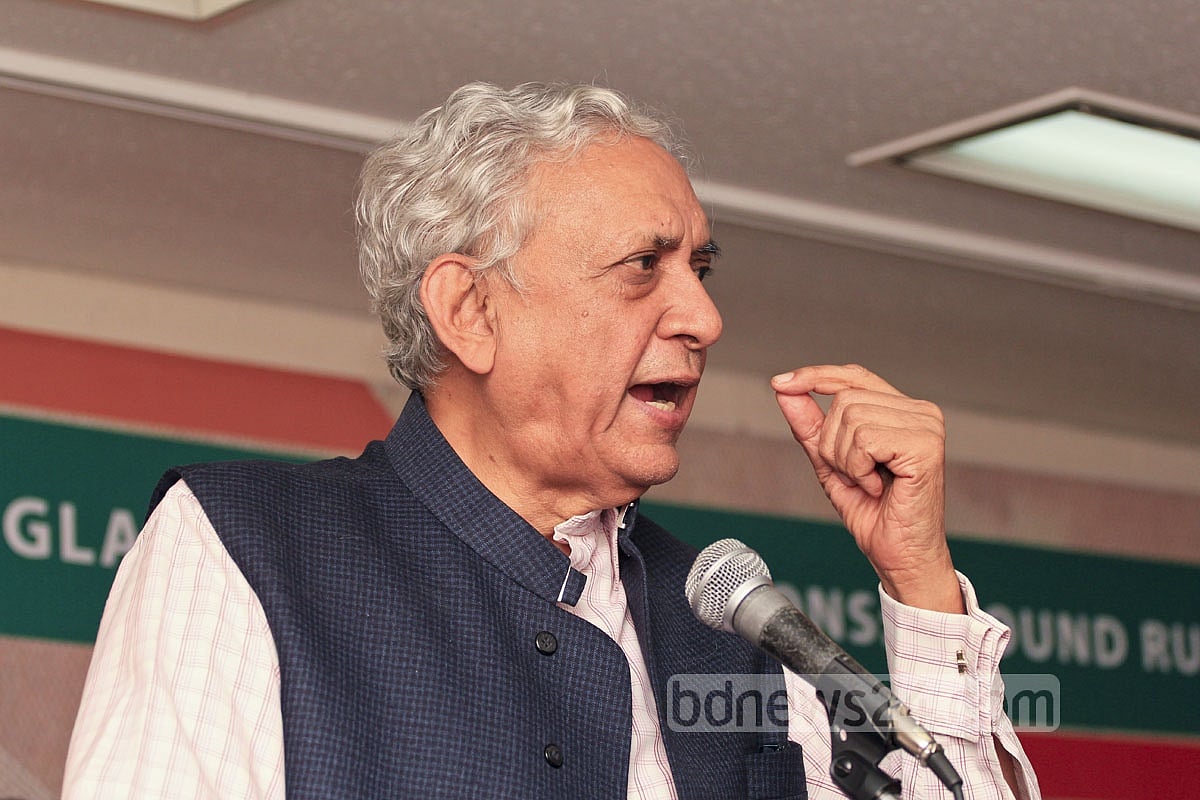
However, a former Indian bureaucrat says it can be changed if the cabinet secretary checks the report with the finance secretary.
They were speaking at a regional conference on ‘government performance management system or GPMS’ in Dhaka on Sunday where experts and officials from India, Bhutan and Malaysia also joined their Bangladesh peers.
Prime Minister’s International Affairs Adviser Gowher Rizvi was chief guest.
“We should revisit the APA for ambitious goals like the SDGs. To change society, APA is a tool,” Principal Secretary Kamal Abdul Naser Chowdhury said.
The Cabinet Division introduced GPMS in the form of Annual Performance Agreement or APA in 2015 “to ensure accountability, transparency and the effective use of resources”.
“If we can do it and perform better, then we can change society,” the principal secretary who had served as public administration secretary said.
He believes “social transformation is possible if civil servants really perform”.
The BRAC Institute of Governance and Development (BIGD) and the Cabinet Division in partnership with the World Bank organised the conference with an aim to learn from each other and share best practices.
Gowher Rizvi. File Photo
This is to improve the public service’s focus on producing results that benefit communities and build public confidence. It also aims to initiate and sustain management structures and performance-based organisational cultures.
In the region it was India that first introduced such a performance management system concept in the public service in 2009.
The BRAC institute, BIGD which is the technical facilitator of the initiative, said Bangladesh adopted the policy following the Indian initiative.
Secretary for coordination and reforms at the Cabinet Division NM Zeaul Alam said knowledge gaps on the GPMS were the key challenge.
“Tendency of soft targeting, establishing linkage between the performance of the organisations and the personnel, and lack of appropriate incentives for better performance” were some of the challenges Alam highlighted they were facing since the implementation of the GPMS.
He proposed a dedicated section in each ministry or division for the implementation of APA.
Former secretary to India’s Performance Management Division Prajapati Trivedi said initially it takes time to adopt the system fully.
“It takes seven to eight years to make a fair system,” he said, highlighting the role of the performance management system in ensuring accountability and deliver better services.
On being asked about addressing the issue of soft targets, he said in India, the cabinet secretary does not sign the performance report if the finance secretary does not find it to be matching with the budgetary allocation for the sector.
He said accountability trickles down. “It must be started from the top and then it’ll go down.”
The prime minister’s adviser Gowher Rizvi stressed on commitment rather than incentives for better delivery at the public service.
“Public service is the highest ideal that any human being can aspire. The very ability to serve our nation in itself is the highest reward that is bestowed on you,” he told the civil servants.
He said performance in civil service was “important” as it helps to build public trust in the government.
“Government and citizen meet at the point of service delivery. When quality of service declines, people lose confidence,” he said.
Rizvi, however, said one ministry or division cannot perform well on its own. “It’s a team,” he said.
To elaborate, he said, students may not be able to attend classes despite quality of education if the public health is not good and they fall ill.












